Flowers and Science
Science, Plant Chemistry, and Industry Engineering: The Secrets of the Corolla
To the Articles

The flower does not merely dwell within our gardens or vases; over the centuries, it has slipped into the deepest intimacy of our homes and our rituals. It is that top note defining our lingering scent, the secret ingredient transforming a dish into a work of art, or the balm that soothes the skin. In this section of “Petals of History,” we lift the veil on the flower as an essential ingredient of life, exploring how it sublimates the ordinary into a sensory and sacred art of living.
I. The Heritage of Petal Alchemists: A History of Plant Chemistry
1.1. From Natural Pigments to Modern Polymers
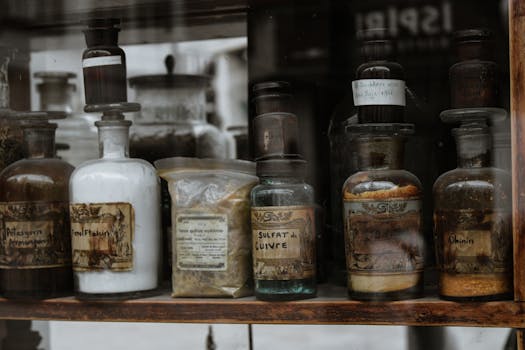
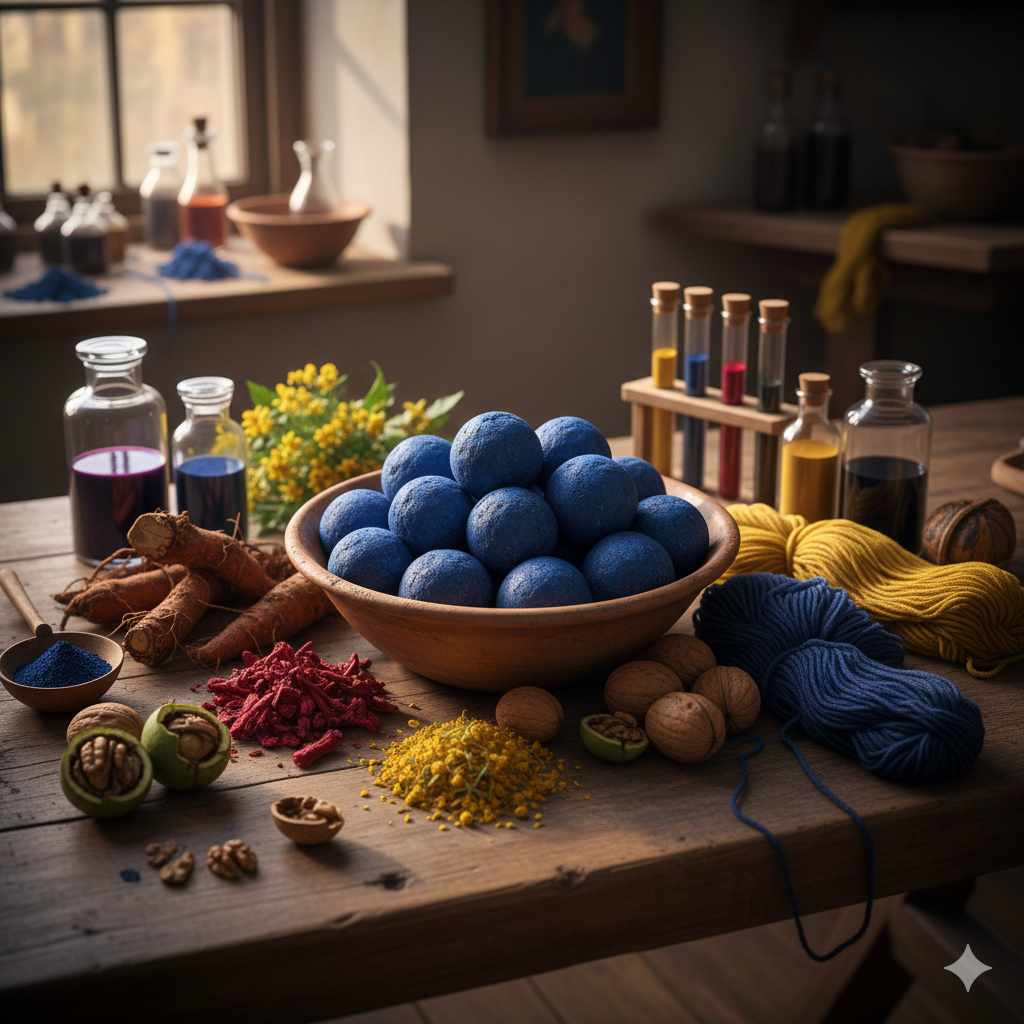
For millennia, the flower was the primary source of the world’s colors. Apothecaries and dyers of the Renaissance spent their lives deciphering the secrets of the Madder or the Woad to extract pigments that would clothe kings and illuminate manuscripts. We trace this odyssey where the molecular structure of the corolla dictated the evolution of our materials. Today, this heritage is being reborn: the floral pigments of yesteryear are inspiring the bio-sourced polymers of tomorrow, offering a sustainable alternative to synthetic chemistry.
1.2. Extraction and Distillation: The Evolution of Techniques
The history of science is also a history of tools. From the copper alembics of Persian scholars to modern supercritical $CO_2$ extraction, the quest to isolate the quintessence of the flower has pushed human ingenuity to its limits. We explore how these technical breakthroughs have transformed a fragile petal into a precious raw material, paving the way for the pharmaceutical and fine fragrance industries.
II. The Age of Shadow: The Petroleum Rupture
2.1. The Industrial Break with the Botanical World
With the advent of the 19th century and the Industrial Revolution, the ancient fidelity to the botanical world was shattered. The discovery of hydrocarbons allowed for the creation of cheaper, synthetic pigments and materials. Science turned its back on the fields to embrace the factory, entering an era of rapid yield but toxic byproducts. For a long time, the plant was relegated to a mere food source, its role as a chemical model forgotten in the shadow of the oil derrick.
III. The Flower as a Driver of the Green Economy
3.1. From Tulipomania to Global Logistics
The flower is a stock market commodity as precious as it is ephemeral. From the first speculative bubbles of 17th-century Holland—the famous Tulipomania—to the ultra-sophisticated logistics hubs of today, the floral trade has shaped global economic routes. We analyze how this industry has evolved to meet the challenges of sustainability, transforming the traditional supply chain into an innovative “Green Industry.”
3.2. Sustainable Sectors and Biotechnologies
The laboratory is the new garden. In this era of ecological transition, flowers are becoming the protagonists of a new industrial engineering. Whether through the development of plants capable of decontaminating soils (phytoremediation) or the creation of natural fertilizers, the science of flowers is at the heart of 21st-century environmental solutions.
IV. Conclusion: When Rigor Meets Beauty
To study the flower through the lens of science is not to strip it of its mystery, but rather to marvel at its complexity. Between the precision of a molecular formula and the poetry of a blooming field lies a fundamental truth: the flower is one of our most powerful allies in building a sustainable and harmonious future. By exploring our articles, you will discover that every corolla is a laboratory of life, waiting to reveal its next secret to humanity.
Explore all our articles