On January 12, 2024, at the peak of Notre-Dame, an apprentice tied a bouquet of mimosas to the frame after driving the final peg—a precise gesture steeped in history. This article explores the “topping out” ritual, from its ancient roots to the practices of the Compagnons, and what it reveals about collective labor. From the ridgelines of cathedrals to everyday idioms like “the grand finale,” we trace how a simple construction custom evolved into a cultural landmark. Balancing living tradition with the legacy of the builders, this gesture marks far more than just the end of a job.
Beyond the Stone: The Soul of the French Framework
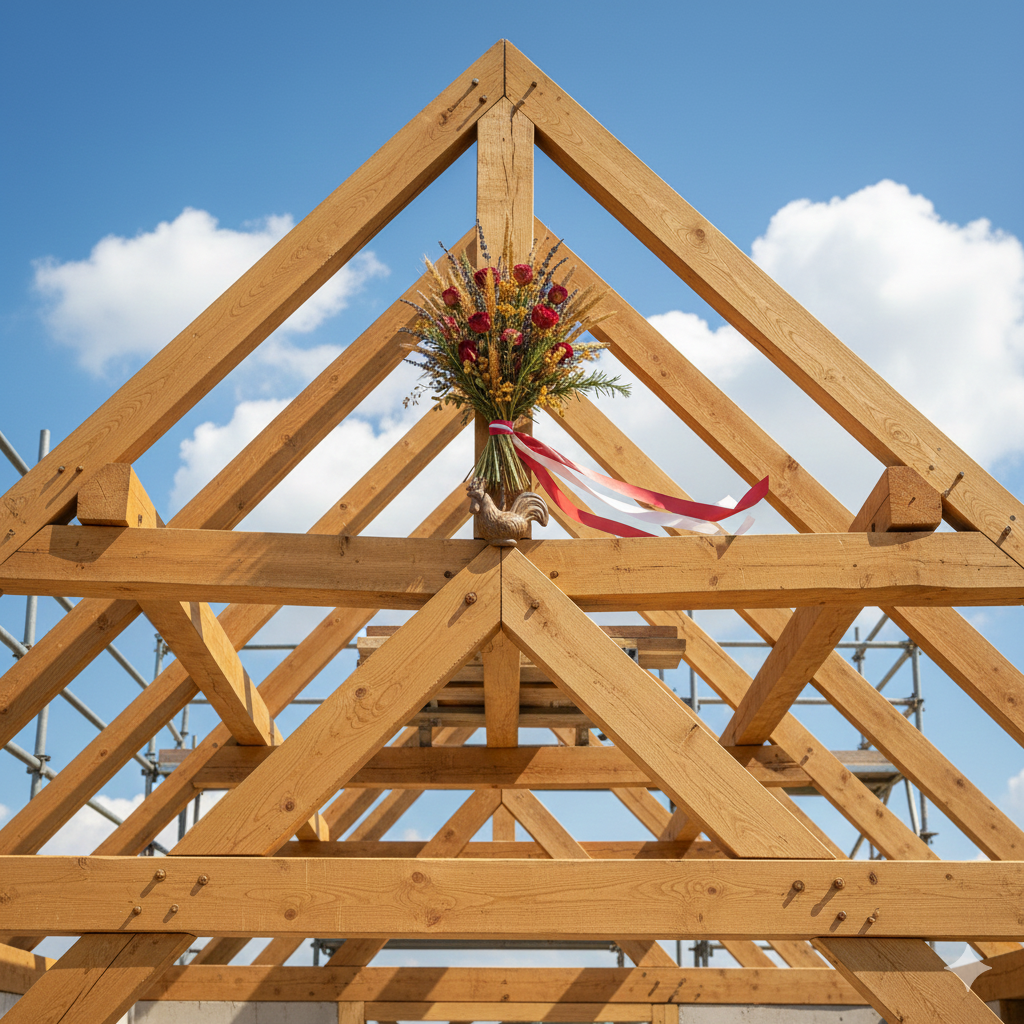
Imagine for a moment: high above a freshly assembled timber frame, under a veiled Parisian sky, a young apprentice hammers the very last wooden peg. As the crowd below holds its breath, a crane hoists a vibrant bouquet of yellow mimosas to the very top of the construction. This isn’t a simple decoration; it is a “Bouquet de Faîtage” (a ridge bouquet)—a ritual as old as the cathedrals themselves.
In January 2024, this exact scene unfolded at Notre-Dame de Paris. After the devastating fire of 2019, the reconstruction of the “Forest” (the cathedral’s intricate oak roof structure) reached a milestone. The placement of this bouquet marked the rebirth of a masterpiece.
In this article, you will discover:
- The “topping-out” tradition and its significance upon the completion of a structural frame.
- The origins of this ritual, from its pagan roots to the legends of the master guilds.
- The symbolism of the carpenter’s bouquet, embodying protection, rebirth, and honoring the labor of the builders.
- The evolution of these bouquets across centuries and regions.
- How everyday expressions like “that’s the cherry on top” or “the grand finale” stem from this ancestral ritual.
That’s exactly what happened on January 12, 2024, at Notre-Dame de Paris. The installation of the topping-out bouquet—the name given to this final wooden peg—on the choir’s framework marked a major milestone in the cathedral’s restoration. More specifically, it signaled the rebirth of the “Forest,” the intricate roof structure that was nearly lost in the devastating fire.
This tradition is far more than a decorative gesture; it serves as a profound link between today’s master artisans and the builders of centuries past.
In this post from Pétales d’histoire, we’ll dive into the fascinating world of the “carpenter’s bouquet.” This ritual celebrates the completion of a masterpiece in wood. From its pagan roots to its modern-day echoes at Notre-Dame, discover how this bouquet honors the legacy of builders and continues to shape the way we talk about craftsmanship today.
If you have a passion for the history of French traditions, this story will transport you to the heart of grand cathedrals and long-forgotten construction sites.
The Topping-Out Tradition: Origins, Symbolism, and the Final Peg
In the heart of medieval France, where cathedrals reached for the sky like “Celestial Jerusalems,” the topping-out tradition was born—an ancestral ritual carried on by the Compagnons du Devoir.
These traveling artisans, heirs to a guild system dating back to the 12th century, embark on a “Tour de France” to perfect their craft, receiving the trade secrets passed down through generations. According to the guilds’ own chronicles, the legend dates back to the construction of Solomon’s Temple—the mythical founder of their rites—where carpenters honored the trees sacrificed for the Great Edifice.
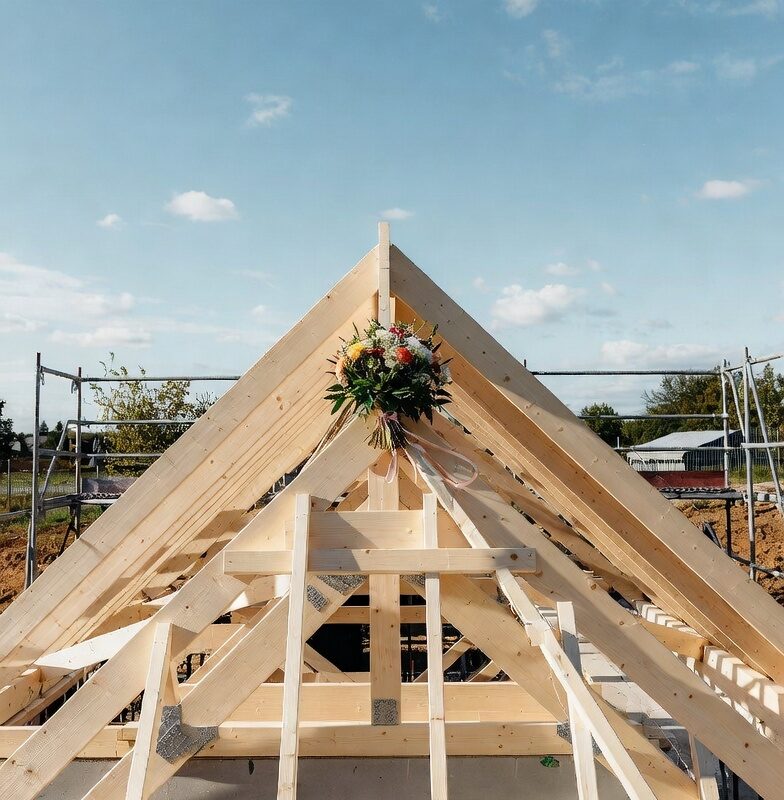
However, the true origin lies in ancient Northern European tree worship from the Middle Ages. When the framework—the wooden skeleton supporting the roof—reaches completion, the workers fix a decorated branch to the ridgepole (the highest point). This ritual invokes the protection of forest spirits against the elements.
This bouquet, often a small evergreen or a leafy branch, symbolizes rebirth and longevity. The tree felled for the project is not lost; instead, it is transformed into the building’s benevolent guardian. It brings good luck to the inhabitants, warding off fire and storms, while honoring the collective labor of the carpenters.
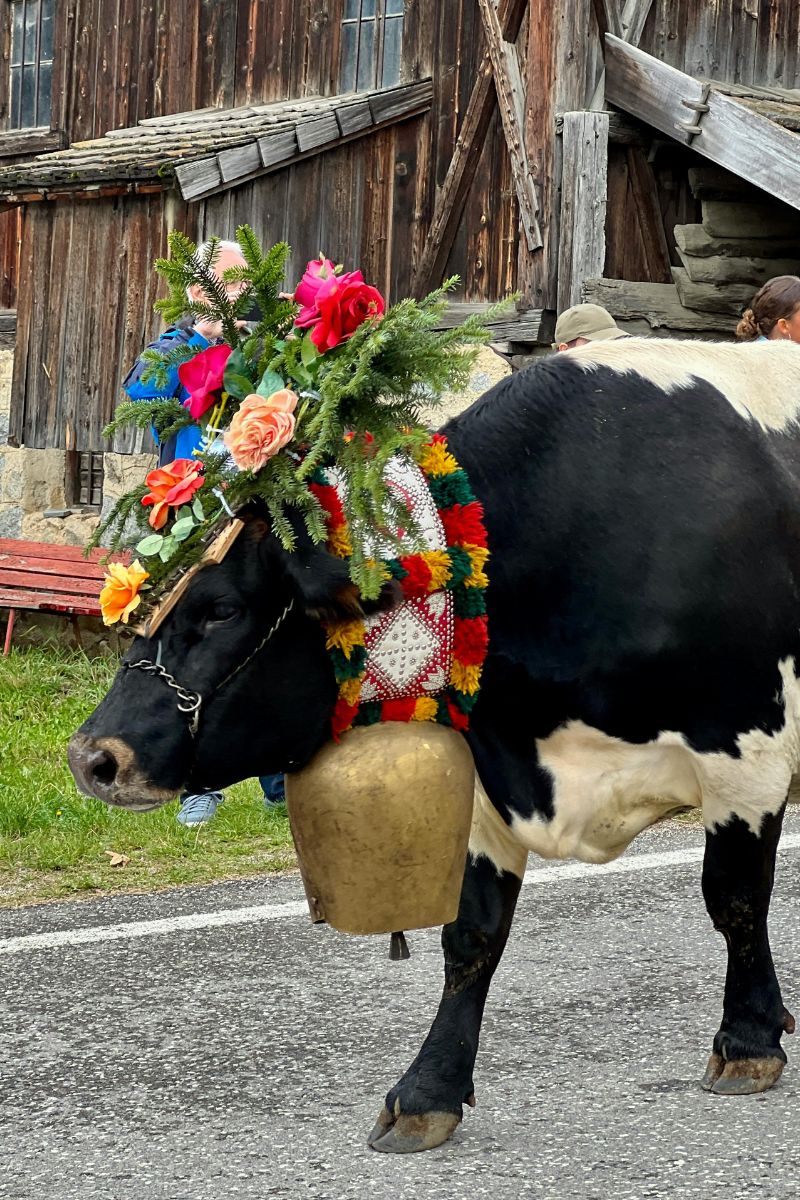
For the Compagnons du Devoir, this gesture is a passing of the torch. It marks the end of the woodworking phase, clearing the way for the roofers while celebrating the unity of the “coterie”—the community of carpenters. This moment of shared jubilation brings to mind the mountain tradition of the désalpe: just as the livestock are decked out in flowers and ribbons to proudly mark the end of a season of hard work and the return to the community, the building receives its crown.
Entrusting the installation to the youngest apprentice highlights the transmission of the “Duty”—a rigorous apprenticeship where every technical gesture becomes a life lesson.
Intimately tied to this ritual, the word “bouquet” also refers to the last peg driven in—a piece of hardwood (usually oak) that locks the final joint of the framework. Known in guild traditions as the “curled peg” or “flowered peg,” it is meticulously carved, sometimes with floral motifs, and hammered home to the cheers of the crews.
At Notre-Dame on January 12, 2024, it was precisely after driving in these last two pegs that 19-year-old apprentice Léonard Laforest fixed a bouquet of mimosas to the top of the apse. It was a moment of pure emotion, captured on film and shared with the world, as the shouts of joy from the Compagnons rang out like a medieval echo.
This symbol of completion is more than a mere ornament: it signifies structural integrity achieved, a home made habitable, and the hope for a lasting legacy. In a world where modern architecture favors steel and concrete, this tradition serves as a reminder that building is about connecting the ground to the canopy, the human to the eternal.
From Sacred Branches to the Roots of Everyday Language
From the spires of Gothic cathedrals to the words that still bloom in our conversations today, the topping-out bouquet has saturated French culture far beyond the construction site. This evolution—from a ritual gesture to an idiomatic expression—illustrates how artisan traditions weave the very fabric of our language. Let’s explore how the composition of these bouquets has shifted through the centuries, across regions, and between different types of architecture, to better understand their lasting echo in phrases like “that takes the cake!” or “that’s the cherry on top!”
The Composition of Topping-Out Bouquets Through Time, Regions, and Architecture: Evolution and Linguistic Echoes

In the Middle Ages, these bouquets were rudimentary: a branch from the crown of the oak or fir used for the framework, kept to appease the spirit of the sacrificed tree.
Adorned with multicolored ribbons—symbols of joy and solidarity—they were hoisted during a celebration hosted by the project owner, who provided wine and meat to the Compagnons in exchange for this floral “blessing.”
With the Renaissance and the rise of trade guilds, the compositions became more elaborate: in Provence, laurel was used for victory; in Brittany, yellow gorse was woven with wildflowers for good luck.
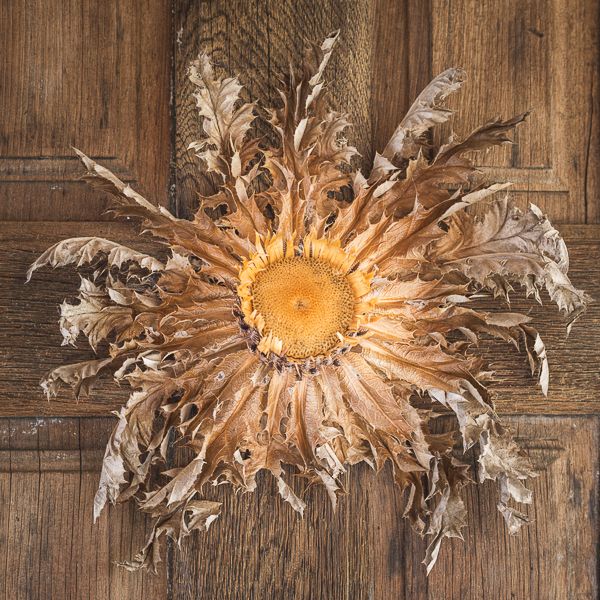
In the 19th century, the industrialization of construction sites introduced new variations. For cathedrals like Notre-Dame, branches were sourced from royal forests (oak from state and private domains); for rural houses, simple Christian boxwood was used, representing immortality and protection. In other regions, people preferred fixing “barometer flowers” like the carline thistle to their doors—its dried flower head served both to predict the weather and to protect the home from harmful influences.
Each French region sculpted these bouquets in its own image. In Normandy, a land of timber-framing, a dense ridge-bouquet was hung by the youngest apprentice to honor “the pride of a job well done,” often accompanied by a laurel cross for the owner’s wife.
In Alsace, influenced by the Germanic Richtfest, an entire fir tree decorated with ribbons was celebrated with a speech and a banquet.
In the Southwest, such as in Charente-Maritime, local branches of elm or ancient oak were used, adapted for agricultural halls or modest buildings.
The evolution of the ritual followed the type of building. For historical monuments like cathedrals and castles, elaborate compositions were used—much like the Provençal mimosas at Notre-Dame in 2024, which symbolized a winter renewal.
In 20th-century industrial construction, the ritual adapted: an evergreen tree was often hoisted atop a crane for warehouses or factories.
Today, though the practice has faded (becoming rare after the mid-20th century), initiatives like Charpentiers Sans Frontières (Carpenters Without Borders) are rekindling the flame with eco-responsible bouquets made from recycled wood.
This floral richness flows directly into our language. The expression “the grand finale” (or bouquet final) comes straight from this ritual: the bouquet crowns the work, just as the final burst of a fireworks display lights up the night, marking a spectacular conclusion.
As for “that’s the limit!” or “that takes the cake!” (c’est le bouquet !), an expression that appeared in 1828 in the writings of Vidocq, it ironically flips this positive peak. Originally signifying the pinnacle of achievement (like the carpenter’s bouquet), it shifted toward meaning “the height” of absurdity—the worst thing added to an already bad situation. It serves as a mocking echo of a much-anticipated or dreaded completion.
Thus, whether caught in a massive traffic jam or making a monumental blunder, we are unknowingly invoking those artisans who once hoisted branches to ward off fate.
US Expert Tip for Travelers:
If you visit France and see a withered branch or a bouquet tied to the top of a construction site, don’t ignore it. It’s a signal that the “soul” of the building has been installed. It’s a sign of a job well done.
FAQ: The Topping-Out Bouquet
Is the “Topping Out” ceremony unique to France?
No, many cultures have it! The Americans and British call it “Topping Out,” often using an American flag or a small evergreen. However, the French version is unique due to its deep connection to the Compagnons du Devoir and the specific ritual of the “carved wooden peg.”
Why was Mimosa used for Notre-Dame in 2024?
Mimosa was chosen because it blooms in winter (the ceremony took place in January). It symbolizes the “Golden Sun” and the resilience of life even in the coldest months. It was a powerful metaphor for the cathedral rising from the ashes of the fire.
Can I have a “Bouquet Ceremony” for my own house?
Absolutely! Even if you are using modern materials, placing a branch or a bouquet on your roof once the structure is finished is a beautiful way to thank your builders and “bless” your future home with good energy.
What does “Bouquet Final” mean in a fireworks display?
It’s the same origin! The Bouquet Final is the grand finale, the most intense part of the show. Just as the floral bouquet marks the “grand finale” of the carpenter’s work, the fireworks bouquet marks the peak of the celebration.
Continue Your Exploration
Immerse yourself in the world of flowers through our various themes and discoveries.
Start ExploringReceive Our Next Discoveries
Subscribe ✉️