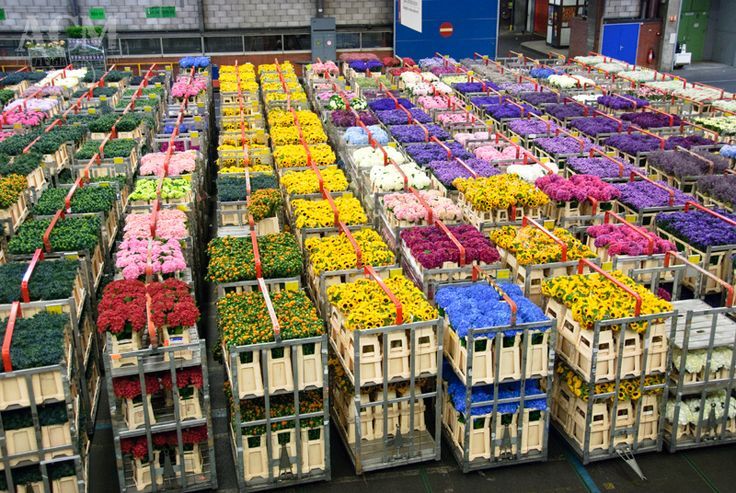
Located in the Netherlands, the Aalsmeer Flower Auction stands as the world’s premier hub for the floral trade. Every day, millions of blooms pass through its halls, with roses serving as the undisputed centerpiece of these international exchanges. Sitting at the intersection of high-stakes logistics, digital auctions, and the global economy, this article breaks down the complex systems that turn delicate, perishable flowers into highly organized, worldwide trade flows. From cutting-edge technological innovations to precision time management and supply chain mastery, Aalsmeer is the ultimate embodiment of the challenges and triumphs within today’s globalized market for the living.
The paradox of the 48-hour rose
Imagine a rose, picked at dawn on the high plateaus of Kenya. It is fresh, still beaded with dew, embedded in the slow rhythm of biological cycles. Yet the very moment its stem is cut, another logic takes hold: urgency. Its death is no longer merely a natural process; it becomes an economic constraint. Time ceases to be neutral—it becomes a hostile variable.
For this rose to appear, intact, in a vase in Paris or Tokyo forty-eight hours later, it is not enough to transport it. Its aging must be suspended, distances compressed, infrastructures spread across several continents synchronized. What is at stake goes beyond logistics: it is an attempt to master time itself.
This is where a fundamental desynchronization sets in. Nature operates in cycles; the economy, in flows. One tolerates waiting, the other erases it. Between the two, Aalsmeer acts as a temporal converter: a device capable of translating a biological rhythm into an industrial cadence.
In this context, the cut flower becomes a paradoxical object. Both a symbol of instantaneity and a product under constant pressure. Unlike wine or cheese, it gains nothing from aging. It is condemned to be sold quickly or lose all value. It thus constitutes a limiting case: an asset whose depreciation is programmed from the moment it enters the market.
Aalsmeer emerges as the response to this radical constraint. It is not merely a market, but an infrastructure designed to organize urgency. From the very entrance, the impression is clear: one does not contemplate flowers, one observes flows. The aesthetic gaze gives way to a logic of circulation.From this first threshold, one idea becomes unavoidable: the flower is no longer simply a natural object turned commodity. It is a unit of compressed time.
Article overview
- The Time Paradox: How the economy compresses the rose’s biological clock.
- Legacy of the Canals: From historical speculation to global centralization.
- Engineering Dormancy: The secrets of cold-chain architecture and putting life on pause.
- The Petal Exchange: A deep dive into the algorithm of reverse auctions.
- The Sensory Interface: When logistical data transforms back into a symbol of emotion.
The Geopolitics of the Petal: Historical Legacy and Global Organization
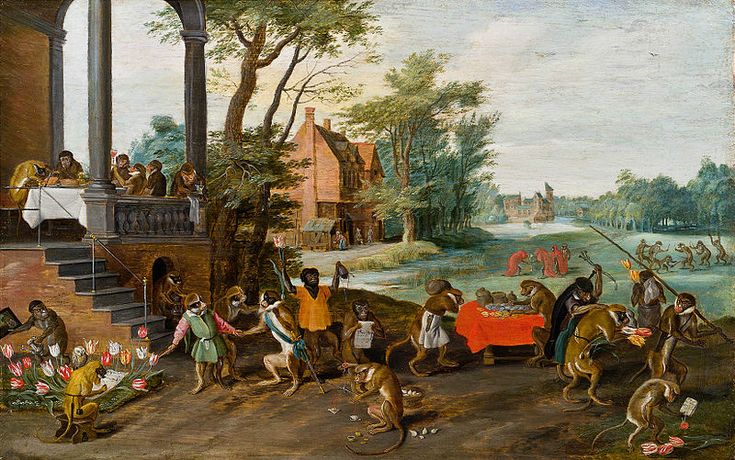
This ability to organize urgency did not emerge overnight. It is rooted in a long history, in which the Netherlands learned to turn vulnerability into strategic advantage.
The episode of tulip mania, often reduced to a speculative curiosity, in fact played a foundational role. It revealed that a flower could concentrate complex economic logics: desire, scarcity, anticipation. But it also highlighted the risks of an unregulated market. The Dutch response was not withdrawal, but organization.
Gradually, a body of know-how took shape: structuring exchanges, standardizing lots, streamlining transactions. Canals, far more than simple transport routes, became the first arteries of this floral economy. They established a spatial continuity that foreshadows today’s digital continuity.
From then on, Aalsmeer is no longer understood as a place, but as a point of convergence. Its strength lies not in its geographic position, but in its capacity for centralization.
At the same time, production shifted. The 20th century marked a decisive separation between cultivation and distribution. Equatorial regions became preferred production centers: stable light, rapid cycles, controlled costs. An abundance made manageable.
This redistribution sketches a networked architecture. The South produces, the North organizes. But this division remains fluid, constantly adjusted by costs, trade agreements, and technical innovations.The result is a functional geography. Political borders fade in favor of logistical corridors. The flower circulates like data in a network.
From this perspective, Aalsmeer acts as a central server: it aggregates global supply and redistributes it according to demand. The geopolitics of the petal thus becomes a geopolitics of tempo—and whoever controls the rhythm controls the market.
Cold-Chain Architecture: Engineering the State of Suspended Animation
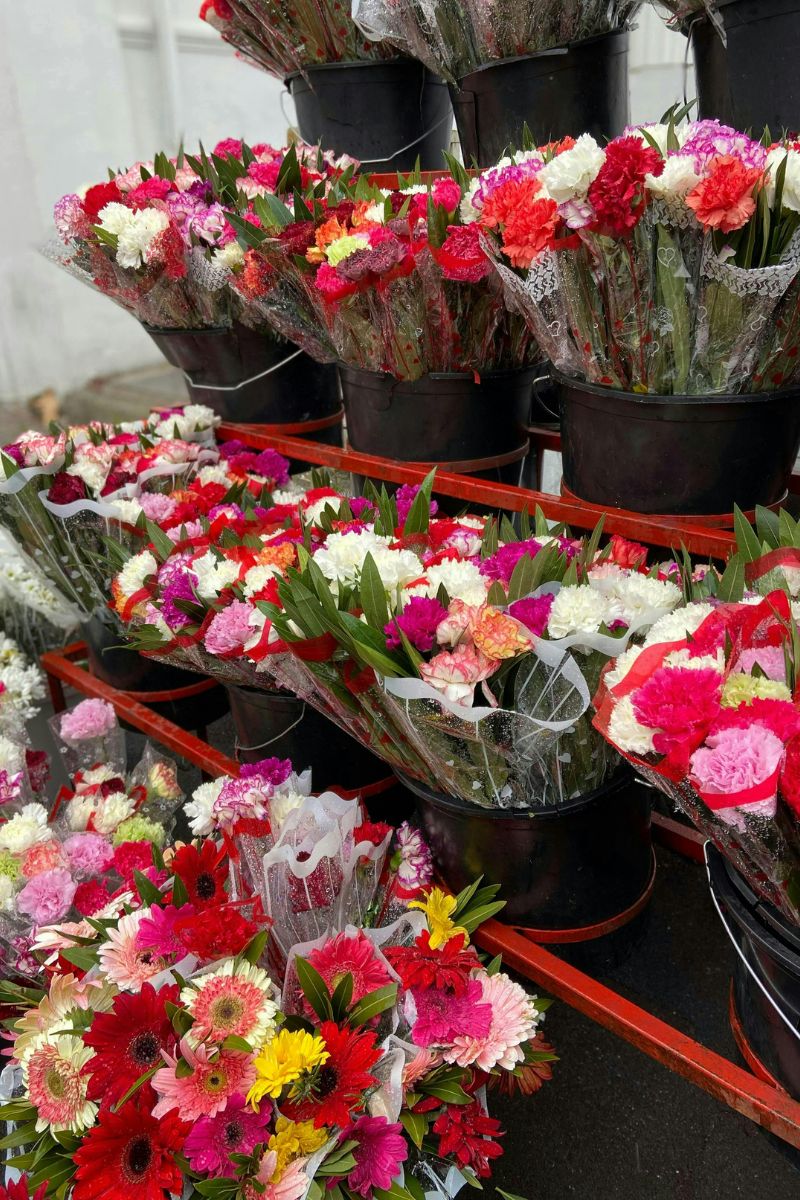
This synchronization rests on a prerequisite: slowing the degradation of living matter. This is the role of the cold chain, the true backbone of the system.The cold chain is not merely a preservation technique. It acts as an interface between two states of the living: growth and suspension. By lowering the temperature, one does not simply preserve the flower—one alters its mode of existence.
The plant enters a form of latency. Its metabolism slows, its chemical reactions stabilize. This is not delayed death, but life put on pause. This suspension makes it possible to inscribe the flower within an artificial time.Around this thermal regulation, other parameters come into play. Humidity must be finely adjusted: too low, and it dehydrates; too high, and it encourages mold. Ethylene, an invisible gas, must be monitored, as it triggers accelerated aging.
What emerges is an artificial ecology: an environment entirely designed to maintain a fragile balance. The flower no longer evolves in its natural setting, but in an optimized one. Certain species, such as the carnation, perfectly illustrate this adaptation to the constraints of transport and preservation.
This logic extends all the way back to production itself. Varieties are selected according to their logistical compatibility: mechanical resistance, thermal endurance, chemical stability.The consequence is major: logistics does not merely transport the product, it redefines what it is. The flower becomes an object designed to circulate.
One can speak here of co-evolution between biology and infrastructure. Technical constraints guide selection, which in turn facilitates circulation. The system gains coherence with each iteration.At Aalsmeer, this transformation reaches its culmination. Each stem is identified, tracked, integrated into a flow of information. The flower thus exists both as an object and as data.
The Aalsmeer Algorithm: Economic Time in Action
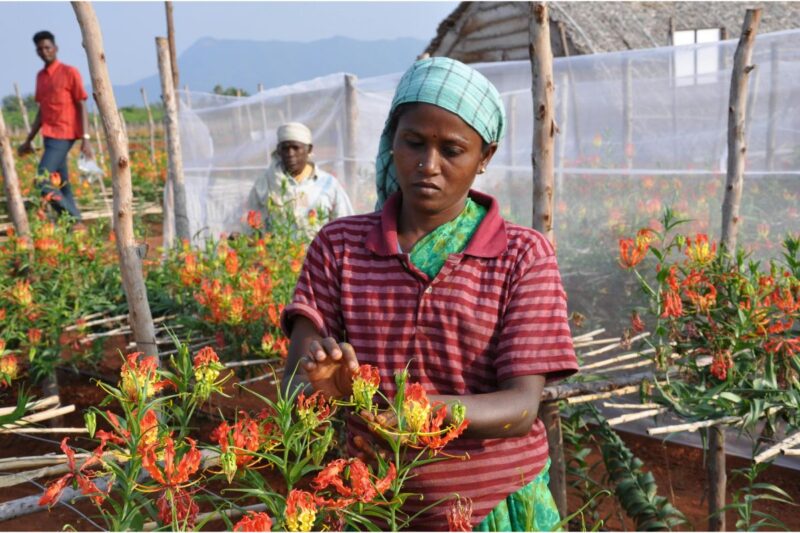
If cold suspends biological time, the algorithm organizes economic time. The auction room constitutes the point of junction between these two regimes.The reverse auction system, often presented as simple, is in fact perfectly suited to the nature of the product. It enables rapid decision-making in a context of uncertainty. The buyer is not seeking an ideal price, but a balance between cost and risk.
This mechanism introduces a strategic dimension. Each actor must anticipate others while assessing the quality of the lot and final demand. Decision time is measured in seconds, favoring a form of expert intuition.
Digitization has amplified this dynamic. Auctions are now accessible remotely, data analyzed in real time. The market becomes partially deterritorialized, while remaining physically anchored. The “waltz of carts” is its concrete translation. Thousands of trolleys circulate continuously through the complex, guided by algorithmic coordination. Every trajectory is optimized, every second counted. The flower, now mobile data, moves frictionlessly from auction to shipment.
The proximity to financial markets is striking: speed, information, arbitrage. The flower becomes an asset traded in a quasi-stock-exchange environment. But unlike a stock, it cannot be stored. This constraint imposes extreme efficiency and makes Aalsmeer a true laboratory of real time.
Standardization and the Erasure of the Seasons: The Logic of Global Logistics
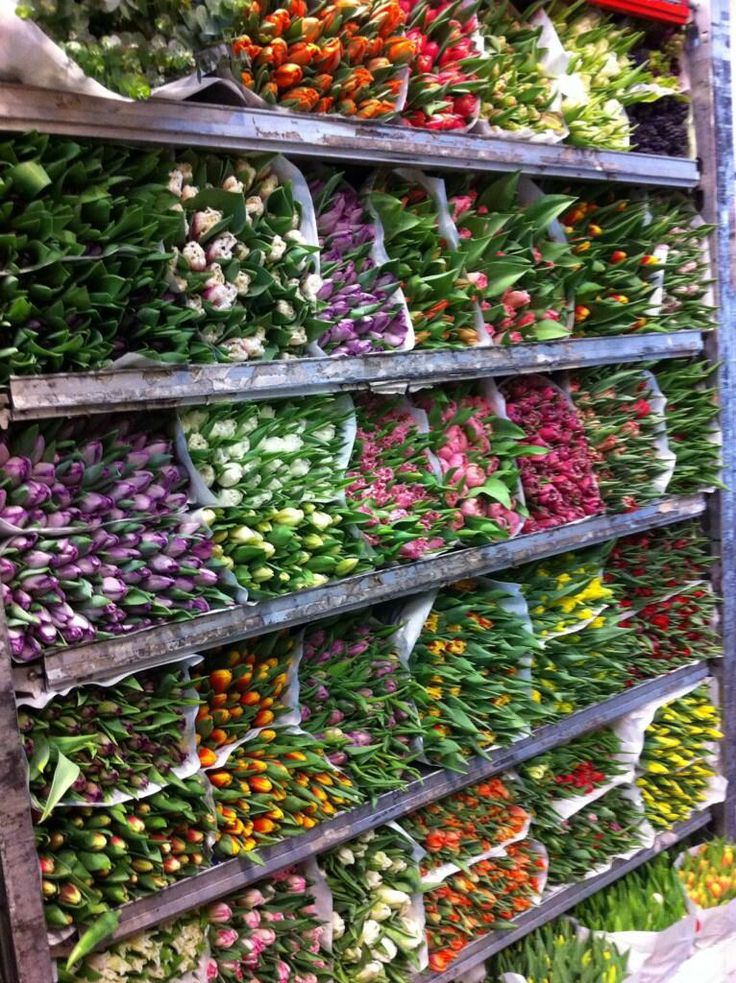
This efficiency rests on an essential condition: predictability. To achieve it, the system reduces uncertainty through standardization. Flowers are classified, calibrated, homogenized. This uniformity facilitates logistics, but also transforms perception. The consumer no longer buys a singular flower, but a category.
Gradually, the season disappears. Roses become available year-round, regardless of their natural cycle. Agricultural time gives way to logistical time. The abolition of the natural calendar allows for winter wonders to bloom—like Christmas Green tulips—where expert forcing transforms the winter solstice into a premature spring.
What we perceive as natural is actually the result of an invisible infrastructure. But this system requires constant trade-offs: local production versus imports, energy consumption versus transportation costs. The balance is always shifting. The goal isn’t to pit one against the other, but to understand the systems themselves. Every choice shifts the constraints. In this way, a simple act—buying a flower—becomes part of a global network of interdependencies.
The Flower as a Symbolic and Social Interface
Beyond economics and technology, the flower retains its symbolic power. It is given, displayed, staged. It connects individuals.What is striking is the coexistence of this symbolic charge with increasing abstraction. At Aalsmeer, the flower is data. In everyday life, it remains a sign. This duality is not a problem; it is the very condition of the system. It allows economic rationality to function without completely dissolving lived experience.
The flower thus becomes an interface: a point of contact between calculation and emotion, between infrastructure and experience. Aalsmeer does not eliminate this tension—it makes it operative.
A Machine for Organizing the Ephemeral
At the end of this journey, Aalsmeer appears as much more than a market. It is an infrastructure that articulates time, space, and the living. The cut flower becomes a hybrid entity: biological, logistical, informational. It circulates within a system designed to reduce friction. But this efficiency comes at a cost: increased dependence on external conditions—energy, flow stability, global coordination.
The future lies between two directions: partially relocalizing to limit dependencies, or further intensifying technology. In both cases, one constant remains: the desire to master time. Aalsmeer is not merely a logistics hub. It is a machine for organizing the ephemeral. And that is, without doubt, where its true singularity lies.
FAQ: Everything You Need to Know About Aalsmeer
Why is Aalsmeer considered the “central server” of the global flower industry?
Because it aggregates supply from the Global South and redistributes it to Northern markets in record time, synchronizing flows like a computer processor.
How does logistics influence the creation of new varieties?
Flowers are now selected for their mechanical resistance and thermal endurance, creating a co-evolution between biology and the constraints of global transport.
What is cold-chain architecture in the floral trade?
It is an optimized artificial environment (temperature, humidity, ethylene) designed to slow down the plant’s metabolism, transforming its natural death into a life put on pause.
Continue Your Exploration
Immerse yourself in the world of flowers through our various themes and discoveries.
Start ExploringReceive Our Next Discoveries
Subscribe ✉️