Long before the flicker of digital screens or the constant updates of a smartphone app, the inhabitants of the countryside—shepherds, winemakers, and humble gardeners—possessed a technology more ancient and more intimate than any meteorological station. They relied on a network of living sentinels: the “barometer flowers.”
These are not merely beautiful blooms; they are highly attuned biological sensors that perceive the shifting pressure, humidity, and light of the atmosphere long before the human senses can detect a change.
What You Will Discover in This Article:
- The Essential Sentinels: Learn to identify the Carline thistle, the Scarlet pimpernel, Red clover, and other botanical allies.
- The Science of Life: Understand the fascinating mechanisms of hygroscopy and phototropism that allow flowers to “feel” a coming storm.
- A Cultural Heritage: Dive into the folklore, proverbs, and peasant traditions that have spanned from the high Alps to the rolling hills of the Basque Country.
- A Practical Guide: Discover how to cultivate your own “weather garden” and decode nature’s signals in your daily life.
The Carline Thistle: The Ancient Sentinel of the Causses
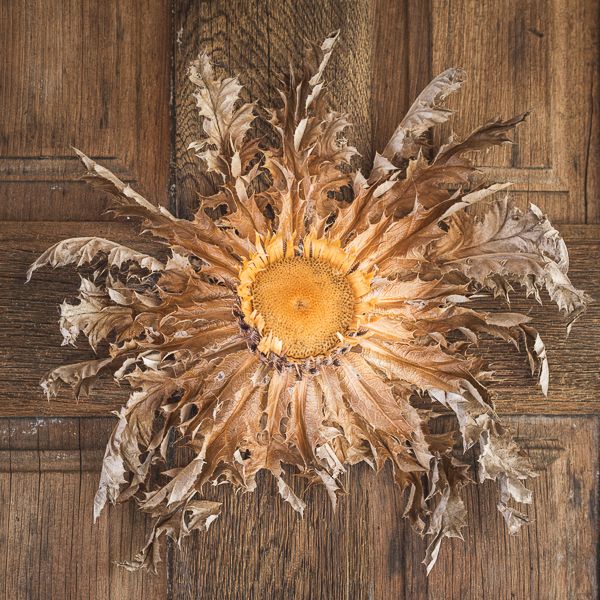
In the rugged, limestone plateaus of the Larzac or the windswept Basque Country, the Carlina acaulis stands as a guardian of the mountain. Pinned to rustic farmhouse doors with a single, rusted nail, the cardabelle is a legacy that spans generations. It is a dry, preserved, yet perpetually “alive” instrument.
When the air is dry, its silvery bracts unfurl like a star, a sure sign of fair weather ahead. But watch it closely: three to four hours before a storm breaks, the bracts draw together, closing into a tight, protective fist. It is an act of self-preservation that has guided generations of mountain dwellers. A dairy sheep farmer in Sainte-Eulalie-de-Cernon once noted: “My grandmother taught me that if the cardabelle is closed by 8 a.m., don’t take the flock out. I learned to trust her wisdom; two hours later, the hail was coming down in sheets.”
The Rose: The Vintner’s First-Responder
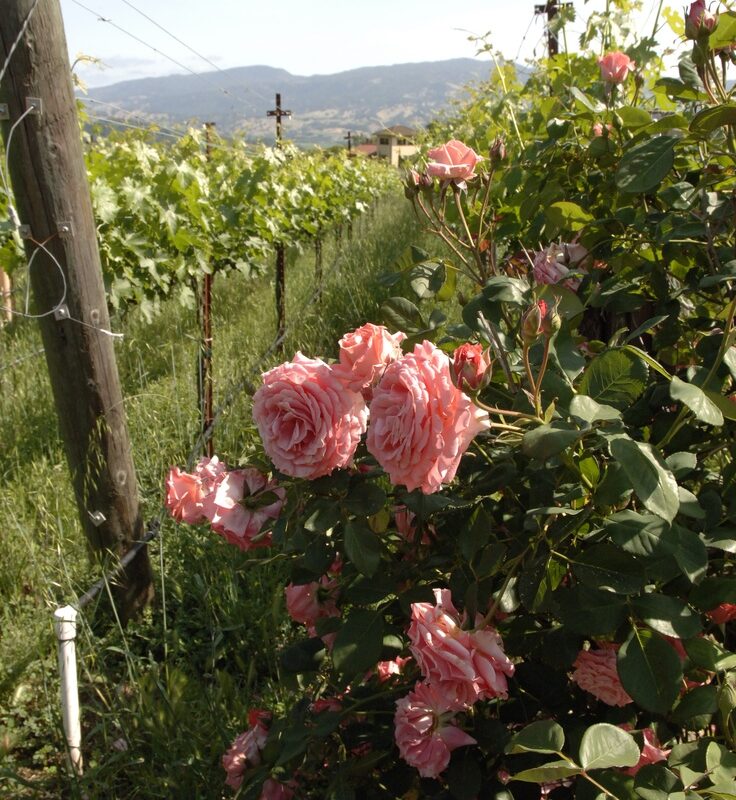
Step into the historic vineyards of Bordeaux or Champagne, and you will notice a rose bush at the end of every row. This is not for the sake of decoration. For centuries, the rose has acted as the vigneron’s most effective biological alarm.
Because species like Rosa canina or Rosa gallica possess a thinner, more porous cuticle than the vine itself, they are the first to succumb to the stresses of humidity—mildew, powdery mildew, and botrytis. They catch the infection two to five days before the grapes, manifesting as blackened petals or spotted leaves. In 2019, an organic vineyard in Saint-Émilion avoided a major systemic treatment entirely by watching their sentinel. On June 12th, the rose signaled the arrival of mildew; by the 14th, a targeted, localized intervention was performed. The harvest remained pristine.
The Meadow’s Clockwork: An Intimate Botany
The art of reading the weather is a subtle, almost secret, language whispered by the meadow.
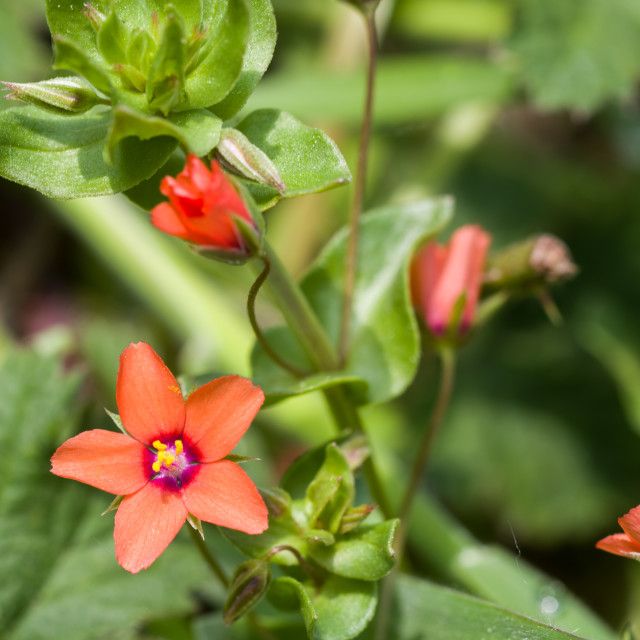
- The Scarlet Pimpernel (Anagallis arvensis): In Ireland and England, farmers once called this the “Haymaker’s Clock.” With its tiny, 5mm scarlet petals, it is a master of punctuality: it opens its face at 9 a.m. in the sun, but should it detect the impending weight of rain, it seals itself shut within thirty minutes.
- The Yarrow (Achillea millefolium): A proud resident of Bavarian and Swabian meadows. Folklore holds that its behavior is a mirror to the sky. As the old proverb goes: “Yarrow bows, weather is fair; it stands tall, rain is near.” When its umbels tilt toward the earth, the sky is clear; when they straighten and lift, the pressure change signals an approaching storm.
- The Red Clover (Trifolium pratense): In Normandy, farmers look to the clover to decide if they need their umbrella. Before a downpour, the leaves lift and press together, forming what is known as a “botanical prayer.”
- The Dandelion & The Daisy: Both are master observers of the day’s rhythm. The dandelion is the “alp-clock” of children: it folds its golden head by 4 p.m. in fair weather, but should the morning start with its head firmly closed, the clouds will dominate the day. The oxeye daisy is more anxious, folding its petals inward a full two hours before a thunderstorm rolls in.
The Biological Engine: Why Do They Respond?
This is not magic; it is the extraordinary efficiency of plant physiology. These responses are driven by hygroscopy—a phenomenon where specialized cells in the stems or petals react to the water-holding capacity of the air. As humidity rises, these cells absorb moisture, expanding and creating internal pressure (turgor pressure) that forces the plant to curl or straighten. Other plants rely on phototropism and thermotropism, reacting to the specific light-intensity and temperature profiles that accompany an approaching weather front.
The Awakening of the Observer: Why Cultivate This Wisdom?
Beyond the practical utility, cultivating these flowers forces us to slow down. In a world governed by the immediacy of notifications, watching a daisy close before a storm is an act of sensory reconnection. It is a transition from being a “consumer of data” to being an “observer of life.” These plants are not just tools; they are silent witnesses that remind us we are an integral part of the climatic cycle. Learning to read them is a form of sovereignty: the freedom of no longer relying solely on a screen to decide when to bring in the hay or protect the seedlings.
A Guide to Creating Your Own “Weather Garden”
If you wish to transform your garden into a climatic sentinel, start with a selection tailored to your environment:
- For the urban balcony: The Dandelion or Daisy are perfect. They only need a few rays of sunlight to reveal their moods.
- For high-traffic areas: Red Clover is a marvel of resilience. Plant it near your front door; its “botanical prayers” are among the most legible signals before a downpour.
- For the vegetable gardener: The Scarlet Pimpernel is the perfect ally. It reseeds easily and forms a living carpet that will tell you, first thing in the morning, whether it is a day for weeding or a day to stay indoors.
A Science of the “Future Anterior”
What is fascinating about these “barometer flowers” is that they offer us a science of the future anterior: they show us what will have been the weather a few hours before we feel it ourselves. While we spend millions refining our digital forecasts, nature continues to operate with startling precision, simply by adjusting the internal pressure of its cells.
In cultivating these sentinels, you are not just planting flowers; you are restoring a forgotten dialogue between the earth and the sky. The next time the clouds gather, don’t reach for your phone. Watch your clover, observe your yarrow, and listen to what the garden has to tell you. Nature has been trying to share the forecast all along—if only you know how to look.
If you enjoyed discovering these biological indicators, you will find plenty more stories about the connection between nature and human history in our Folklore & Traditions category.
Explore our themes through the “Flower Collection” tab, or return to the heart of our world:
GatewayFAQ : Vos questions sur les fleurs baromètres
Can I really trust a flower to predict the weather better than my phone app?
While digital apps rely on broad satellite data, your flowers rely on the actual local microclimate of your backyard. They don’t just predict the weather; they feel it. While they might not be as precise as a professional meteorologist for a long-range forecast, they are often more accurate for what’s happening in your immediate vicinity within the next few hours.
Do I need a “green thumb” to keep these barometer flowers alive?
Not at all! Most of these, such as dandelions, clover, and yarrow, are remarkably resilient, native, and easy to maintain. They thrive with very little intervention, making them perfect for both beginner gardeners and seasoned homesteaders.
How long does a dried cardabelle (carline thistle) actually last?
You’d be surprised! A properly harvested and mounted cardabelle can remain reactive to humidity for decades. It’s a beautiful, functional piece of history you can pass down through generations.
Is it safe to pick wild plants like the carline thistle for my door?
Always practice sustainable foraging. Ensure the species is not protected in your local area and only take what you need. Better yet, try growing a small patch of these “sentinel” flowers in your own garden so you can observe them year-round without disturbing the wild meadows.
Ready to start your own living forecast?
Pick your favorite from the list above and plant it this season. You’ll be surprised at how quickly you start “reading” the garden—and how much more connected you feel to the rhythm of the sky.