What you will discover in this article
Un parfum sous la lune
In the sacred forests of Vrindavan, beneath a sky studded with stars, the holy jasmine — a white star of the night — releases a fragrance that sets hearts trembling. Around 300 BC, legend whispers that Krishna, god of divine love, caused a celestial jasmine tree to spring forth in order to soothe two rival loves. In Pétales d’histoire, uncover the meaning of jasmine, its timeless symbolism, and the part it plays in the steaming teacups of China.
Jasmine in Indian Mythology: Krishna’s Flower
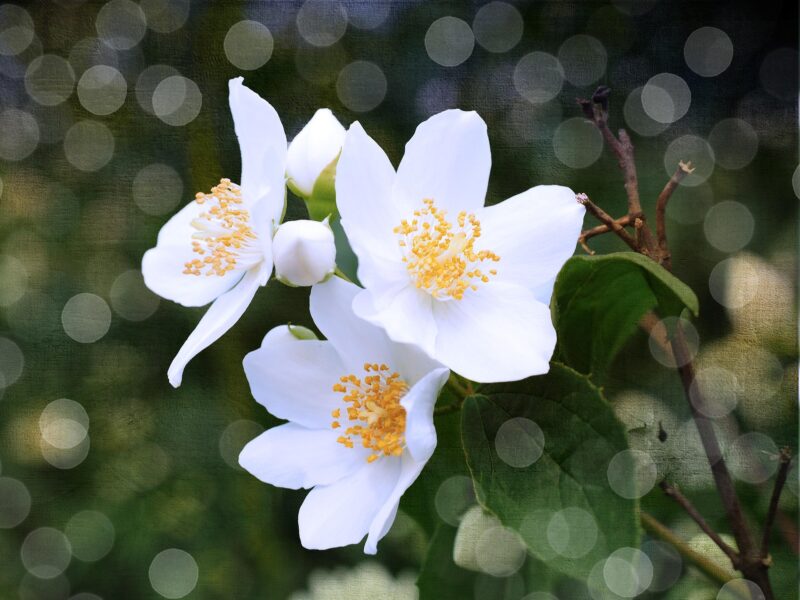
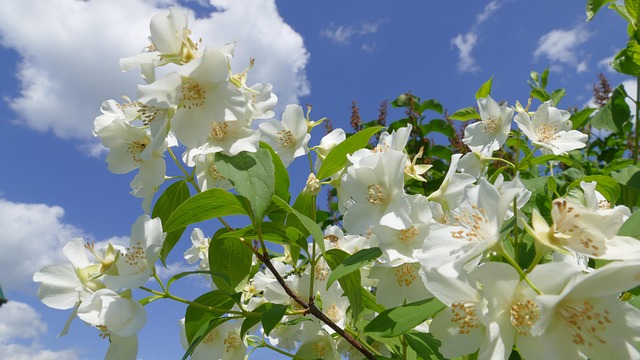
Around 300 BC, in Vrindavan, Krishna—the divine flute-player and lover—received a rare bloom from the sage Narada: the Parijat, a sacred nocturnal jasmine. According to the Bhagavata Purana (trans. A.C. Bhaktivedanta Swami, 1970), this white flower with an orange heart unfurled beneath the moon, intoxicating souls. Krishna bestowed it upon Rukmini, his beloved. Yet Satyabhama, green with envy, demanded the entire tree. With a mischievous twist, Krishna planted it in Satyabhama’s garden, but angled its branches so that the petals drifted to Rukmini’s threshold at dawn.
This gesture, recounted in the Harivamsa (trans. M.A. Mehendale, 1995), transformed jasmine into a symbol of eternal love, woven into the rituals of Mathura. Indeed, a legend whispers that a gopi, moved by the Parijat, shed a tear upon its petal, which then glowed under the moonlight. Thus, this sacred jasmine became a bridge between the earthly and the divine. [Sources: Bhagavata Purana, 1970; Krishna: The Supreme Personality of Godhead by E. Schweig, 2005; Harivamsa, 1995]
Jasmine in Arabic Poetry: A Symbol of Love
In the Arab world, the sacred jasmine, with its pristine white petals, has bewitched poets. In the 10th century, Al-Mutanabbi sang in his Diwan: “The sacred jasmine blooms like stars, its scent a vow of love.” These verses, murmured in Baghdad, adorned fountains of jasmine, as chronicled in the Abbasid annals. Moreover, the perfumed gardens of Samarra became poetic sanctuaries.
The jasmine of Damascus grows in my hand,
As I tread the bridge of the day,
Jasmine that fills the world with fragrance,
And teaches me to hold fast without crumbling.
— adapted from Nizar Qabbani
Carried along the Silk Roads, jasmine – symbol of love and the divine quest – has inspired India, Europe, and the Sufis alike. Today, it still binds the verses of Al-Mutanabbi to the groves of Vrindavan, an ageless caress.[Sources: Poems of Al-Mutanabbi, trans. A.J. Arberry, 1967; The Abbasid Caliphate by H. Kennedy, 2016; External link: Jasmine in Islamic Culture]
The Virtues of Jasmine Tea: A Chinese Tradition
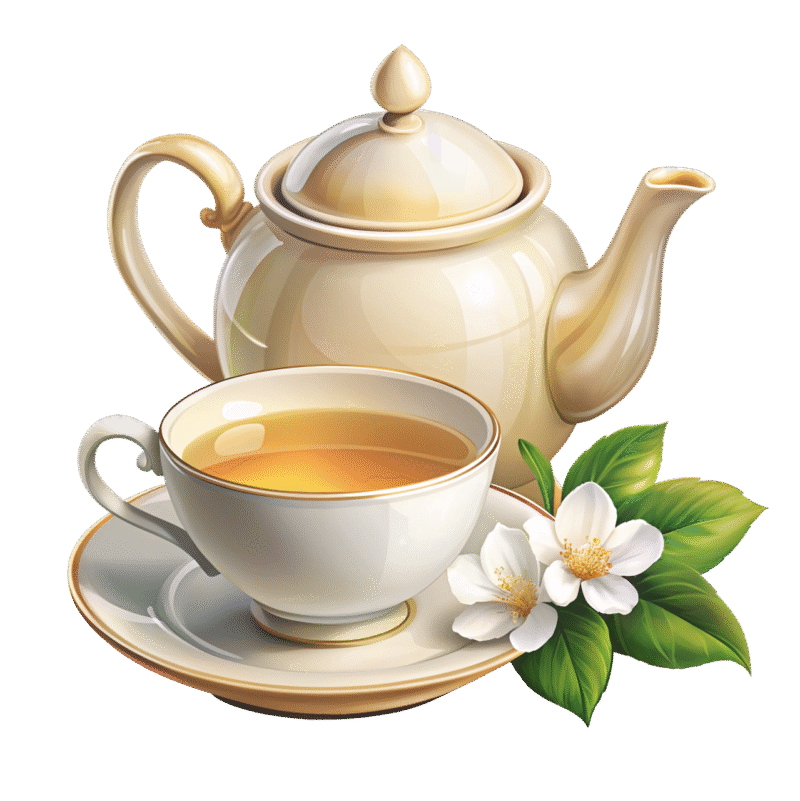
Jasmine, the white star of sacred nights, still perfumes souls in the teacups of China. Born under the Song dynasty (960–1279), jasmine tea—or mòlìhuā chá—marries its delicate petals to green tea, a ritual in which the flowers, plucked at dawn, open beneath the dew in Fuzhou, the “city of jasmine”.
In imperial salons and the bustling lanes of today, its gentle warmth soothes, evoking the gardens of Vrindavan. At Hengxian, gatherers repeat an age-old craft, blending the petals with tea up to seven times for the finest brews—a breath of love in every sip. The benefits of jasmine tea include its calming effects and antioxidants, cherished from imperial chambers to modern alleyways.
* Vrindavan in Uttar Pradesh, Vrindavan in Uttar Pradesh – the holy city forever linked to Lord Krishna – where jasmine (especially Jasminum sambac, known locally as “motia”) is omnipresent in the gardens, woven into garlands for temple offerings, and central to sacred rituals. The town is renowned for its deep connection to Krishna, whose legends tell of playful, amorous dances in fragrant groves almost always adorned with jasmine, the flower of purity and love.
Today, urban youth savour this tea in sleek bottles or hushed ceremonies, its aroma linking yesteryear to hurried mornings. In the fields of Guangxi, jasmines still sparkle, an echo of Krishna’s divine vows. This flower, woven from memory, remains an eternal caress, a whisper of stars in a steaming cup. (Source: Chinese Tea Culture by Wang Ling, 2001)
A Petal of Eternity
The jasmine, heaven’s gift from Vrindavan, murmurs of love and divinity through the ages. From its meaning in Indian mythology to the verses of Al-Mutanabbi and the virtues of jasmine tea, its petals weave a timeless tale.
Reflections on this Blossom
Deepen your journey with these dedicated chronicles:
Explore our themes through the “Flower Collection” tab, or return to the heart of our world:
GatewayFAQ FAQ: Jasmine – Meaning and History
What does jasmine most commonly symbolise?
Eternal love, divine beauty, and a tenderness that endures through time – whether in Indian mythology, Arabic poetry, or the Chinese tea tradition.
Where does the legend of Krishna’s jasmine come from?
From the Bhagavata Purana and the Harivamsa: the Parijat, a night-blooming sacred jasmine offered by the sage Narada, opens only under the moon and drops its blossoms each dawn at the feet of Rukmini, Krishna’s beloved.
Why are Arab poets so enchanted by jasmine?
As early as the 10th century, Al-Mutanabbi compared it to scented stars; in the 20th century, Nizar Qabbani saw it as the flower “that grows in my hand” and teaches one to love without breaking.
Can we still feel today what jasmine symbolised 2,000 years ago?
Absolutely: a garland offered in Mathura, a steaming cup in Fuzhou, or a waft of jasmine perfume in a Damascus alley… the same promise of everlasting love still drifts through the air.