The carnation is that flower which carries within it two souls: one ardent and rebellious, the other delicate and almost shy. One need only look at it to understand that it has never chosen between the barricade and the bouquet.
A Flower with a Burning Heart
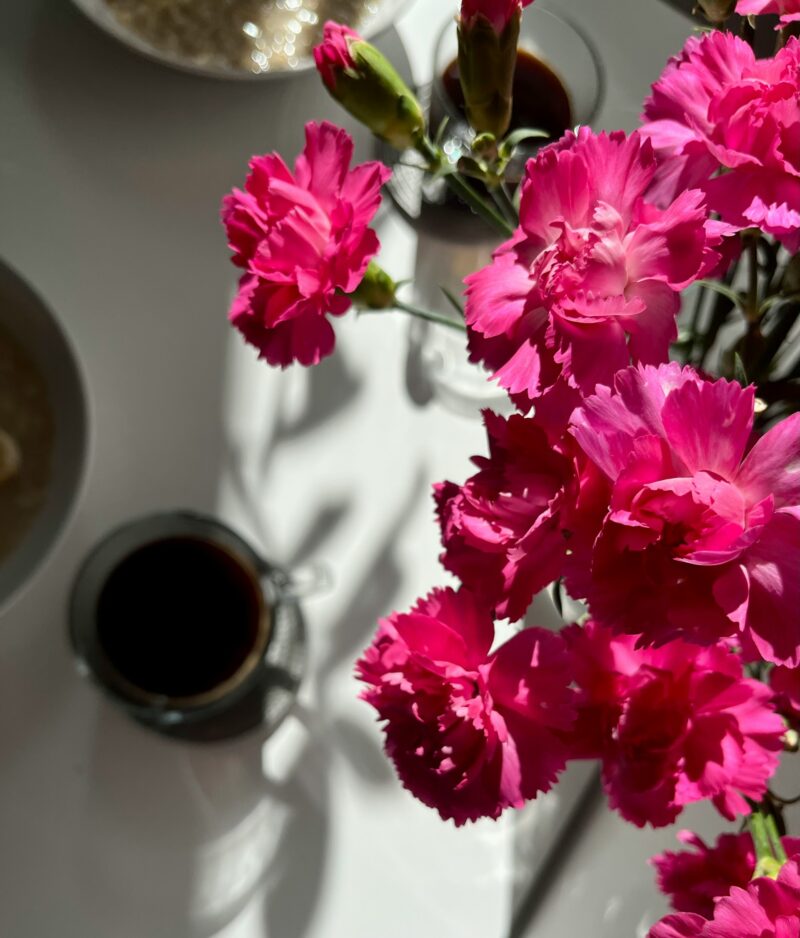
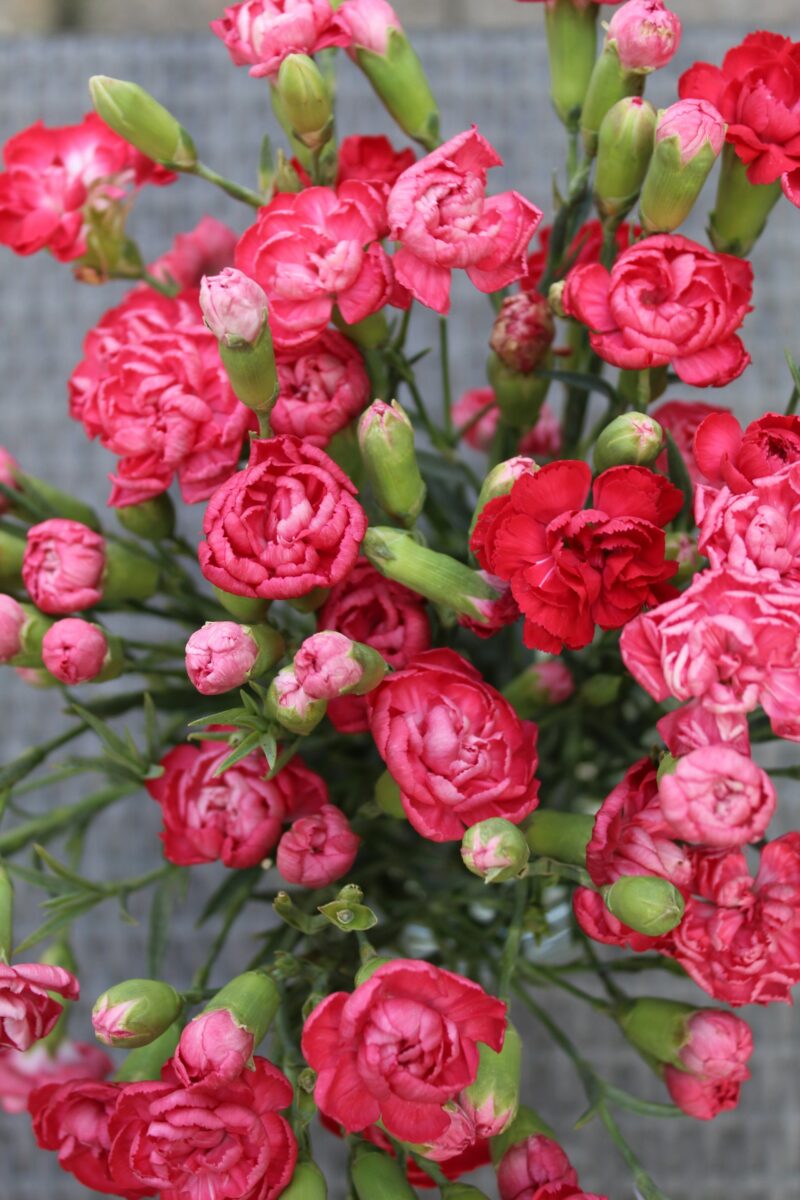
The carnation, with its fringed petals and peppery scent, is no ordinary flower. Its name, Dianthus (“flower of the gods”), calls to mind Roman wreaths, yet its soul beats deep within human history. Red as the blood of revolt, white as a farewell, pink as a hope held close, the carnation tells centuries of struggle and remembrance. From the barricades of the French Revolution to the flower-strewn squares of Portugal, it blooms wherever humanity dreams, fights, and remembers. In gardens across the world, the carnation is a living poem, a petal that defies time.
A Flower Born Beneath the Gaze of the Gods
The Greeks called it the “flower of Zeus” – dios anthos – from which its learned name Dianthus derives. They used it to crown the victors of the games, poets, and even the illustrious dead. Pliny the Elder relates that the carnation would spring up of its own accord on the graves of heroes, as though the earth itself still wished to pay them homage.In mythology, it is sometimes linked to Artemis: a nymph, transformed into a carnation by the jealous goddess, kept for ever her serrated petals, like tears frozen in time.
The Political Carnation: When a Flower Topples a Dictatorship
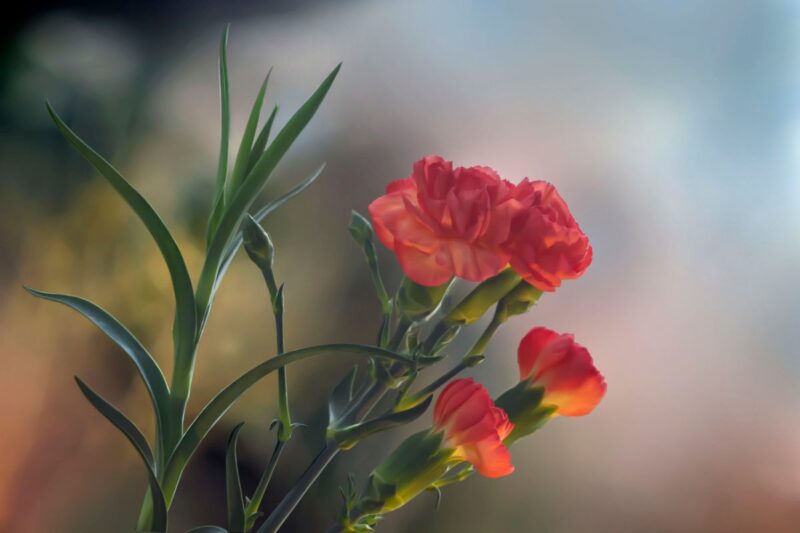
On 25 April 1974, in Lisbon, soldiers slipped red carnations into the barrels of their rifles. Not a single drop of blood was shed that day. Salazar’s dictatorship – the longest in Europe – crumbled beneath a shower of petals. Ever since, the red carnation has stood as the emblem of gentle revolutions, the kind that choose the flower over violence.Long before Portugal, it had already played its part: in Franco’s Spain (where the red carnation was banned at demonstrations), in France where workers wore it in their buttonholes on May Day, in Austria where the Social Democrats brandished it against the rising tide of fascism in 1934. It is the flower of a people who rise up without hatred.
The Secret Language of Carnations
In Victorian times, offering a carnation was never an innocent act:
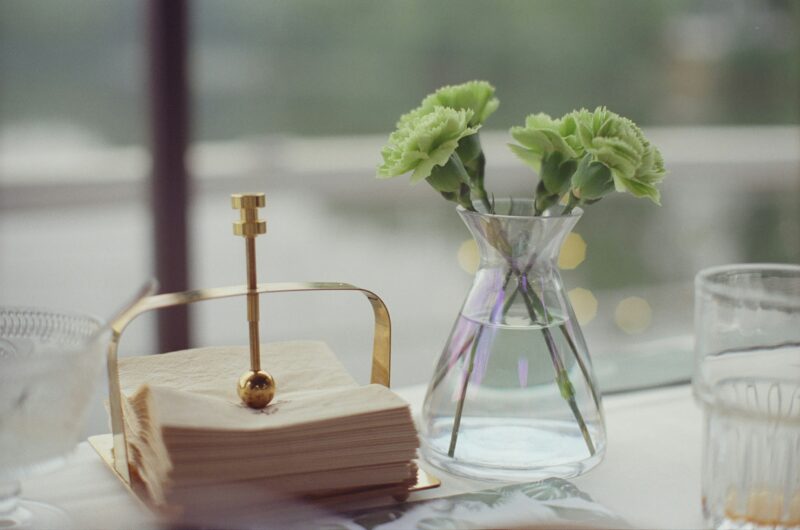
It might be tucked into a buttonhole, pinned to a bodice, or secretly slipped inside a letter. Oscar Wilde, an ardent devotee of artificially dyed green carnations (the quintessential dandy’s badge), very nearly made it the standard of fin-de-siècle aestheticism.
A Charming Anecdote:
In the 1880s Oscar Wilde strolled through London sporting a green carnation, a deliciously decadent act of rebellion. These carnation-coded memories tie the ages together, from the shadow of the guillotine to the sunlit squares of freedom.
The Carnation in Culture and the Arts
Picasso placed a blazing red carnation in the hands of a figure in Guernica.
García Lorca sings of it in his Andalusian verses as “the flower that tastes of blood and honey”.
On stage, flamenco dancers still pin it into their jet-black hair.
At Provençal or Italian weddings, the groom’s buttonhole is more often than not a white or red carnation.
The Carnation in History: Revolts and Memory
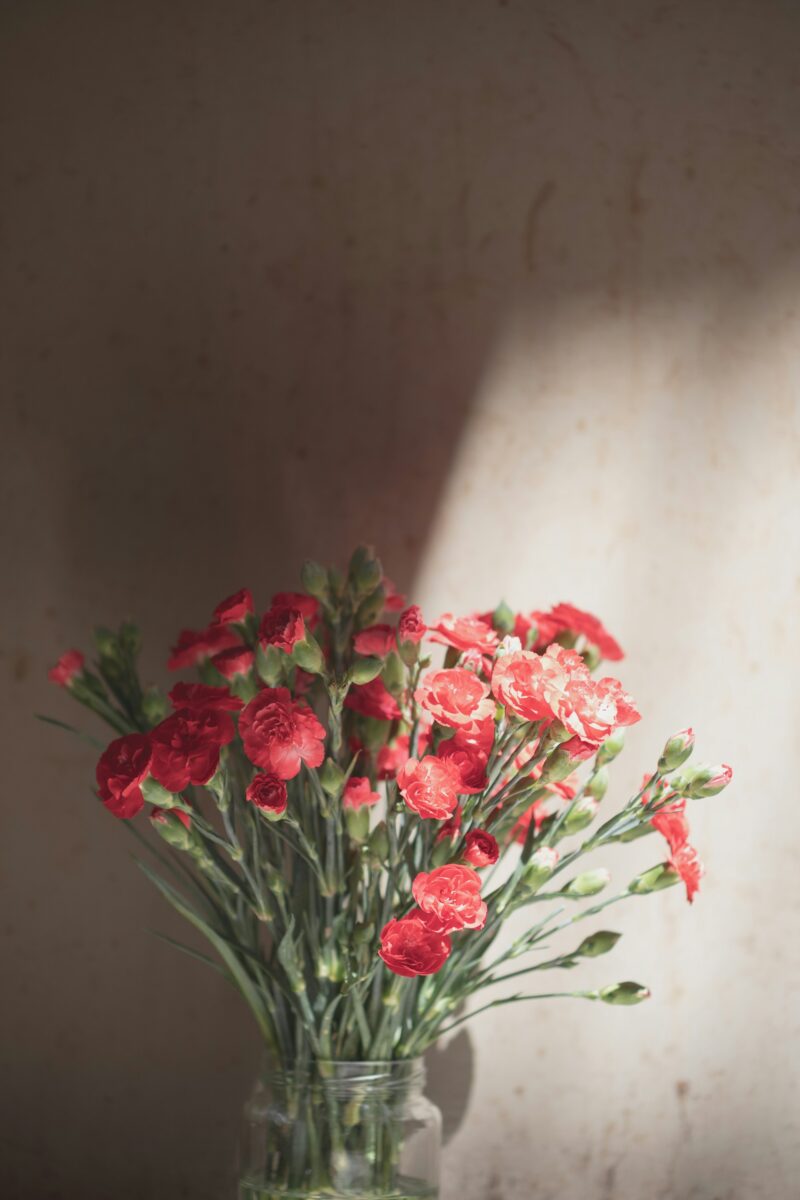
The carnation carries the echo of upheavals. In 1793, during the French Revolution, those condemned to the guillotine wore red carnations as a mark of courage in the face of death. The Carnation Plot, a romantic and desperate attempt to save Marie-Antoinette, concealed secret messages within its petals, a daring but ultimately futile gesture.
In the nineteenth century, the red carnation became the emblem of the working class, adorning the buttonholes of socialists at the first May Day celebrations in France and Germany. Then, in 1974, Portugal’s Carnation Revolution turned rifles into bouquets: a flower-seller named Celeste Caeiro handed red carnations to the soldiers, and a single petal halted a tank, an image that has since become a global icon of peace.
Gardens of the World: The Carnation, Star of Human Landscapes
In historic gardens, the carnation weaves its quiet stories. In the Middle Ages, its white petals adorned the cloisters of Europe (the so-called “Mary Gardens”), emblems of Christian purity. Monks steeped them in infusions to soothe both fevers and troubled souls.
In the nineteenth century, the working-class gardens of Paris (Parc Monceau) and London (Hyde Park) saw red carnations bloom at socialist gatherings. In Africa today, Kenyan permaculture plots plant them as a natural insect repellent (as confirmed by agronomic studies).
A charming aside:
the Parisian “œilletiers” of the 1800s sold their posies along flower-lined avenues, blending poetry with trade (as immortalised in old engravings). From cloister to modern square, the carnation still flowers wherever history is written.
A Touch of Gentle Botany
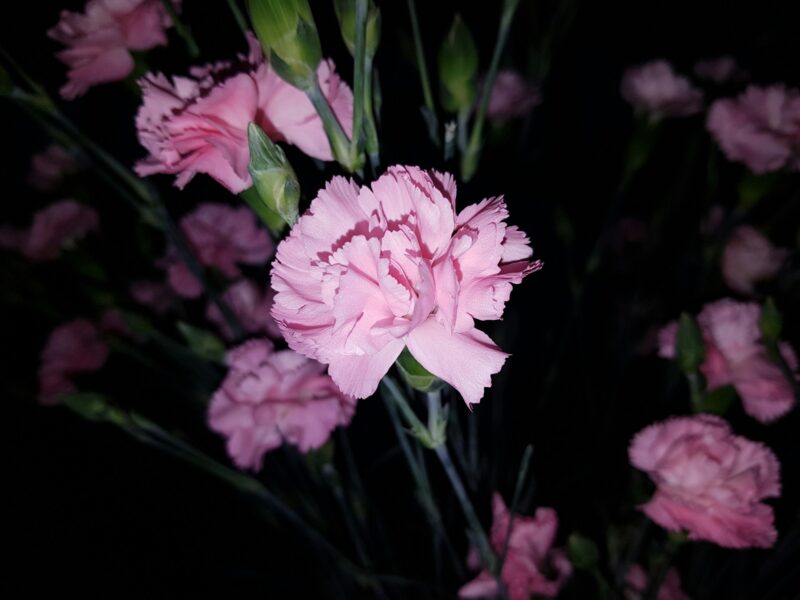
The florists’ carnation (Dianthus caryophyllus) hails from the Mediterranean coast. It thrives in scorching sun and poor, stony soil – a plant of quiet defiance. In the 19th century, hybridisers, especially in England and around Nice, created thousands of varieties: the plump, pom-pom-headed Chabaud carnation, the poet’s carnation with its delicately fringed petals, the dainty miniature mignardise…
Its scent? A singular blend of clove (hence the English name “clove pink”) and peppery rose. It remains one of the few flowers from which an absolute is still extracted for high perfumery (think Joy by Jean Patou, Œillet Sauvage by L’Artisan Parfumeur…).
A Timeless Petal
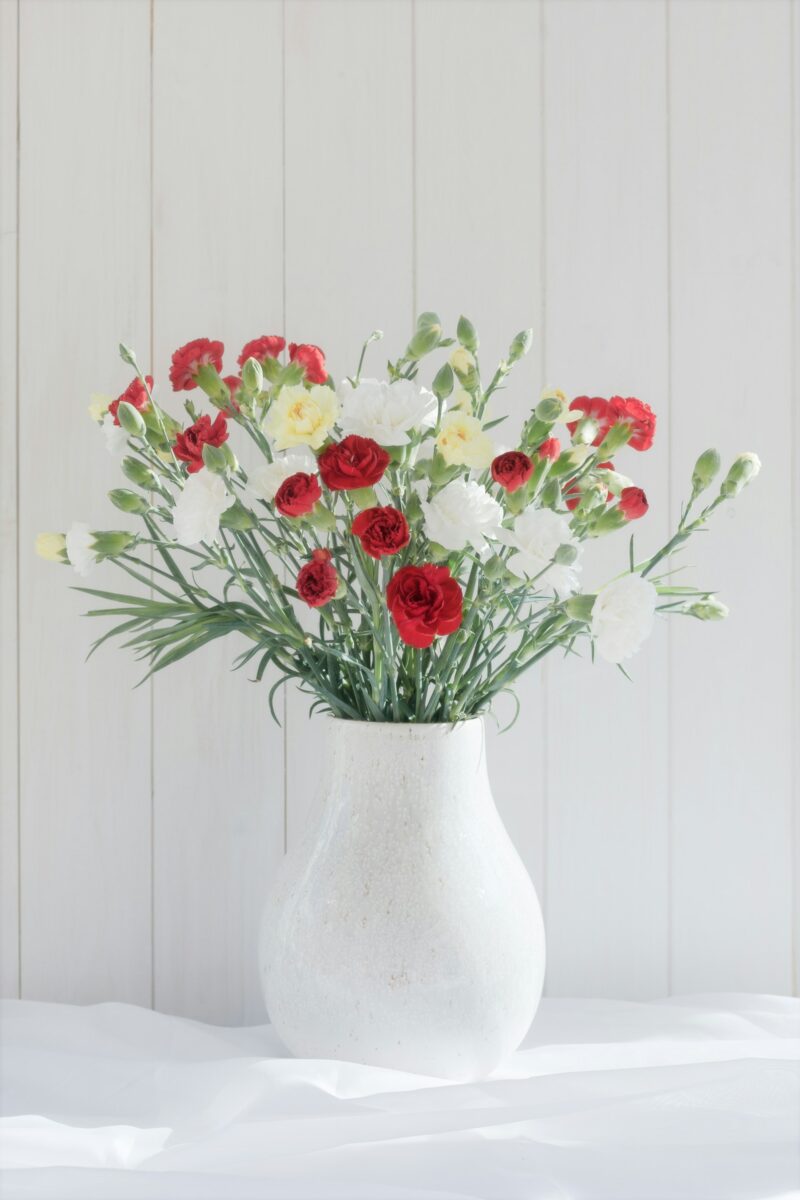
The carnation – red as a shout, white as a farewell – is a flower of contrasts. It honours mothers who have passed away (Mother’s Day in the United States, begun in 1908) and once perfumed Victorian wines, lending a refined flourish to the art of living (see the recipes of Mrs Beeton). Whether in the gardens of the world or amid uprisings, it remains a keeper of memory. Discover its secrets in our stories of historic gardens and symbols of revolt. Red, white, or pink, the carnation beats in time with the human heart – a single petal that blossoms wherever hope is reborn.
Explore our themes through the “Flower Collection” tab, or return to the heart of our world:
GatewayCarnation FAQ
What does a red carnation mean?
The red carnation symbolises deep, passionate love, but also revolt and working-class solidarity. It is the emblematic flower of Portugal’s Carnation Revolution (1974) and of May Day in France and Belgium.
[Image: red carnations in rifle barrels]
Why do we speak of the “Carnation Revolution”?
On 25 April 1974 the Portuguese overthrew Salazar’s dictatorship without a single act of violence: soldiers placed red carnations in the barrels of their rifles and the people offered flowers to the troops. The red carnation has since become the universal symbol of peaceful revolutions.
[Image: soldiers receiving carnations from the crowd]
What is the difference between a florist’s carnation and a poet’s carnation (sweet William)?
The florist’s carnation (Dianthus caryophyllus) is the large, highly scented bloom you find at the florist’s. The poet’s carnation or sweet William (Dianthus barbatus) is smaller, grows in clumps, and often forms colourful, multi-hued bunches in cottage gardens.