The tulip, with its velvet petals and radiant hues, has cast a spell over artists for centuries. In the heart of the Ottoman Empire, it stood as an incarnation of majesty and the sacred; yet, during the Dutch Golden Age, it transformed into the protagonist of an artistic and speculative frenzy known as “Tulipmania”. To grasp the full breadth of this legend—from its botanical roots to its divine symbolism—we invite you to wander through our foundation: Tulips: History and Symbolism. This chronicle escorts you from the palatial splendor of Istanbul to the sun-drenched studios of Amsterdam and the ephemeral blooms of Keukenhof.
- The Mues of History: How the tulip evolved from a “turban” symbol to a “Vanitas” masterpiece in Western art.
- The Fever of Tulipmania: The 17th-century speculative bubble where a single bulb commanded the price of an Amsterdam canal house.
- The Tulip Era (Lale Devri): The flower’s profound influence on poetry, architecture, and melody under Sultan Ahmed III.
- Contemporary Legacies: The modern role of Keukenhof in perpetuating this grand floral tradition.
Tulips in the Ottoman Empire: An Icon of Splendor
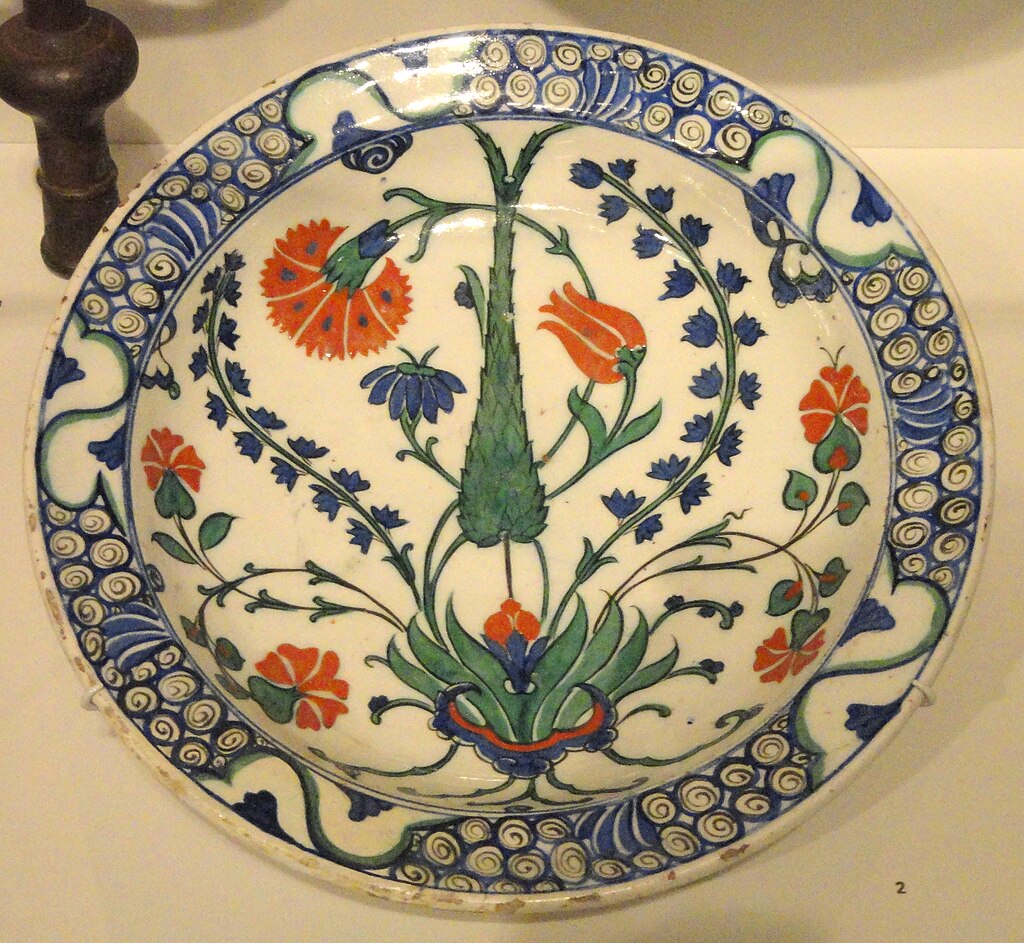
In the Ottoman Empire, tulips transcended their botanical essence to become emblems of prestige and spirituality. Their name, derived from the Turkish tülbend (turban), evoked the effortless elegance of the elite—an aura magnified upon their adoption by the court in the 16th century. The “Tulip Era” (Lale Devri), spanning from 1718 to 1730 under Sultan Ahmed III, consecrated these blossoms as cultural jewels.
They flourished within poetry, melodies, and the pictorial arts, adorning palaces, mosques, and noble estates with refined motifs. Whether depicted on glazed ceramic tiles, silken fabrics, or illuminated manuscripts, the tulip served as a celebration of celestial beauty. Furthermore, its spiritual resonance was profound: in Turkish, the word for tulip, lale, shares the same letters as Allah, imbuing the flower with a sacred breath.
Consequently, they did not merely decorate; they inhabited the very architecture of the empire, with domes and minarets echoing their graceful silhouette. The Fountain of Ahmed III, erected in 1728, stands as a testament to this, blending Ottoman floral motifs with European Baroque influences in dazzling harmony. In the miniatures of Levni, the era’s emblematic painter, tulips bloomed in courtly scenes, adding a touch of opulence to these rich tableaus. The Ottoman tulip was never a mere ornament; it was a messenger of faith, power, and timeless elegance.
From the Sublime Porte to Amsterdam’s Canals
While the tulip shone in Ottoman art as a symbol of divinity, its journey toward Europe marked a pivotal turn in its legend. Through diplomatic exchanges under Suleiman the Magnificent, bulbs were brought to Vienna by Ambassador Ogier Ghiselin de Busbecq in 1554, eventually reaching the fertile soils of the Netherlands. This Ottoman lineage bestowed a prestige upon the tulip that enthralled the Dutch, transforming an Oriental flower into a European icon. From that moment, the Dutch Golden Age adopted the flower as a symbol of wealth amidst an unparalleled artistic effervescence.
The Dutch Golden Age and Tulipmania: An Ephemeral Passion
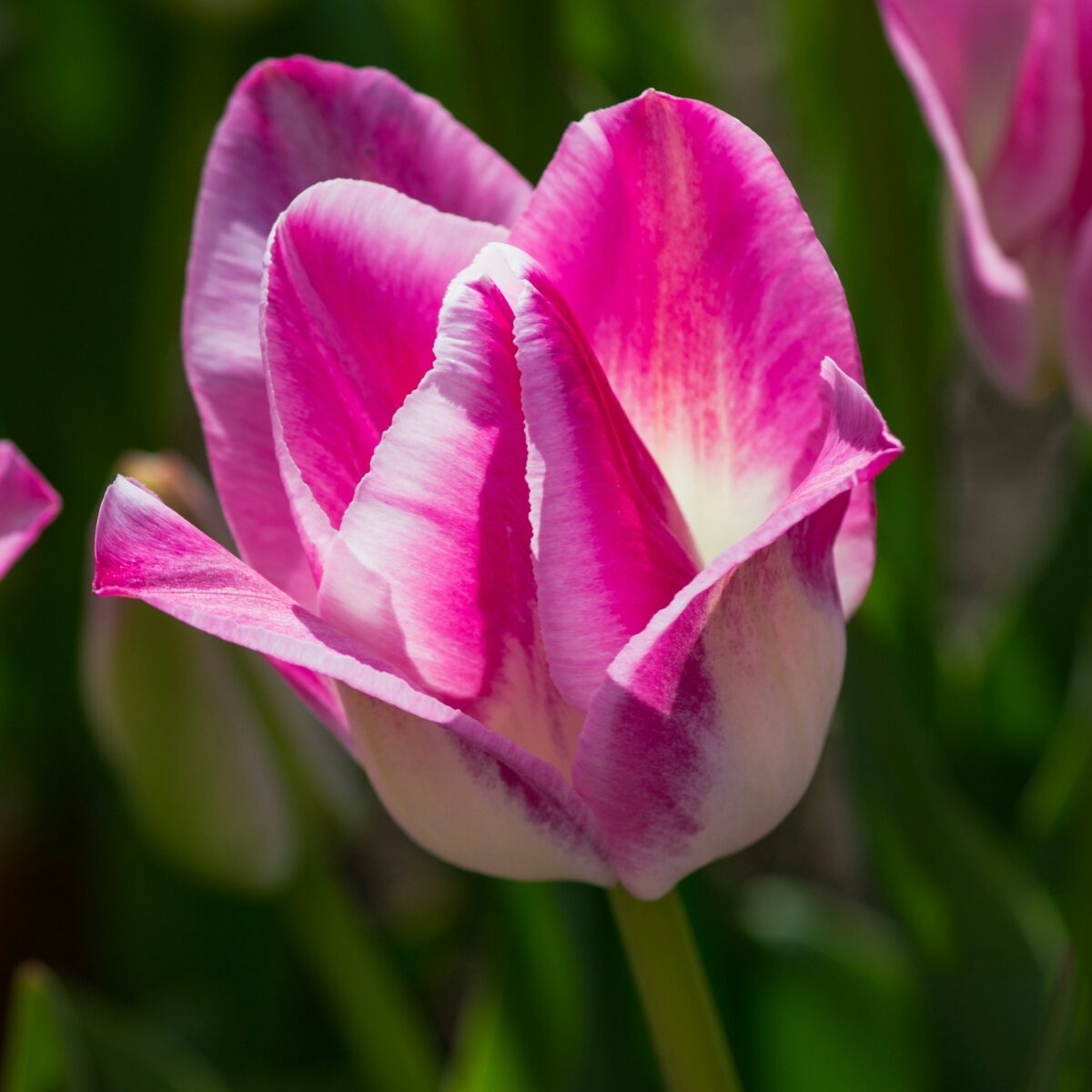
By the 17th century, tulips had risen to the rank of coveted gems, emblems of opulence. Their introduction to the Netherlands in 1593 by botanist Carolus Clusius ignited a fervor that culminated in 1637 with the infamous Tulipmania.
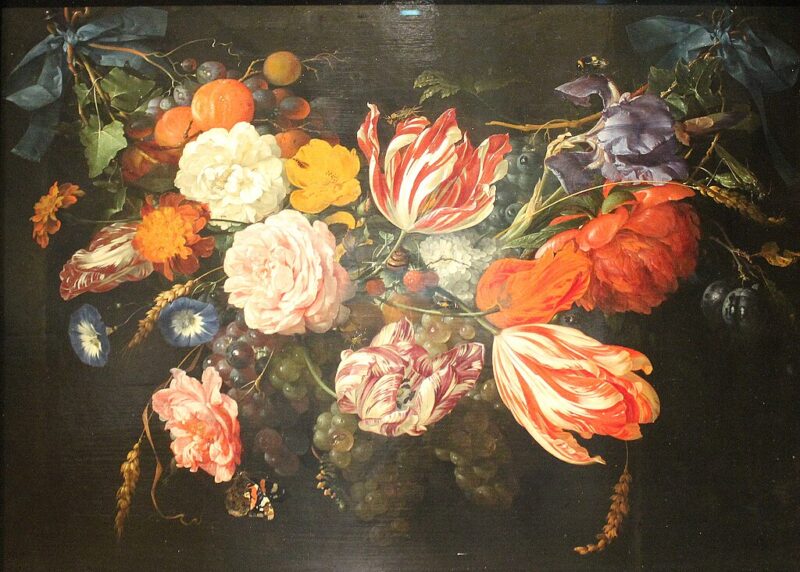
The Semper Augustus: The Zenith of the Fever During the height of Tulipmania, certain bulbs reached absurd valuations. The famed Semper Augustus, for instance, was traded for sums rivaling the price of Amsterdam’s most palatial homes, symbolizing the extravagance of this financial delirium. This madness was not confined to markets; it saturated the art world, invading the studios of the Great Masters. Painters such as Hans Bollongier and Ambrosius Bosschaert captured them in still lifes (or vanitas), where the tulip—both precious and fleeting—shone at the heart of compositions heavy with symbolism.
While these canvases exalted the tulip’s splendor, they also invited a deeper meditation. In the vanitas tradition, these works prompted viewers to contemplate the transience of life; the tulip embodied a fleeting beauty in the face of the inevitable passage of time. Watercolors, often created as “tulip books” to guide collectors in their quest for rare bulbs, captured the delicacy of the petals, while majestic oil paintings staged them in opulent bouquets—symbols of both wealth and vanity. Following the brutal market collapse of 1637, the tulip became a poignant metaphor for the ephemeral. In Dutch art, they no longer merely celebrated magnificence; they whispered a lesson on the impermanence of earthly glory.
Keukenhof : Une symphonie éphémère
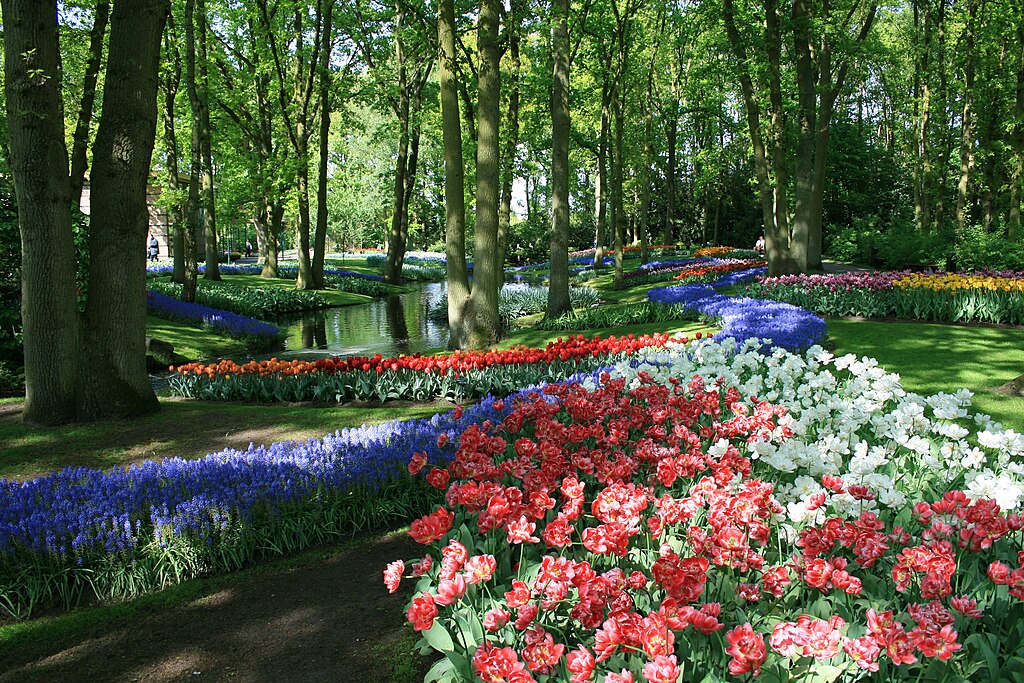
Keukenhof, known as the “Garden of Europe,” carries the tulip’s legacy into the contemporary era. Every spring, from mid-March to mid-May, this Dutch park ignites with millions of bulbs arranged in ephemeral patterns that rival the most inventive art. The garden is a living canvas, where nature and artistry converge to offer a spectacle as dazzling as it is fugitive. Each year, a renewed theme guides these compositions, transforming the flowerbeds into a tapestry that pays homage to the tulip’s storied heritage.
The Floral Fabric of History: Tulips, Roses, and Jasmine
In summary, tulips have woven a golden thread through art history, from the shimmering tiles of the Ottoman Empire to the delicate still lifes of the Dutch Golden Age. Yet, their radiance does not stand alone; they rival other floral muses like the Ispahan Rose and Jasmine, which have similarly enchanted artists.
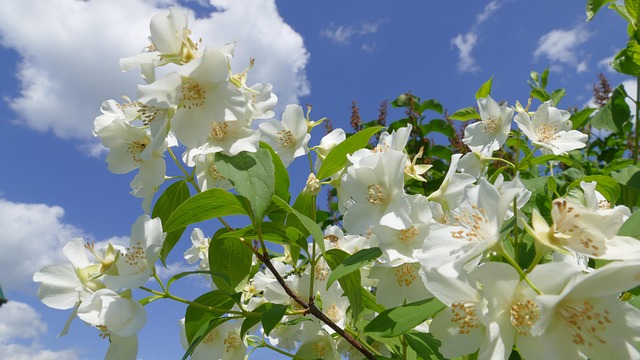
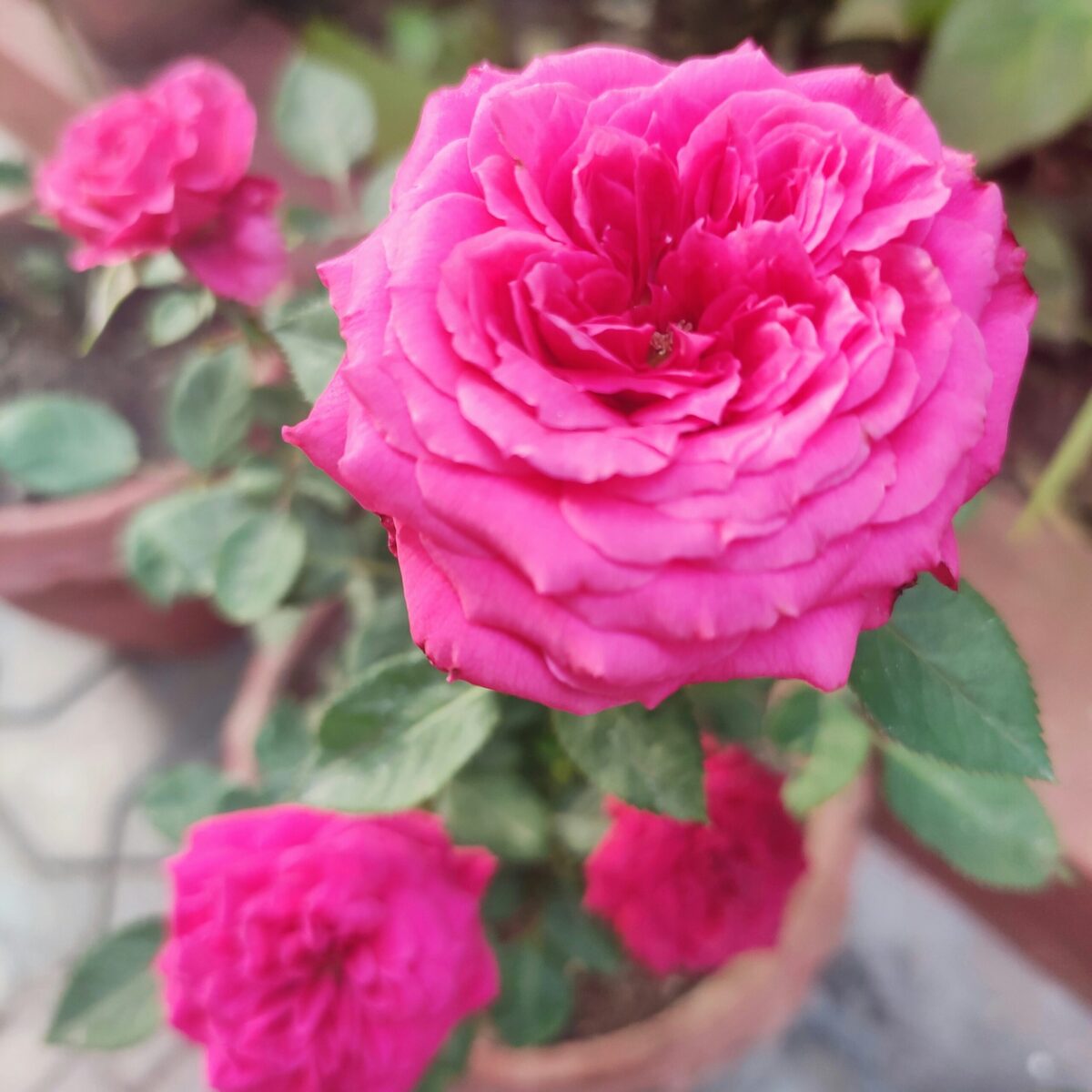
The Ispahan Rose, born in Persian gardens, inspired poets and painters alike, from Herman Richir’s canvas La Rose d’Ispahan to the haunting melody of Gabriel Fauré’s Les roses d’Ispahan. Likewise, jasmine, with its heady fragrance, has bloomed in both Persian and European art, notably in William Morris’s Jasmine wallpaper, a symbol of love and purity. These flowers, much like the tulip, bridge cultures, uniting East and West in a shared celebration of natural beauty. Whether gazing upon an Ottoman miniature, a Dutch oil painting, or the living beds of Keukenhof, these blossoms remind us that nature, in all its fragility, inspires a universal creativity. The tulip, the rose, and the jasmine continue to enchant, proving that some beauties, though fleeting, sparkle for eternity.
History does not end with this single petal…
Two paths now lie before you: one invites you to delve deeper into the soul of this bloom by exploring main arcticle, the other beckons you to broaden your horizon by discovering its kin among other floral wonders.
Explore our themes through the “Flower Collection” tab, or return to the heart of our world:
GatewayEchoes from the Garden: Unveiling the Mysteries of the Floral Icon
Why was the tulip compared to a turban in Ottoman culture?
The word “tulip” stems from the Turkish tülbend, meaning turban, referring to the flower’s shape which mirrored the elegant headwear of the Ottoman nobility
What was the most expensive tulip in history?
The Semper Augustus remains the legendary peak of Tulipmania; at its height, a single bulb could cost as much as a luxury home in 17th-century Amsterdam
How does Keukenhof honor the history of the tulip today?
By creating a “living gallery” each spring where millions of flowers are planted according to annual themes, blending traditional horticulture with contemporary artistic design.