A Sealed Garden for the Virgin
In the silence of Advent, December 8th blooms like a white rose. Mary, conceived without sin: this is what the Church has proclaimed since 1854 with the words “Tota pulchra es.” In Lourdes, in 1858, Bernadette heard: “I am the Immaculate Conception.” Since then, churches have been adorned with pure flowers: roses, lilies, and silences. An hortus conclusus, as the Song of Solomon calls it—this enclosed garden where the Virgin rests, sheltered from the shadows of the world. Winter is not barren; it carries within itself this immaculate promise. From dawn, the faithful lay bouquets before the altars. Candles flicker, hymns rise, and one feels that even the snow participates in the feast, blanketing the earth in a mantle of purity.
This notion of the Hortus Conclusus is more than a mere allegory; it shaped the very soul of medieval gardens—walled havens of peace where medicinal and symbolic flora grew sheltered from chaos. In 19th-century iconography, this imagery was coupled with a technical feat: the rise of glass-enclosed winter gardens. Offering fresh flowers in December thus became an expression of devout luxury, a challenge issued to the frost’s bite to honor the “Rose without Thorns.”
White Roses: The Crowned Queen
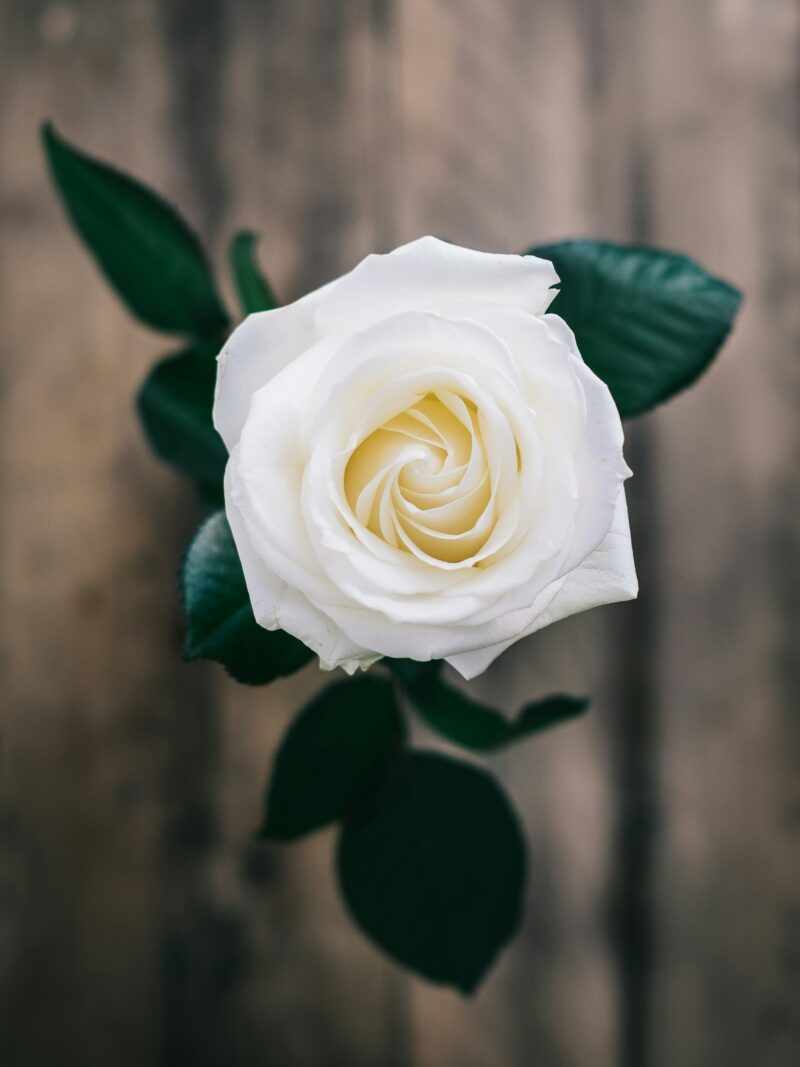
The rose, queen of flowers, becomes the crown of the Queen of Heaven. In Lyon, during the Festival of Lights (Fête des Lumières), thousands of white roses are offered each year to the Virgin Mary, echoing the city’s centuries-old devotion. This floral tradition, flourishing since the 19th century, serves as a reminder that beauty can be born in the heart of December, when all else seems dormant. Even today in Rome, the Pope places a golden bouquet upon the Marian column in the Piazza di Spagna. White roses reign supreme there: the ‘Iceberg’ variety, with its crystalline white petals, or ‘Blanc Double de Coubert,’ which breathes a scent of honey beneath the snow. They proclaim that purity needs no springtime to bloom.
Lilies: Light in the Shadows
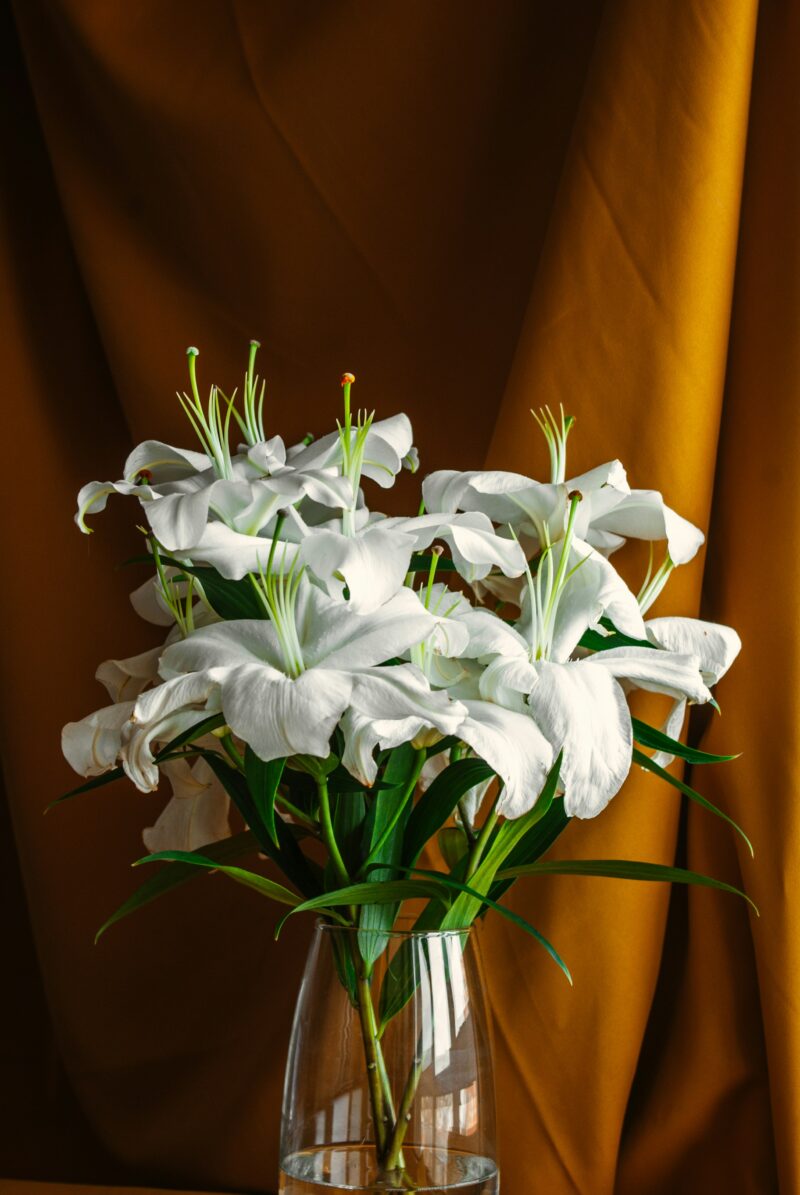
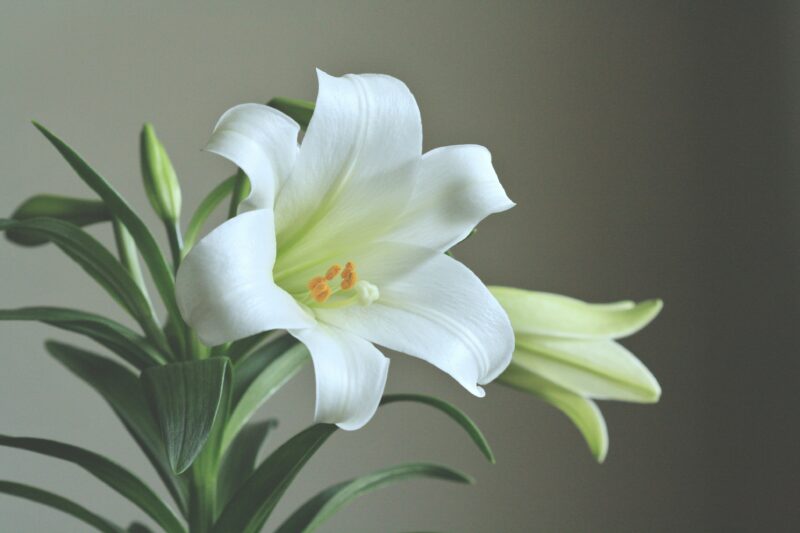
The lily, a flower of light, illuminates the winter. In 1643, the city of Lyon promised Mary a perpetual feast if the plague were to cease. The scourge died out at the city gates—a miracle attributed to the Virgin’s intercession. Since then, every September 8th, the people of Lyon ascend the hill of Fourvière with lilies and candles. These same white flowers illuminate the altars on December 8th for the Immaculate Conception. In cathedrals, they are called “Annunciation flowers,” for they carry the same message: a pure light within the shadows. Like the cornflowers born from the mud of the fields, lilies pierce the frozen ground to offer their radiance. They declare that grace fears neither the cold nor the night. At Notre-Dame de Paris or the Basilica of Fourvière, the bouquets rise, white and upright, like prayers frozen in beauty.
Did you know?
In heraldic and religious symbolism, the Lily of the Immaculate Conception is often depicted without its anthers (the stalks that carry the yellow pollen). This absence of pollen prevented any “staining” of the corolla, thus symbolizing a conception preserved from any blemish. It represents the perfect union of botany and dogma.
A Scent of Eternity
This December 8th, whether in Lyon, Rome, or a remote village, the feast of the Immaculate Conception invites the same gesture: offering a white flower. A rose, a lily, or simply a glance toward the heavens. Mary, the enclosed garden, is also a garden open to all who seek light in winter; and should one doubt, let them remember Bernadette, the lilies of 1643, and the roses laid each year at Fourvière. Miracles are not always spectacular; sometimes, they dwell in a spared city, in a tradition that spans centuries, or in a flower that refuses to wither beneath the snow.
Explore our themes through the “Flower Collection” tab, or return to the heart of our world:
GatewaySacred Blooms: Essential FAQ
Why are white flowers the symbol of the Immaculate Conception?
White represents the absence of “macula” (stain). In the heart of winter, these blooms symbolize purity and the light of hope defying the darkness, echoing the 1854 dogma of Mary’s conception without sin.
What is the “Hortus Conclusus” in floral history?
Latin for “Enclosed Garden,” it was a walled sanctuary in medieval times. It serves as a metaphor for a soul protected from the world’s chaos, where symbolic plants like the “Rose without Thorns” could bloom in peace.
What is the significance of the Lily in the Lyon tradition?
The lily became a beacon of gratitude in 1643 when the city of Lyon was spared from the plague. Today, these “Annunciation flowers” are still offered as a tribute to grace and resilience against the winter frost.