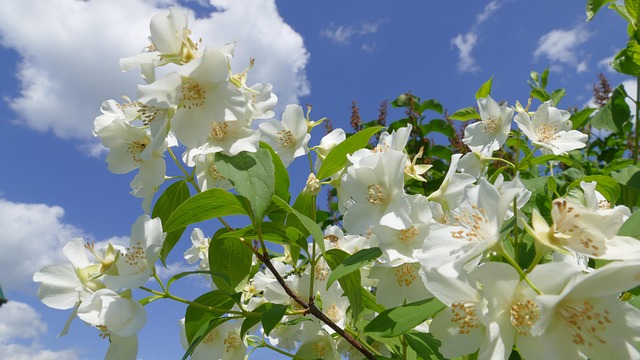
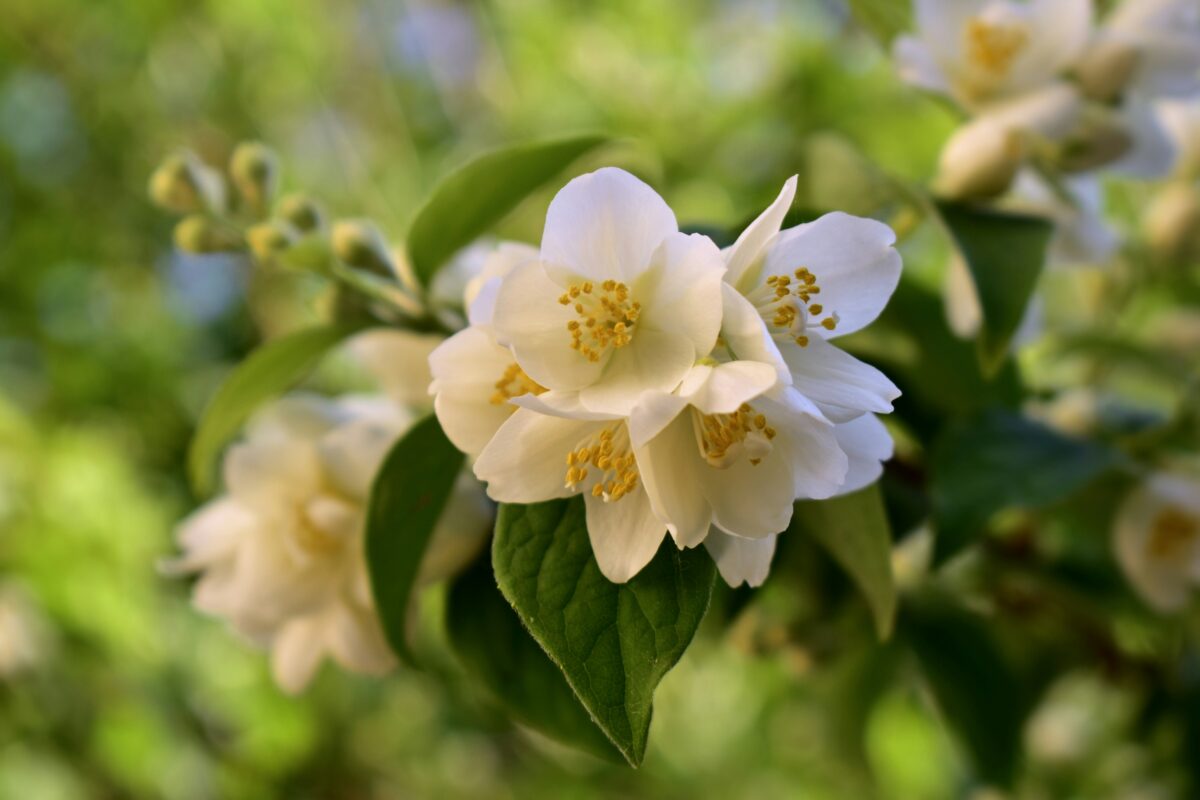
The jasmine, with its delicate petals and captivating scent, is a flower that transcends cultures and eras, carrying within its heart a spiritual essence. In mythology and legends, jasmine embodies divine love, purity, and an intimate connection with the sacred.
From ancient India to Persian tales, and through popular traditions, this flower tells stories that speak to the heart and soul. This article explores the mythological richness of jasmine, with a brief reference to the lotus to emphasize its singularity, offering a poetic reflection.
Sacred Origins of Jasmine: A True Gift from the Heavens
The very name “jasmine” comes from the Persian word yāsmīn — literally “gift of God”. Originating in the Himalayas, India and China, it has always symbolised eternal love, purity and the subtle bond between earth and sky.
In mythology, it is a symbol of eternal love and purity, a link between the terrestrial and the divine. This fragrant “gift” appears in tales where it serves as a spiritual messenger, awakening hearts to beauty and grace.
Jasmine in Hinduism: The Arrows of Kamadeva
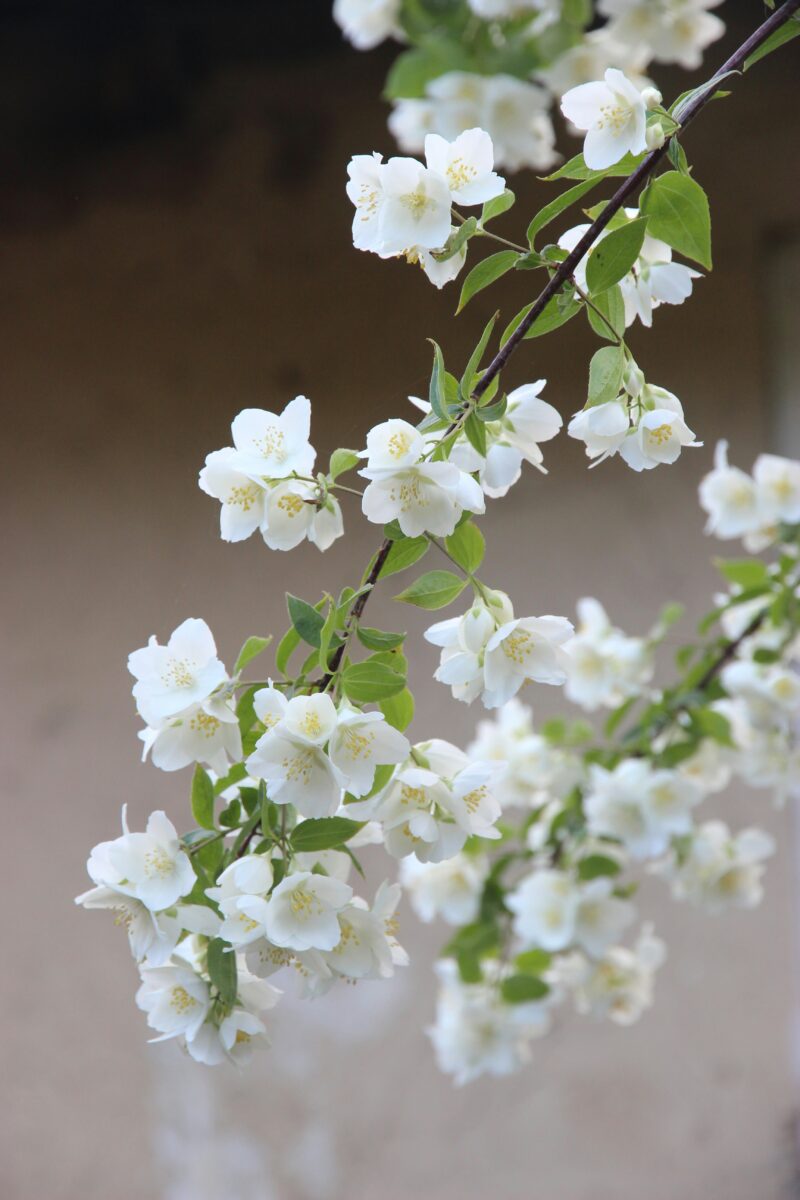
In Hinduism, jasmine is closely linked to Kamadeva, the god of love, whose arrows, adorned with jasmine, symbolize the power of divine love. One legend tells that Kamadeva used an arrow to disturb Shiva in his meditation, prompting him to unite with Parvati.
Although an angered Shiva reduced Kamadeva to ashes, this story highlights jasmine’s capacity to inspire a transcendent love, connecting the mortal to the divine. Jasmine is also offered to the goddess Shitala, protector against diseases, where its flowers appease her wrath and bring healing. These tales make jasmine an emblem of hope and spiritual connection.
Persian Legends: Yasmin, Flower of Eternal Love
In Persian tales, jasmine is at the heart of stories of eternal love. One legend recounts that a princess named Yasmin was transformed into a flower by the gods to preserve her pure beauty in the face of a forbidden love. This transformation gave its name to the flower, which became a symbol of divine grace in Persian gardens, conceived as reflections of paradise.
In other Middle Eastern stories, the fragrance of jasmine, rising at night, attracts benevolent jinns or celestial spirits, bearing messages of hope. These accounts present jasmine as a bridge between the visible and invisible worlds, its scent acting as an invitation to spirituality.
Jasmine in Popular Traditions: A Symbol of Protection
Beyond formal mythologies, jasmine shines in folklore legends. In Thailand, one story tells of a mother who planted jasmine near her home so its scent would guide her lost child back to her. This legend has made jasmine a symbol of maternal love and protection, often used in rituals to honor ancestors.
In Indonesia and the Philippines, tales describe jasmine as having sprung from the tears of a goddess weeping for humanity, its fragrance soothing broken hearts. These stories emphasize jasmine’s role as an emotional healer, capable of comforting and uniting.
Jasmine and Spirituality: A Connection to the Heart
While jasmine shares a symbolism of purity with the lotus, it distinguishes itself through its link to love and emotion. Whereas the lotus, central to Hindu and Buddhist narratives, represents detachment and transcendence, jasmine anchors the soul in the moment, enveloping the heart in sweetness.
Associated with the heart chakra, it fosters compassion and love, but its essence is more intimate, focusing on divine connection through emotion, unlike the lotus’s pursuit of enlightenment. This distinction makes jasmine a unique flower, celebrating the beauty of love in the present.
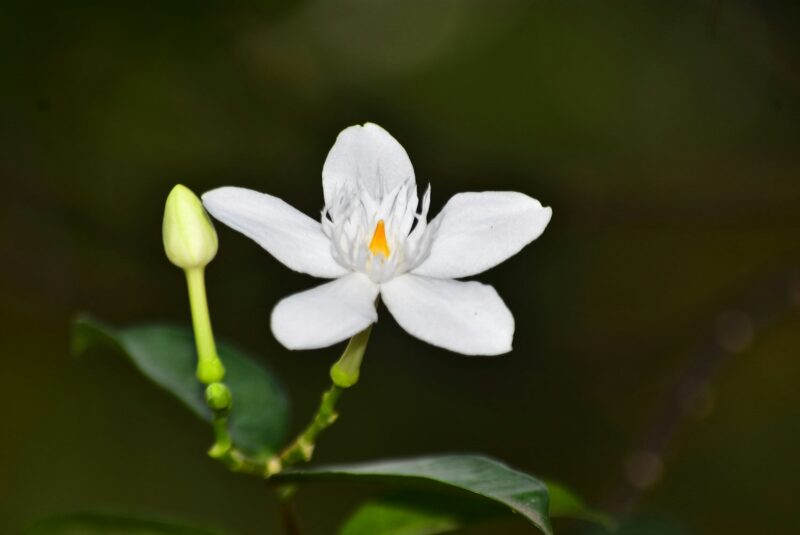
Jasmine in Rituals and Poetry: A Divine Embrace
The legends of jasmine inspire rituals where the flower plays a sacred role. In India, jasmine garlands are offered to deities, a gesture rooted in the mythological tales where the gods were adorned with these blossoms.
In esoteric practices, jasmine incense is burned to invoke angelic energies, echoing the Persian legends about spirits attracted by its scent. In poetry, jasmine is a metaphor for eternal love and ephemeral beauty. Sanskrit poets, such as Kalidasa, celebrated it for its fragrance evoking a divine embrace, while Arab tales describe it as a star fallen to earth, recalling paradise.
A Fragrance That Lingers in the Heart
Through its mythological tales, jasmine invites us to embrace divine love and spiritual connection. From the arrows of Kamadeva to the tears of a goddess, this flower embodies an accessible spirituality, rooted in emotion and the beauty of the present moment.
For your spiritual journey, let jasmine guide you: meditate with its fragrance, offer a flower as a sign of gratitude, or allow yourself to be inspired by its legends. In every petal, jasmine whispers a message of eternal love, a “gift from God” that links the soul to the sacred.
History does not end with this single petal…
Two paths now lie before you: one invites you to delve deeper into the soul of this bloom by exploring main arcticle, the other beckons you to broaden your horizon by discovering its kin among other floral wonders.
Explore our themes through the “Flower Collection” tab, or return to the heart of our world:
GatewayFAQ – Jasmin divin : mythes d’amour
Why is jasmine linked to love in so many cultures?
Its captivating fragrance and nocturnal blooming have always made it a symbol of sensual and spiritual love, capable of “awakening” hearts (like Kamadeva awakens Shiva).
Do jasmine and the lotus share the same symbolism?
No. The lotus represents purity through detachment; the jasmine represents purity through love and emotion. One rises out of the mud without attachment, the other opens at night to spread its fragrance of love.
Where does the word “jasmine” come from?
From the Persian “yāsmīn” which means “gift of God.”