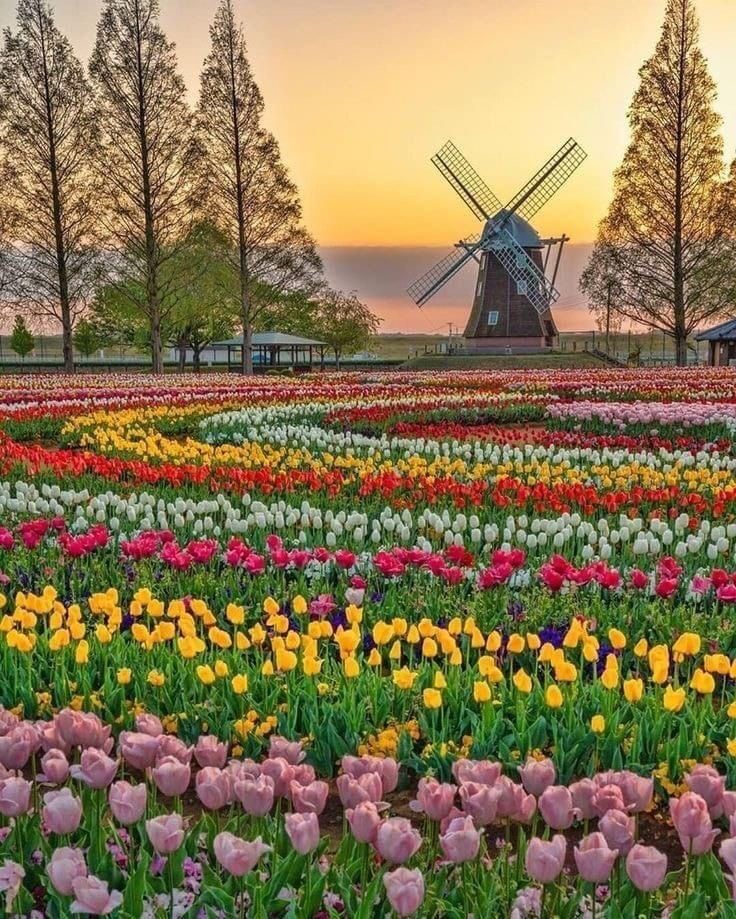
Each spring, in the small town of Lisse in the Netherlands, Keukenhof ignites in a living rainbow—an ephemeral tapestry where seven million bulbs paint the landscape with silent eloquence.
Surnamed the “Garden of Europe,” this 32-hectare sanctuary is far more than a mere horticultural showcase; it is a masterpiece in perpetual evolution. Here, the floral compositions engage in a soulful dialogue with the heritage of Dutch Still Life and the audacity of modern installations.
Step into this living gallery, where every parterre evokes a master’s brushstroke and every path whispers a story of botanical passion.
The Garden Revealed: Secrets Whispered by the Bulbs of Lisse
- The Kitchen’s Legacy: The unexpected history behind the name “Keukenhof” and the park’s noble origins.
- Living Pigments: How 7 million bulbs are transformed into vibrant tableaux by master landscape architects.
- A Mirror of the Golden Age: The profound link between Keukenhof’s fleeting art and the symbolism of Dutch Vanitas.
- A Sensory Odyssey: The artistic experiences the park offers beyond a simple stroll.
An Artistic Genesis
The soul of Keukenhof traces back to the 15th century, when Countess Jacoba van Beieren gathered herbs and vegetables for the kitchens of Teylingen Castle—hence the name “Keukenhof” (The Kitchen Garden). It was in 1857, however, that the park found its timeless aesthetic, thanks to the vision of the celebrated landscape architects Jan David and Louis Paul Zocher (the minds behind Amsterdam’s Vondelpark). They sculpted the land into an elegant English landscape style, which serves even today as the canvas for millions of tulips.
In 1949, Keukenhof embraced its full artistic dimension: a consortium of bulb growers transformed the estate into a “living catalog.” Since opening in 1950, the park has never ceased to enchant, drawing 200,000 visitors in its first year and reaching a staggering 1.5 million in 2019.
Every autumn, an expert guild of 40 gardeners begins a meticulous ritual. By utilizing the “Lasagna technique”—layering bulbs with staggered blooming times—they ensure an uninterrupted eight-week symphony. From March 20 to May 11, 2025, the Keukenhof Floral Design Festival will unveil brand-new compositions where tulips, hyacinths, and narcissi compete in geometric or sinuous patterns, reminiscent of Golden Age canvases.
A Palette of Colors
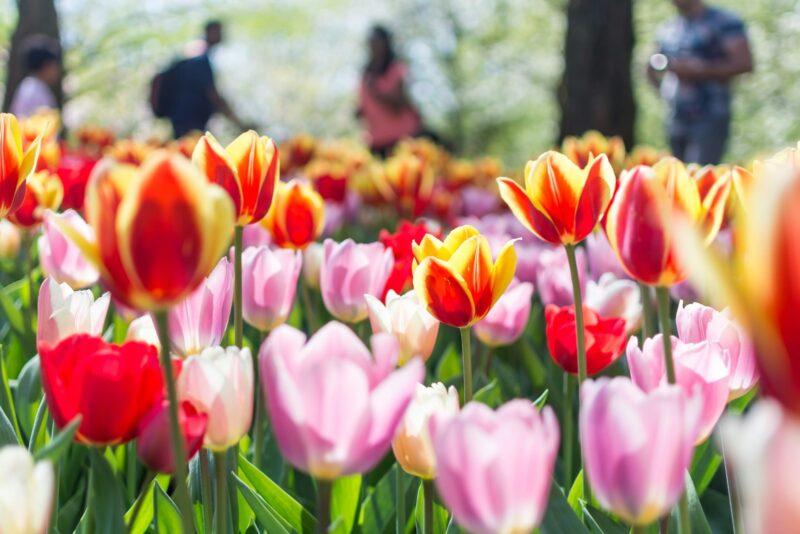
Keukenhof is not a simple garden; it is a living canvas of flowers. The meticulously designed beds evoke the still lifes of Ambrosius Bosschaert, where tulips incarnated both luxury and the fleeting nature of life (Vanitas).
The curators use tulips as raw pigments, creating rivers of blue Muscari or mosaics of fiery reds. These compositions are renewed annually through artistic themes: in 2015, Van Gogh was celebrated with swirling patterns mimicking his brushwork; in 2019, “Flower Power” blended tulips with vintage objects for a pop-art aesthetic.
The indoor sanctuaries, such as the Beatrix or Willem-Alexander pavilions, extend this vision. Here, floral exhibitions featuring 500 producers recall the 17th-century “Cabinets of Curiosities.” A river of hyacinths meanders through the woods, its scent carried by the breeze, while floral sculptures—such as the floats from the Bloemencorso—transform tulips into grand installations. These creations ensure that Keukenhof 2025 Floral Art remains a dialogue between tradition and modernity.
An Artistic Heritage
The artistic legacy of the tulip at Keukenhof is anchored in the Dutch Golden Age, when these blossoms became the heart of a singular fever. To understand the crucible where the bulb became a crown, and to follow the epic journey from the Ottoman Empire to Holland, consult our master study. In the heat of Tulipomania, they embodied prestige. To grasp the peak and collapse of this floral frenzy, read our full analysis: Tulips in Art: From Sacred Icon to Dutch Tulipomania.
Painters like Bosschaert captured their fragile radiance to meditate on impermanence. Today, Keukenhof continues this tradition through “Inspiration Gardens.” The 2024 theme, “Let’s Dance,” featured tulips arranged in fluid motifs evoking choreography. The park also hosts the Netherlands’ largest sculpture garden, where international works—like a giant steel tulip reminiscent of Jeff Koons—dialogue with the surrounding flora.
A Sensory Experience
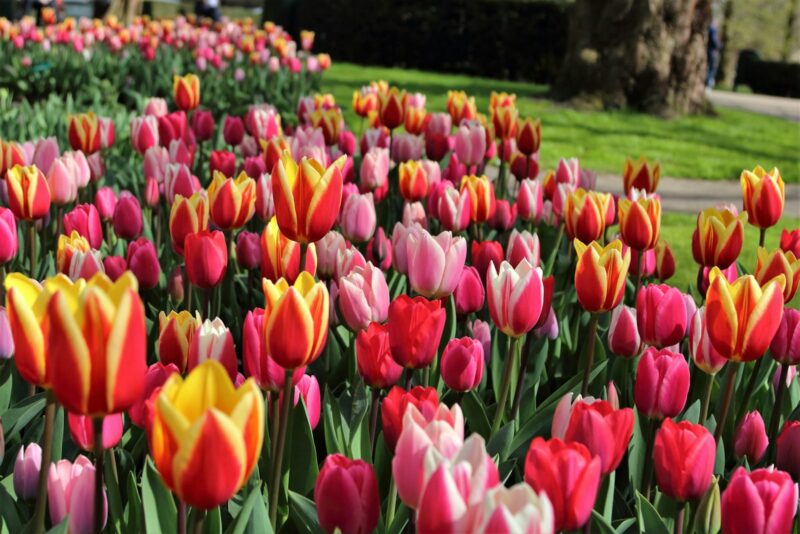
To wander through Keukenhof is to walk inside a painting. The 15 kilometers of paths wind between lakes and groves, where tulips act as dabs of color on a canvas. The sunlight, softened by the canopy, creates a chiaroscuro worthy of a Dutch master. Visitors, armed with cameras, capture these scenes like modern painters seeking the perfect angle.
It is a total symphony: the fragrance of hyacinths, the spring breeze, and the birdsong compose an atmosphere that transcends tourism. Events like the Bloemencorso parade—nicknamed the “Face of Spring”—add a festive dimension where flowers become performers.
To fully embrace this, architects recommend the mid-season (early to mid-April). This is the ideal window to observe the harmony between early tulips, hyacinths, and narcissi, ensuring the most serene atmosphere before the May crowds arrive.
Keukenhof and Art Today
Keukenhof continues to inspire contemporary floral design. Artists like those behind the Brussels Flower Carpet or photographers like Annie Leibovitz revisit the tulip, blending nature with glamour. These contemporary echoes, explored in our Flowers in Art section, show how the park extends the tulip’s artistic reign.
An Ode to the Ephemeral
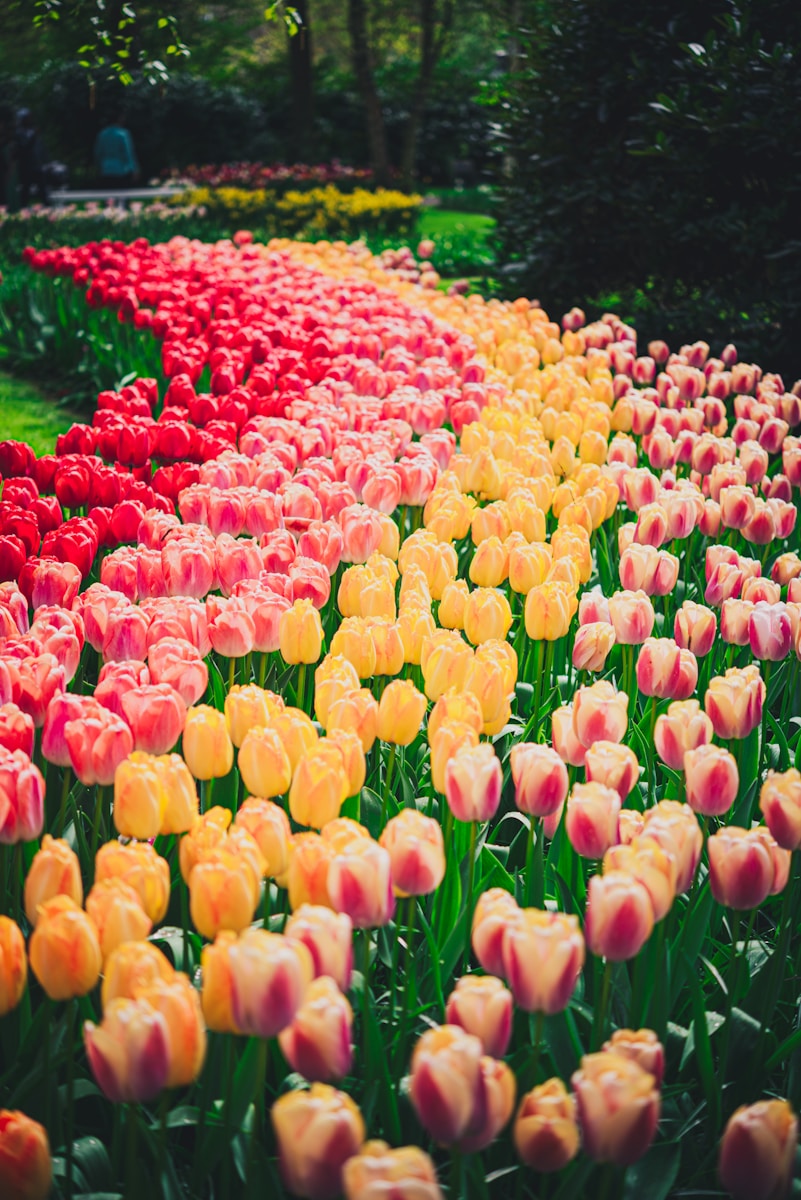
Keukenhof reminds us that art, like life, is fleeting. Each spring, its tulips awaken for eight weeks, then fade, leaving room for new dreams. This fugacity, the heart of Dutch botanical inspiration, echoes the Vanitas paintings of old. In Keukenhof, you walk within a living masterpiece, where every petal is a brushstroke and every garden a chapter of human sensitivity.
History does not end with this single petal…
Two paths now lie before you: one invites you to delve deeper into the soul of this bloom by exploring main arcticle, the other beckons you to broaden your horizon by discovering its kin among other floral wonders.
Explore our themes through the “Flower Collection” tab, or return to the heart of our world:
GatewayFAQ : The Essence of the Visit
What is the “Lasagna” technique mentioned?
It is the layered planting of bulbs with different flowering dates in the same spot, ensuring a “living painting” that evolves and lasts for several weeks.
How does the park pay tribute to the Dutch Masters?
Through specific garden designs that replicate the color palettes and compositions found in 17th-century Still Life paintings, such as those by Bosschaert.
What is the Bloemencorso?
It is a world-famous floral parade (“The Face of Spring”) featuring magnificent floats decorated with tulips and bulb flowers, some of which are displayed within the park.
Why is mid-April recommended for photography?
This period offers the “peak bloom” where the widest variety of species overlap, providing the most complex and rich color palette for the lens.