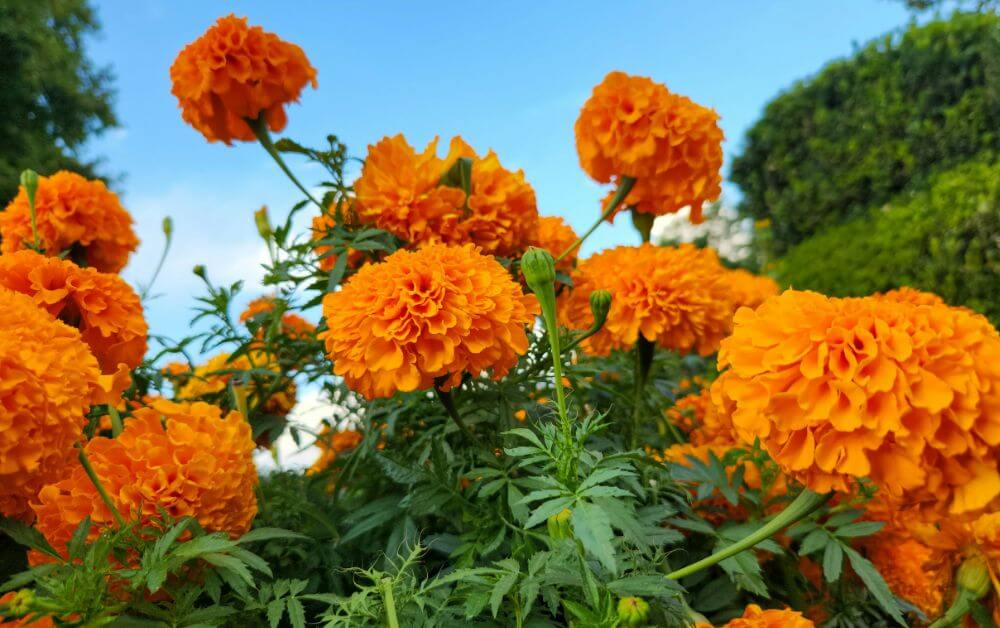
Marigolds are the emblematic flowers of the Day of the Dead. Embark on a colourful journey with these golden blooms that illuminate history, from the Aztec lands to European flowerbeds.
Born beneath the Mexican sun, they whisper ancient secrets, weaving a bridge between remedies of yore and far-flung bouquets. During the Day of the Dead, they guide souls in a dance of vibrant petals, uniting the living and the departed. On the silver screen, marigolds shine in Coco, golden bursts of emotion. Let yourself be enchanted by their symbolism, a poetic odyssey through time, culture, and memory!
The French Marigold: A Golden Glimmer between History and Remembrance
- Name and Origin: Tagetes (named in honor of the Etruscan prophet Tages) of sacred Aztec origin (Mexico).
- Symbolism: The flower of Cempoalxóchitl, a luminous guide for souls during the Day of the Dead.
- Historical Journey: Introduced to Europe in the 16th century (named “d’Inde” or “French” due to confusion with the West Indies).
- Rare Uses: Utilized as a natural food dye and as a guardian repellent in the garden.
- Cultural Influence: A central golden glow in the animated masterpiece Coco (2017).
Symbolism of the Marigold on the Day of the Dead
Beneath the November sky, marigolds illuminate the Day of the Dead, guiding souls with their golden petals. Their musky scent traces paths of light to the altars, uniting the living and the departed. Discover their sacred role and Aztec heritage.
The History of Marigolds: An Odyssey from the Aztecs to Europe
In the golden mists of ancient Americas, the story of these flowers unfolds beneath the Aztec sun, where their dazzling petals gleamed like jewels. The peoples of that era, in their wisdom, gathered these golden bursts to soothe ailments, brewing potions against fever or inner troubles, and enhancing their dishes with a singular flavour.
Among the Aztecs, marigolds embodied a promise of renewal, springing forth each year like luminous messengers born of the Mexican soil
In the 16th century, the sails of the Spanish conquistadors carried these treasures to Europe. The tagetes then blossomed in a ballet of colours across the gardens.
In France, they were dubbed “Oeillets d’Inde”, delicate stars illuminating the flowerbeds, whilst in England, by a twist of fate, they were sometimes called “African marigolds”. From flamboyant dyes to guardians of crops, they shielded the fields, repelling harmful insects with their natural compounds. Tireless travellers, they crossed the seas, taking root beyond the horizons, uniting worlds in their golden wake.
The Conquistadors’ Legacy: The Illusion of the ‘Indies
Pourtant, ce nom d’Œillet d’Inde est moins une erreur botanique qu’un témoignage linguistique des grandes explorations. Au XVIe siècle, lorsque la fleur fit son apparition dans les jardins du Vieux Continent, les terres du Nouveau Monde étaient couramment désignées par les explorateurs sous le nom générique d’“Indes Occidentales”. Cette dénomination, relique de la quête d’une route vers l’Asie, figea l’identité de la fleur dans une géographie dépassée, la rattachant poétiquement à l’horizon lointain, qu’il fût mexicain ou asiatique.
Un Hommage Divin : La Fleur et le Secret de Tagès
Sous le ciel savant de l’Europe, ces fleurs reçurent un nom qui les reliait non pas à leur terre, mais à la mythologie. Le genre botanique, Tagetes, fut baptisé par le grand naturaliste Linné en l’honneur du dieu étrusque Tagès. Ce devin, né selon la légende d’un sillon de terre fraîchement labouré, était le maître de l’art de l’interprétation et de l’oracle. Quelle ironie poétique : la fleur aztèque qui guide les âmes et révèle le chemin des morts porte le nom du dieu méditerranéen qui révélait l’avenir aux hommes. C’est ainsi que la science, en quête de classification, tisse parfois les liens les plus insoupçonnés entre les mondes.
The Role of Marigolds in the Day of the Dead Altars
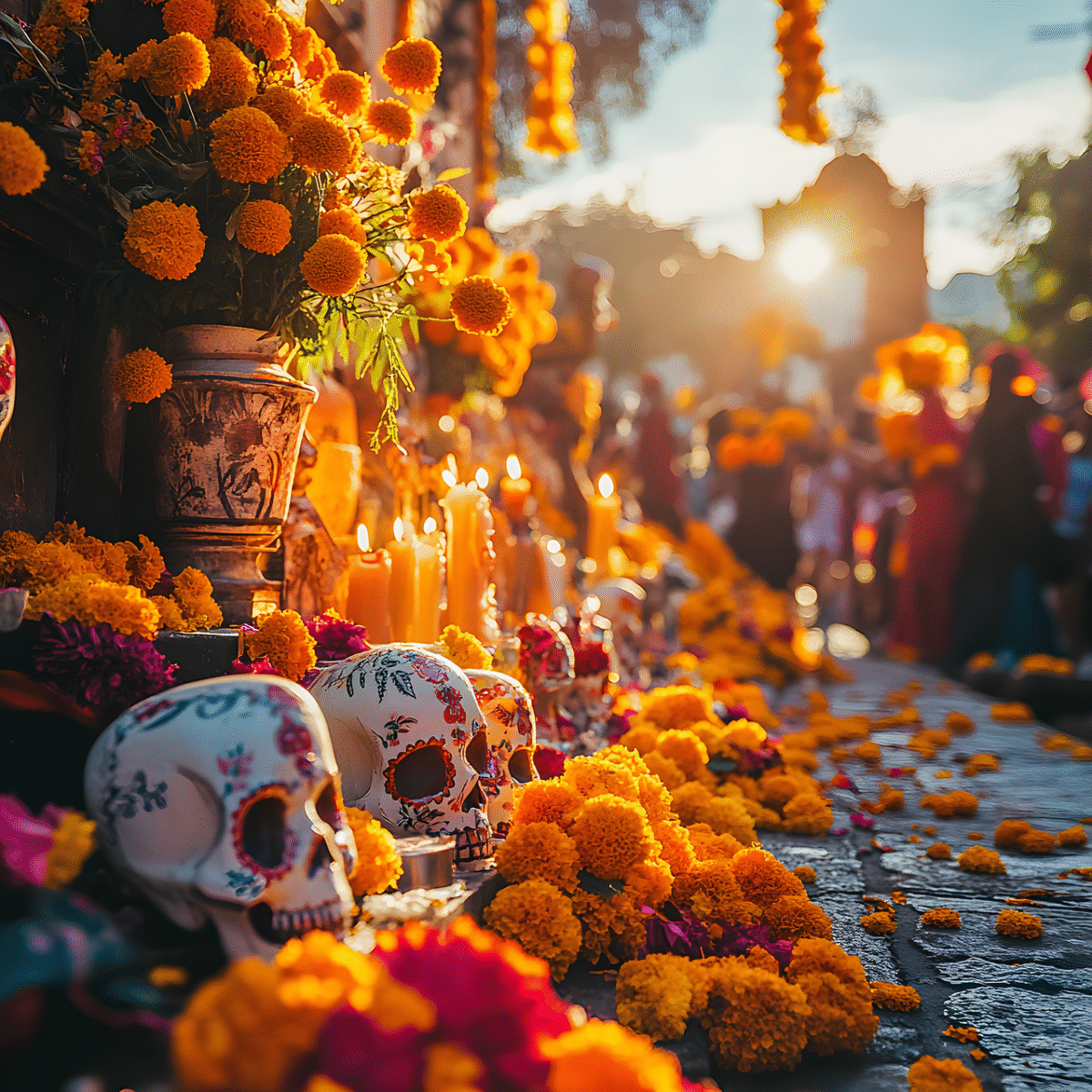
Beneath the November sky, marigolds intertwine with the Day of the Dead in a whisper of gold and orange, guiding wandering souls towards a warm hearth. In this dance between two worlds, these flowers—bursts of sunlight—weave paths of petals, a luminous river for the spirits of the 1st and 2nd of November. Their musky scent, like Ariadne’s thread, leads the departed to altars overflowing with memory, flickering candles, and offerings of food in homage. To delve deeper into tagetes and Día de los Muertos, explore the vibrant traditions of this festival on National Geographic, where the history and symbolism of this celebration come alive.
Oeillet d’Inde : Une fleur sacrée aztèque
Aztec heritage, the symbolism of tagetes shines forth, once offered to the goddess of shadows, a bridge between life and the beyond. Today, called cempasúchil in Mexico, they whisper the fragility of existence, uniting hearts in an eternal echo. Scattered over graves or arranged as offerings, they illuminate the night, symbols of a cycle where death is but a step towards the light. They throb with a promise: a love that transcends, a memory that blossoms beneath a sky studded with souls.
At the Cinema: The Golden Glow in the Film Coco
On the canvas of cinema, these flowers unfurl their flamboyant petals, capturing the soul of stories. In Coco (2017), Pixar’s masterpiece, they trace a luminous path, guiding young Miguel to the realm of the dead, their bursts of gold and orange painting a Día de los Muertos vibrant with emotion. Their dancing light, sprinkled over bridges and altars, whispers memory and hope, binding the living to souls taken flight.
Elsewhere, in Mexican dramas or documentaries, these flowers emerge, discreet stars illuminating scenes of mourning and festivity, their scent almost palpable. The role of tagetes in memory blossoms, weaving tales where life and death entwine, offering a visual poetry that resonates in the hearts of viewers.
Modern Uses of Marigolds: A Flower at the Heart of Everyday Life
In the wake of their Aztec heritage, tagetes, or cempasúchil, flourish today far beyond the Day of the Dead altars. Their golden glow illuminates kitchens, gardens, and even wellness rituals, weaving a link between tradition and modernity. In Mexican cuisine, cempasúchil petals perfume dishes such as tamales or infusions, lending a subtly spiced flavour. Their wealth of antioxidants draws cosmetic artisans, who incorporate their extracts into creams and oils to soothe the skin. In gardens, they remain faithful guardians, repelling harmful insects with their musky scent—an echo of their protective role in Aztec fields. Artists and designers seize upon them too, employing their vibrant hues in textiles or ephemeral installations, celebrating their symbolism of memory and renewal. Thus, the cempasúchil continues to bloom, uniting past and present in a dance of gold that transcends cultural frontiers.
A Flower at the Heart of Time
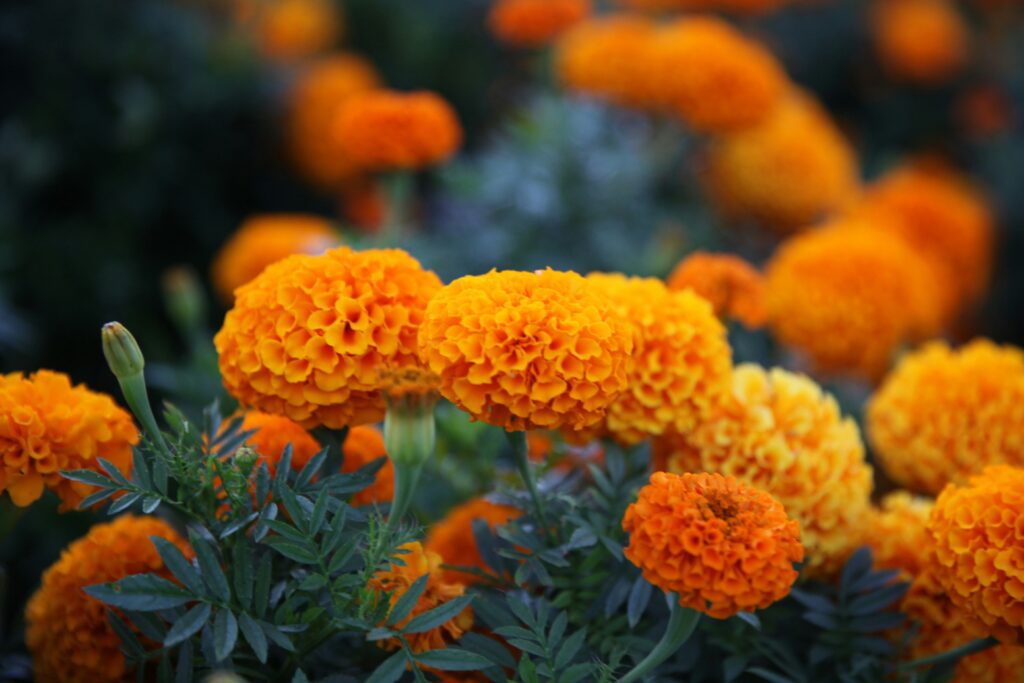
French Marigolds, golden messengers, trace a luminous furrow through the ages. From Aztec lands to European gardens, they unite the living and the departed in an eternal embrace during the Day of the Dead.
In Coco, they illuminate tales where memory dances with hope. Flowers of renewal, they whisper a timeless truth: life, death, and art form but a single cycle, a vibrant garden where each petal bears a story, a breath, a gleam of eternity. Whether beneath the Mexican sun or on the screens, marigolds bloom, golden poets of an endless world.
Explore our themes through the “Flower Collection” tab, or return to the heart of our world:
GatewaySouls journey upon paths of petals, yet how many secrets remain buried beneath the soil of history? Here are the answers that illuminate the mystery of this golden flower.
FAQ : The Golden Odyssey of the Cempasuchil
Why are marigolds, known as cempasúchil, essential to the Día de los Muertos?
More than mere decoration, these vibrant blooms act as a luminous beacon. According to ancient Aztec belief, their intense golden-orange hue and unique, musky fragrance create a sensory bridge, guiding the spirits of our ancestors from the realm of the beyond back to the warmth of their earthly homes during the first days of November.
Is there a botanical difference between the “French Marigold” and the Mexican cempasúchil?
Botanically speaking, they belong to the same genus, Tagetes. The term “French Marigold” is a historical misnomer born from 16th-century exploration confusion, where “Indies” were often conflated across the globe. While they share the same DNA of resilience, the Tagetes erecta (the classic cempasúchil) holds the true mantle of the sacred, towering over its smaller, garden-variety cousins.
Can I use marigolds in my kitchen as they do in Mexico?
Indeed, you may. Beyond their ornamental grace, certain edible varieties of Tagetes offer a complex, slightly citrusy, and spiced profile. In modern culinary arts, their petals are used to infuse oils, color delicate pastries, or add a floral whisper to savory dishes. Always ensure you are sourcing organic, culinary-grade flowers, untouched by synthetic pesticides.
How do marigolds serve as “guardians” in a home garden?
The marigold is a silent sentinel. Beneath their cheerful exterior lies a sophisticated chemical defense system. Their roots secrete compounds that discourage soil-borne pests, making them a gardener’s most poetic ally. Planting them is not just an aesthetic choice; it is an act of ecological harmony, shielding your vegetable patch with a golden, aromatic protective barrier.
Why does the name Tagetes hold such an ironic historical weight?
It is a beautiful paradox: the Swedish botanist Linnaeus named the genus after Tages, the Etruscan deity of divination who emerged from a freshly plowed furrow to teach humanity how to read the future. Thus, a flower dedicated to honoring the past and the departed forever bears the name of a god who whispered of the future.