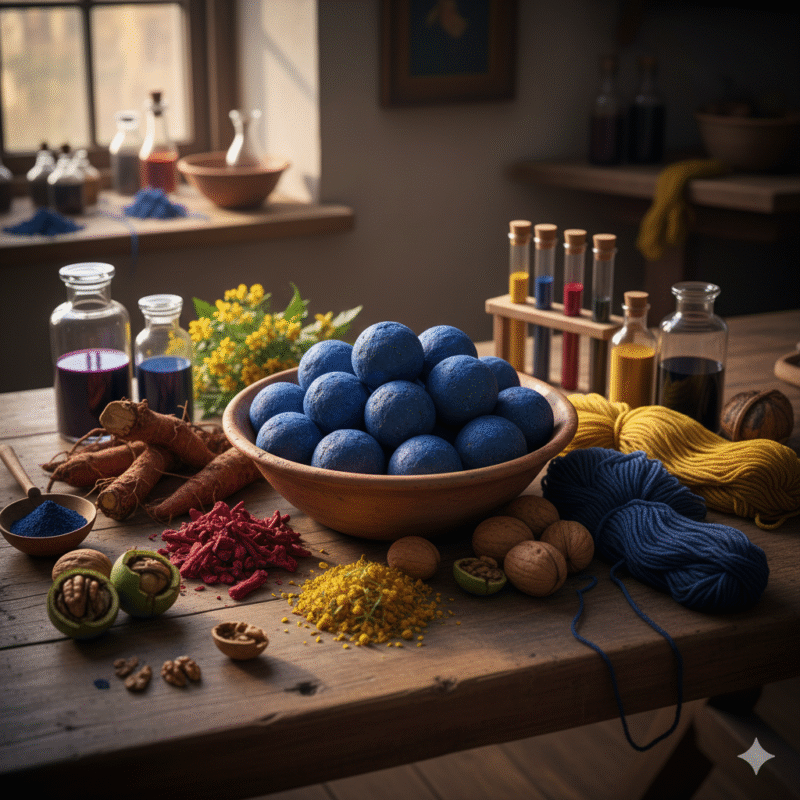
In the silence of the workshop: when the Madder root and the Woad flower unite to paint the history of French textiles. There was a time, not so long ago, when color was not an industrial choice but a conquest over the wild world. Before organic chemistry laboratories reduced the rainbow to synthetic formulas, France vibrated to the rhythm of the harvests. In those days, being a dyer meant being something of an alchemist: it was known that the luster of royal velvet or the depth of court drapery depended on a humble root, a golden leaf, a rough bark, or a stone.
Highlights of this Floral Dossier
- The Alchemy of the Land of Plenty: How Toulouse Woad transformed simple leaves into a coveted “Blue Gold.”
- The Blood of the Earth: The secrets of Madder, the root that forged the French army’s visual identity.
- The Chromatic Trinity: The mastery of Weld, Kermes, and Walnut.
- The Art of Mordanting: The crucial role of metallic salts.
- Contemporary Renaissance: Sustainable luxury and Haute Couture reclaim organic pigments.
I. The Blue Gold of the Land of Plenty: The Reign of Woad
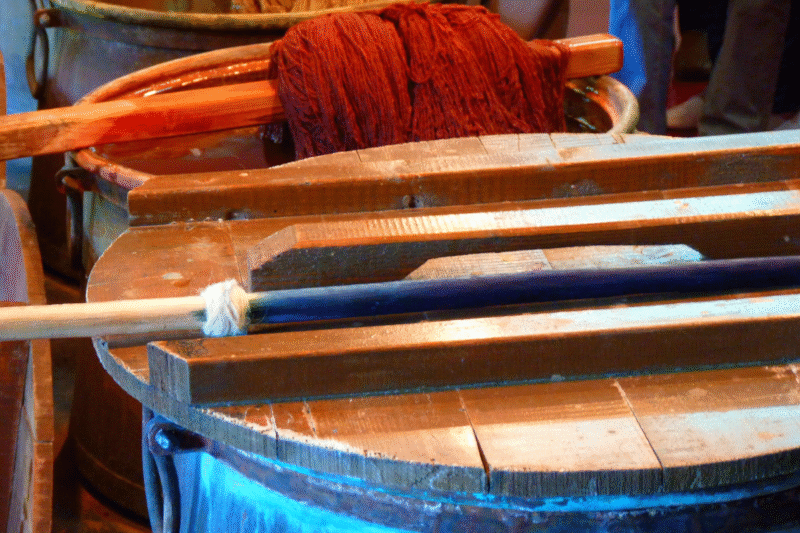
Had you crossed the triangle formed by Toulouse, Albi, and Carcassonne in the 16th century, your eyes would have been dazzled by a sea of vibrant yellow flowers. This was Woad (Isatis tinctoria). A paradox of nature: it was from this solar bloom that the deepest, most stable, and most coveted blue in all of Europe was extracted, rivaled only by lapis lazuli—a stone whose price exceeded that of gold.
The Alchemy of Cocagne: The secret of Woad lay not in its flower, but in its leaves. Once harvested, they were crushed in “blood mills”—powered by the strength of animals or men—to form a paste fashioned by hand into fist-sized balls known as “cocagnes.” From this term was born the myth of the “Land of Plenty” (Pays de Cocagne), a land of abundance where wealth literally grew from the soil.
These balls had to ferment for months, releasing a mephitic odor that, for the merchants of Toulouse, was the very scent of money. Once dried and ground into powder (known as “agraine”), they yielded a blue of legendary permanence, capable of traversing centuries without fading under the sun’s glare.
This blue alchemy hides a molecular secret: indigotin. Unlike other dyes, Woad does not surrender itself through simple infusion. It requires a “reduction vat,” an oxygen-deprived environment where the ammonia from fermented urine once served as a catalyst. It was in this chemical twilight, far from the brilliance of the salons, that the fiber prepared for its celestial metamorphosis.
A Global Economic Powerhouse: Woad was the first great French industrial secret. It was exported by the wagonload to the ports of Bordeaux and Bayonne, bound for London, Antwerp, or Hamburg. Woad merchants, such as Jean de Bernuy, became wealthier than princes, financing the sumptuous Renaissance “hôtels particuliers” (private mansions) that American tourists still admire today in Toulouse. This “Blue Gold” was the pillar of a surplus trade balance long before the aerospace industry took root in the same region.
This supremacy was not only the fruit of the terroir but also that of an iron political will. Under the reign of Louis XIV, Jean-Baptiste Colbert, the architect of French industrial grandeur, established manufacturing regulations of absolute severity. Royal inspectors crisscrossed the workshops to ensure that only Woad—or high-quality Indigo—was used for “grand teint” (colorfast) draperies. This “color police” aimed to ban mediocre substitutes, thereby guaranteeing that the brilliance of French cloths remained, across all borders, the symbol of unalterable perfection.
II. The Blood of the Earth and the Brilliance of Empire
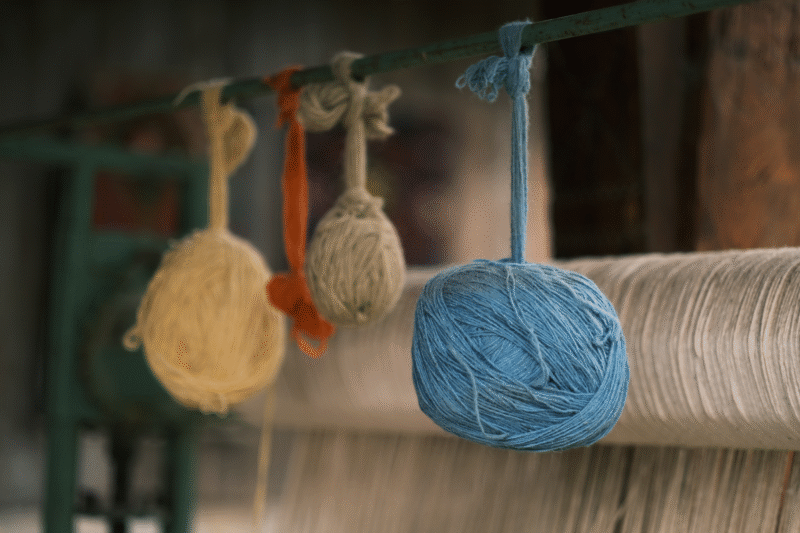
While the Southwest held the blue, the Vaucluse and Alsace regions became, centuries later, the masters of red thanks to Madder (Rubia tinctorum). Here, alchemy changes its face: the secret is no longer sought within the leaf, but within the very bowels of the earth.
The Science of the Root: Madder is a patient plant. One must wait three years for its slender, creeping roots to become saturated with alizarin, the crimson pigment. The extraction of this red was a science of precision. The fabric first had to be “mordanted”—often with alum—so that the fiber would accept the color. Without this step, the red would be but a fleeting stain; with it, it becomes a permanent wildfire upon the cloth.
The genius of Madder reached its zenith with the mythical “Turkey Red” (Rouge d’Andrinople). This complex process, imported from the Levant in the 18th century, required up to twenty stages of preparation, mixing alum with baths of oil and bull’s blood. It was no longer mere dyeing, but a sacred ritual where the root, tamed by human hands, finally offered the world a crimson of insolent vivacity.
The Visual Identity of France: In the 19th century, Madder left the realm of craftsmanship to become a matter of State. Under Louis-Philippe, it was decided that the French army would wear “madder red” trousers. The objective was twofold: aesthetic, for the parade, but above all economic, to support the farmers of Provence. Until 1914, the French soldier was a moving target, yet a magnificently dyed one, carrying upon him the legacy of an industry that employed thousands of families.
III. The Chromatic Trinity: Weld, Kermes, and Walnut
The prestige of French dyeing was not limited to this duel between blue and red. A true “Trinity” of secondary plants completed the wardrobe of the elegant.
- Weld (Reseda luteola): This wild plant, which grows on the most unpromising embankments, offered the purest and most lightfast yellow of the era. It was the indispensable partner to Woad in creating the deep greens of the Gobelins Manufactory tapestries.
- Kermes and Saffron: While Saffron, derived from crocus stigmas, offered a sacred and costly orange-yellow, Kermes (a small scale insect living on the holm oaks of the South) produced a scarlet so vivid that it was reserved for the cloaks of cardinals and kings.
- Le Noyer : Pour l’art de vivre et les intérieurs, le brou de noix (l’enveloppe charnue du fruit) offrait une gamme de bruns boisés, de fauves et de bistres, créant cette patine “à la française” qui définit encore l’élégance sobre des mobiliers anciens.
IV. The Alchemists’ Secret: Mordants, Vats, and Chemical Mysteries
To understand France’s ascent to the rank of master of colors, one must venture into the shadows of the workshops, where water, fire, and metal meet. The plant alone, however pigmented it may be, is not enough to create color: it is merely a potential. The true genius lay in the art of mordanting.
The Marriage of Metal and Fiber: Most natural dyes are known as “mordant dyes.” For the coloring molecule of Madder or Weld to unite eternally with wool or silk, an intermediary—a chemical bridge—was required. Dyers used metallic salts, primarily rock alum. This mineral “bit” into the fiber, opening its scales to imprison the pigment within. Depending on the metal used, the same plant could yield radically different colors. A Madder bath with iron turned a deep violet, whereas with tin, it became a flamboyant orange.
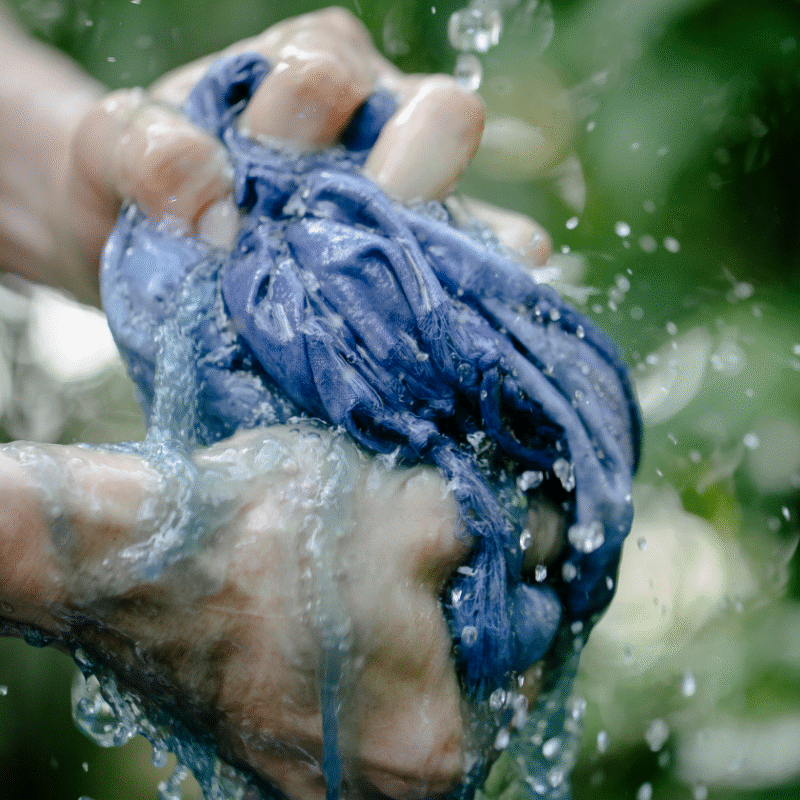
The Woad Vat: A Plant Respiration — Woad, however, required an even more mysterious process: vat dyeing by reduction. The pigment in Woad is not water-soluble. To tame it, the dyer had to create a “vat” from which oxygen was banished. The cloth emerged yellow; it was only upon contact with the air, during oxidation, that the miracle occurred: the fabric turned blue, as if capturing the very azure of the sky. This magical moment, christened “the greening” (le verdissement), remains to this day one of the most fascinating spectacles of plant chemistry.
For this miracle to occur, the dyer had to contend with a reality far more prosaic than the splendor of the final result. The alchemy of reduction required the use of fermented urine, whose ammonia allowed the pigment to be solubilized. In the gloom of the workshops, the acrid and mephitic odor of these vats stood in singular contrast to the nobility of the silks that emerged from them. This was the paradox of the master dyers: manipulating the humblest part of matter to extract the most celestial clarity.
V. The Art of Living and the Decline: The Shock of Synthesis
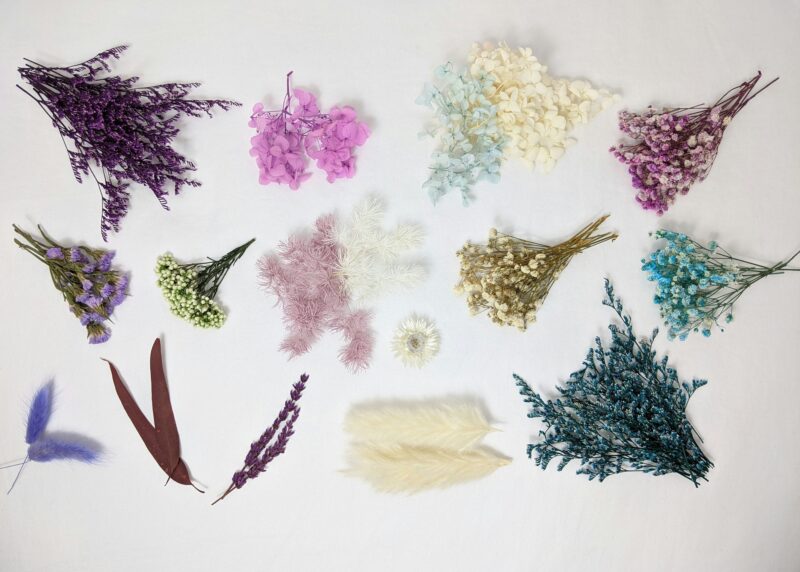
The zenith of these dye plants was also the prologue to their fall. In 1869, the discovery of synthetic alizarin by German chemists struck down the cultivation of Madder within a few years. Fields of flowers were replaced by smoking factories.
However, the French art of living has retained a nostalgia for these “living” hues. Unlike chemical pigments, plant dyes possess a natural polychromy. Under a microscope, a fiber dyed with Woad reveals an infinity of blue nuances, whereas a chemical dye shows only a flat color.
This chromatic vibration is no illusion of the mind. Under the microscope, the plant fiber reveals a stratification of pigments, a thickness of time and sap. It is this depth that allowed the literary circles of the 19th century to adorn their ideas with woad-dyed woolen stockings; a sober elegance that gave birth to the term “Bas-bleus” (Bluestockings), designating those women of letters whose minds were as solid and nuanced as the hue of their legs.
VI. The Color Road: An Itinerary at the Heart of Heritage
For the aesthete traveler, the history of dye plants is best experienced on the ground. From Provence to the Luberon, at the Conservatory of Dye Plants in Lauris, one rediscovers how dyer’s broom or spindle trees adorned festive textiles. Further North, in the Aisne and Somme departments, the legacy of “Guède” (Northern Woad) can be read in the architecture of the cloth-making towns, where drying lofts still bear witness to the time when fabrics hung in the wind to reveal their brilliance.
Contemporary lifestyle is reclaiming this heritage. Owning a hand-dyed scarf, whose pigment comes from a specific harvest in the Vaucluse, is akin to tasting a vintage wine. One looks for the terroir, the year, the craftsmanship. Color, once again “organic,” is the new luxury of 21st-century France.
VII. The Renaissance: Sustainable Luxury and the Future of Color
Today, the cycle begins anew. From Grasse to Toulouse, enthusiasts and haute couture houses are rediscovering the virtues of dye plants. In a world seeking meaning and sustainability, Woad and Madder are no longer relics, but solutions for the future. The return of these biodegradable and non-toxic pigments to the runways tells a story of terroir: it is the ultimate luxury, a beauty that respects the earth that bore it.
History does not end with this single petal…
A new path now unfolds before you: continue your journey by exploring
the destinies of other blossoms that have shaped our world.
Conclusion: The Flower, Fabric of Our History
Today, the cycle begins anew. From Grasse to Toulouse, enthusiasts and haute couture houses are rediscovering the virtues of dye plants. In a world searching for meaning and sustainability, Woad and Madder are no longer relics, but solutions for the future. The return of these biodegradable and non-toxic pigments to the runways tells a story of terroir: it is the ultimate luxury, a beauty that respects the earth that bore it.
Explore our themes through the “Flower Collection” tab, or return to the heart of our world:
GatewayWorkshop Secrets: History at the Heart of Color
Why is French natural dyeing considered the “ultimate luxury” in sustainable fashion?
Unlike synthetic dyes, traditional French techniques using Woad (Pastel) and Madder (Garance) are a slow-luxury process. Each batch is unique, creating depth and a “living color” that synthetics can’t replicate. It’s not just a garment; it’s a piece of history that respects the Earth.
What makes Woad (Pastel) different from standard Indigo?
While both yield blue, French Woad from the Toulouse region offers a softer, more luminous “pastel” blue that was once the gold standard of European royalty. It is rarer and requires a highly specialized fermentation process, making it a true collector’s pigment in the textile world.
Are these natural pigments durable enough for modern wear?
Absolutely. These “grand teint” (great dye) techniques were perfected over centuries to ensure colorfastness. When handled with care, naturally dyed silks and wools develop a beautiful patina over time, increasing in character rather than simply fading.
How does supporting these ancient techniques impact the environment?
By choosing heritage dyes, you are supporting biodiversity and non-toxic production. These plants actually help regenerate the soil, and the dyeing process avoids the heavy metals and harsh chemicals common in fast fashion, ensuring a clean footprint for your wardrobe.
Can I incorporate these historic textiles into a contemporary interior or wardrobe?
Yes! The trend of “Earth-Tone Minimalism” in the US is perfectly captured by these pigments. The muted, organic hues of Madder and Woad provide a sophisticated, grounded aesthetic that pairs beautifully with modern architectural lines and high-end natural fibers.