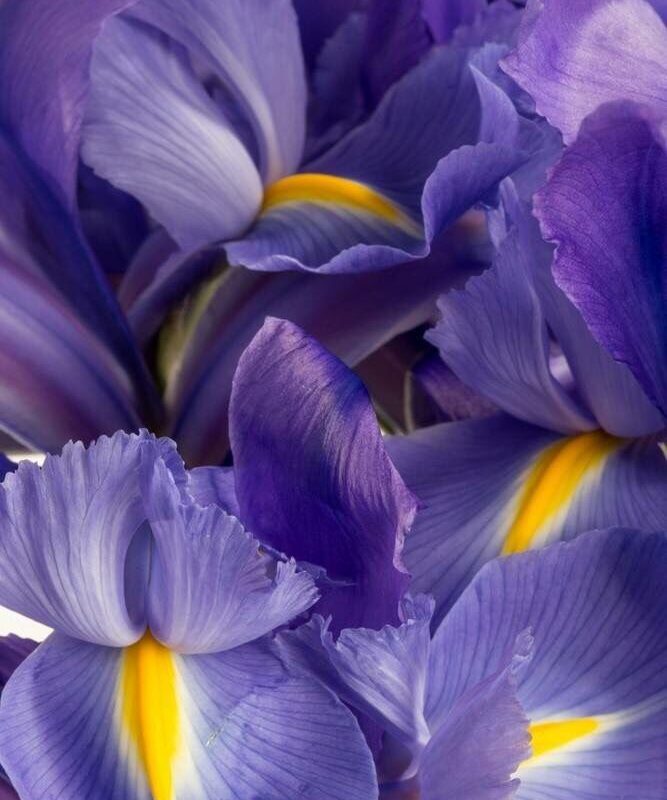
Beneath the arid, limestone soils of Tuscany, where the midday sun makes the air vibrate, a discreet plant leads a silent existence. To the distracted wanderer, the iris is but a deep blue flower, a fleeting beauty that fades with the passing of spring. But for the perfumer, the blossom is merely a lure. The true treasure, the “Grail” of the perfume organ, remains hidden in the depths: the rhizome. It is called Orris.
It is not merely a raw material; it is a lesson in patience imposed by nature. In an era where everything accelerates, orris demands the unthinkable: six years of patience before surrendering its first breath.
What the Iris root will whisper to you:
- The Time of the Earth: Why six years of patience are the immutable price for an exceptional scent.
- The Alchemy of the Shadows: The secret of the irones, those molecules born only in the silence of the attics.
- The Sovereign Gesture: From the Tuscan roncolino to the absolute, discover the hand of man behind the metamorphosis.
- Sillage of History: How Catherine de’ Medici imposed this powdery refinement upon the Court of France.
- The Art of the Bottle: An immersion into the contemporary masterpieces that celebrate this botanical muse.
I. Suspended Time: The Six-Year Cycle
The production of orris is an anomaly in the modern agricultural world. Where most crops seek immediate yield, the Iris pallida imposes its own tempo. The work begins by planting rhizome fragments in well-drained, limestone soil—often on slopes to prevent the stagnant water that would cause the root to rot.
For three whole years, the plant nourishes itself on the nutrients of the earth. It produces nothing marketable. It simply grows. It draws from the minerals of the Tuscan soil to engorge its rhizome with starch and molecular precursors. During these thousand days, the grower watches and weeds by hand, but intervenes only slightly. This is the phase of accumulation.
Then comes the harvest, a pivotal moment where the living plant becomes a raw material. But here, unlike with jasmine or the rose, the harvest is not the end of the process. It is merely a stage. Once unearthed, washed, and peeled, the iris rhizome is… odorless. If you were to bring it to your nose at that instant, you would smell nothing but the scent of damp earth and fresh potato. The olfactory magic is absent.
A new phase must then begin: drying. For another three years, the rhizomes are stored in jute sacks or spread out in airy attics. This is where the alchemy takes place. Under the influence of air and time, the fatty acids within the root slowly oxidize. This natural degradation process gives birth to the irones*. Without these three years of dormancy, in the shadows of a warehouse, the fragrance would not exist. Six years. Such is the price of transformation.
* Irones are organic molecules naturally found in the rhizomes (underground stems) of certain iris species.
II. The Hand of Man: From the Roncolino to the Alembic
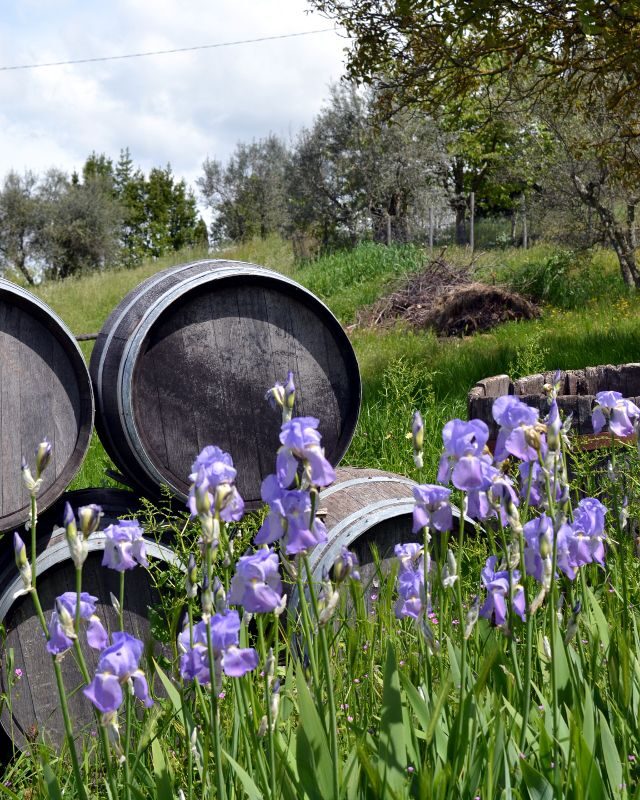
The machine has no place in the world of high-quality orris. The often steep Tuscan terrain protects this ancestral craftsmanship. The harvest is performed through manual labor, often starting at dawn to avoid the sweltering heat. It is a task of both strength and precision.
Maria’s gesture
In Florence, Maria—a farmer whose hands carry the traces of three generations of labor—wields the roncolino with the dexterity of a surgeon. This small, curved knife is the tool that serves the grower’s will. The task is to peel the rhizome, removing the dark, bitter skin to preserve only the white heart: pure and immaculate. “The root is like a raw jewel,” she explains. “If you cut too deep, you lose the precious material. If you don’t peel enough, the impurities will ruin the distillation three years later.”
Once this painstaking craftsmanship is complete, the white roots dry in the sun to lose their initial moisture before retreating into the darkness of the sheds. This passing of the torch between the human hand and natural oxidation is what defines the terroir. A Tuscan orris will never share the same profile as one grown in Piedmont or France. The Italian limestone soil bestows a finesse—a mineral identity—that can be found nowhere else.
The Final Metamorphosis
After six years, the rhizome has become as hard as stone. It must then be pulverized into a fine, almost volatile powder. This powder is then steam-distilled. What is obtained is not a classic liquid essential oil, but a solid, waxy substance that perfumers call Iris Butter—the equivalent of a “concrete” for other flowers.
This butter is already a treasure, but it remains laden with undesirable fatty acids. To reach the quintessence, an alcoholic wash is performed to isolate the Orris Absolute. The yield is staggering for an industrialist, yet fascinating for an artist: it takes a full ton of dried rhizomes to obtain only a few kilograms of butter. One then understands why this material is sometimes traded at prices exceeding that of gold.
III. The Olfactory Paradox: The Power of Powder
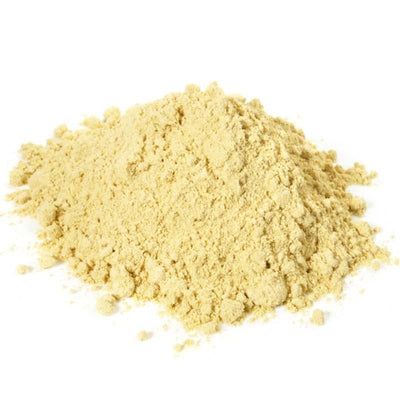
How to describe the scent of orris? It is undoubtedly the most complex note in perfumery, as it plays on striking contrasts. It is simultaneously vertical (the strength of the earth) and horizontal (the softness of powder).
The nose first perceives a sensation of absolute “cleanliness,” but an organic clean, far removed from synthetic detergents. It is the scent of a child’s skin, of old paper, of vintage lipstick. This is the “powdery” side. Yet, behind this softness lies a woody, dry, almost austere structure, reminiscent of cedar or sandalwood.
This is where the irones enter the scene. These molecules are the pillars of the structure:
- Alpha-irone brings that spring violet note, ethereal and poetic..
- Beta-irone anchors the fragrance in wood and earth, providing persistence.
- Gamma-irone offers that damp, almost tactile nuance that leads experts to say orris “smells like rain on dust.”
Orris also possesses a miraculous property: it is an unparalleled natural fixative. Its molecules are heavy. They cling to the skin and, in doing so, they hold onto other more volatile notes. A perfume containing orris doesn’t just smell good; it lasts, it evolves, and it breathes with the wearer. It transforms a simple, ephemeral fragrance into an unforgettable trail.
IV. An Epic of Elegance: From the Medicis to the Present Day
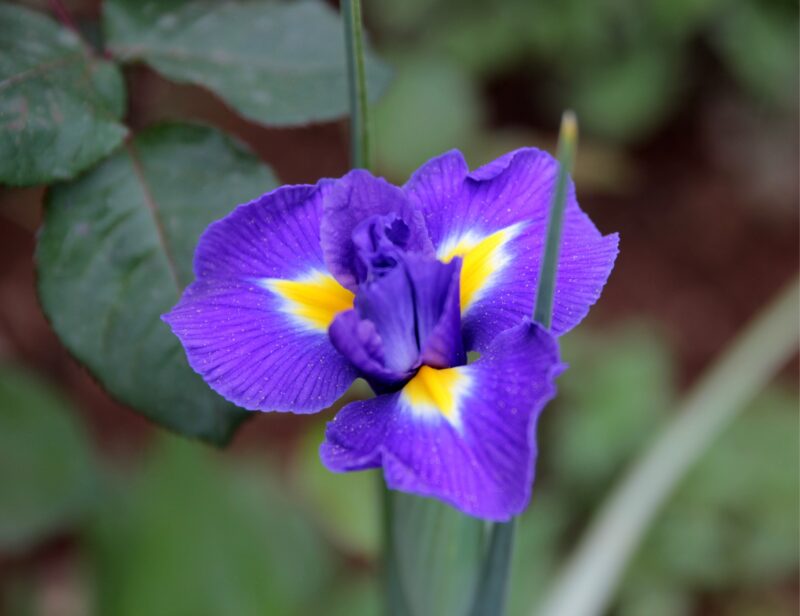
The history of orris is intrinsically linked to that of the European nobility. While the iris is the flower of the Kings of France*, its rhizome is the fragrance of Italian queens.
* The “fleur de lys” of the Kings of France is, botanically speaking, an iris.
When Catherine de Medici left Florence to marry the future King of France, she did not just take her cooks and astrologers; she brought her perfumers. At the time, orris was used in powder form to scent wigs and leather gloves. The leather of that era, tanned with aggressive products, smelled strong and foul. Orris powder not only helped mask these odors but also softened the contact of the leather against the skin.
Under Louis XV, the French court was nicknamed “the perfumed court.” Orris reigned supreme there. It was dusted onto hair and slipped into love letters so that the paper would retain an evocative memory of the sender. It is the scent of invisible refinement, of an elegance that seeks to impress not through power, but through subtlety.
In the 19th century, modern chemistry made it possible to extract the very essence of the root. Orris left the powder compacts to enter the perfume bottles. It became the soul of the great classics. Today, it continues to fascinate contemporary creators.
- In Iris Silver Mist (Serge Lutens), its dark, root-like, almost icy side is explored. It is the iris of the undergrowth, mysterious and proud.
- In Infusion d’Iris (Prada), it becomes cottony, light, clean, and modern. It is the iris of white linen drying in the sun.
V. The Experience of the Senses: Learning to See the Invisible
To understand orris, you must agree to slow down. The next time you discover a perfume claiming this note, try not to judge it within the first second. Orris is a heart and base note; it needs the warmth of your skin to unfurl.
Imagine, with every spray, the six-year journey you have just released. Imagine Maria’s hands powdered white by the root’s starch, the Tuscan sun that warmed the limestone soil, and the silent winters in the warehouses of Florence where the irones were slowly born in the darkness.
This is where the true alchemy resides. It is not merely organic chemistry; it is a human transmission. Orris reminds us that in our world of the instantaneous, certain beauties can only be born of time. It is the echo of a nature that refuses to be rushed, and which, in exchange for our patience, offers us the most beautiful of gifts: a fragrance that touches the heart as much as the skin.
History does not end with this single petal…
Two paths now lie before you: one invites you to delve deeper into the soul of this bloom by exploring main arcticle, the other beckons you to broaden your horizon by discovering its kin among other floral wonders.
Explore our themes through the “Flower Collection” tab, or return to the heart of our world:
GatewayQuestions of Floral Curiosity:
Why is orris more expensive than gold?
Its rarity stems from an incredibly low yield (one ton of roots for just a few kilograms of butter) and a six-year capital tie-up before a sale can even be made.
Can high-quality orris be grown at home?
While Iris pallida grows in many gardens, only the alchemy of Tuscan limestone soil and the three-year drying process allow for the development of its characteristic powdery note.
What is the difference between the iris flower and orris?
In perfumery, the flower is “silent” (its scent cannot be extracted). Orris refers to the processed rhizome—the plant’s true olfactory reservoir.