As November draws to a close and the first frost brushes against our windows, an unexpected guest appears at florists’ stalls: the tulip. This isn’t the grand, flamboyant spring parade of tall stems and radiant corollas. These are modest, quiet pioneers—tight green buds, simple and shy, sold in compact bunches to bloom in the warmth of our homes.
Buying tulips in late November remains an unusual gesture, almost a rebellion against the season. Yet, in 2026, these “forced” pioneers from French greenhouses are seeing a discreet but growing success, offering a touch of softness amidst the winter chrysanthemums and hellebores. They aren’t eternal—available for only three to four weeks—but they embody a deep desire to defy the cold with a promise of spring.
Inside This Botanical Journey
- Early Arrivals: Why simple green buds appear as early as late November.
- The Star of Christmas: A new holiday tradition.
- The Art of Forcing: The technical process explained simply.
- The “Viridiflora” Trend: Truly green tulips (Spring Green, Greenland) taking over the holidays.
- French Terroir: Focus on the Var region (the sun-drenched French Riviera), the heart of production.
- Short Circuits: How they travel so little from the field to your vase.
- Pro-Tips: Precise gestures to make a bouquet last 10 days.
- Decor Ideas: Sobriety and elegance for your winter interior.
Gowns of Emerald and Frost: The Birth of Advent Tulips
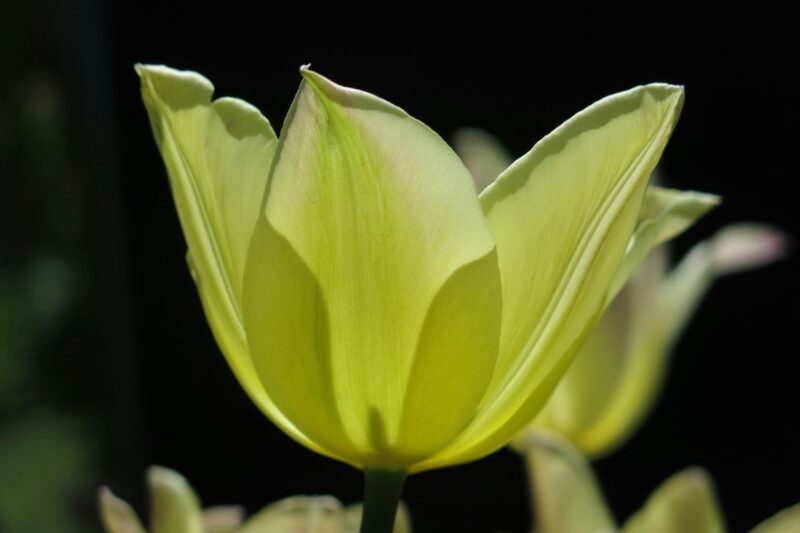
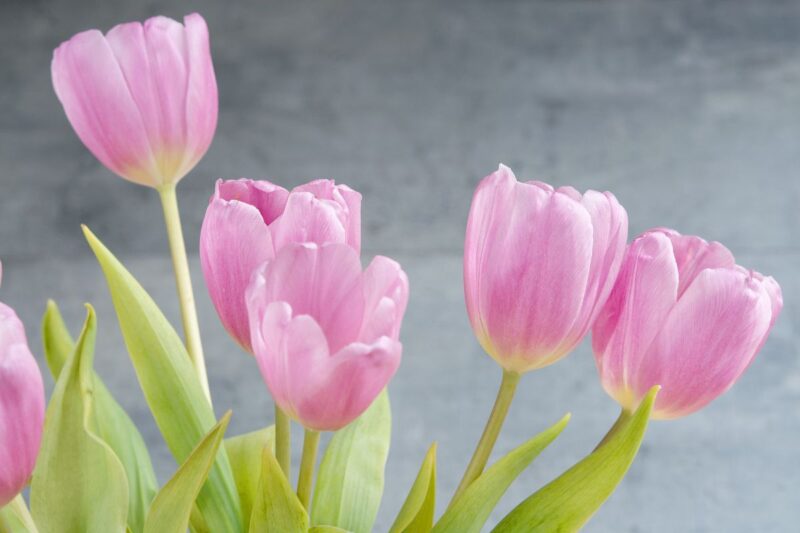
Winter tulips do not look like the others. They are minimalist, with six smooth, slender petals often tinged with green on the reverse while still closed. The bud, tight as a clenched fist, opens slowly into an elegant cup: pure creamy white, tender pale pink, or soft yellow, depending on early varieties like Fosteriana or Kaufmanniana. There are no fleshy petals or extravagant shapes here; their charm lies in a raw freshness, as if the flower were plucked at dawn on an April morning but delivered in the heart of autumn.
Their stems, short and sturdy (20 to 30 cm / 8 to 12 inches), remain vigorous, ready to stand tall in the lukewarm water of a vase. It is this simplicity that makes them so endearing: they ask for little and give much—a week or two of contemplation before they gracefully bow.
A Historical Bridge: While the sight of green tulips in winter evokes holiday magic, their story is rooted far beyond Christmas gardens. To understand the full epic of this flower, from its Ottoman origins to its speculative value, we invite you to consult our exhaustive analysis on [The History and Symbolism of the Tulip].
Forcing: An Invented Winter to Bloom Early
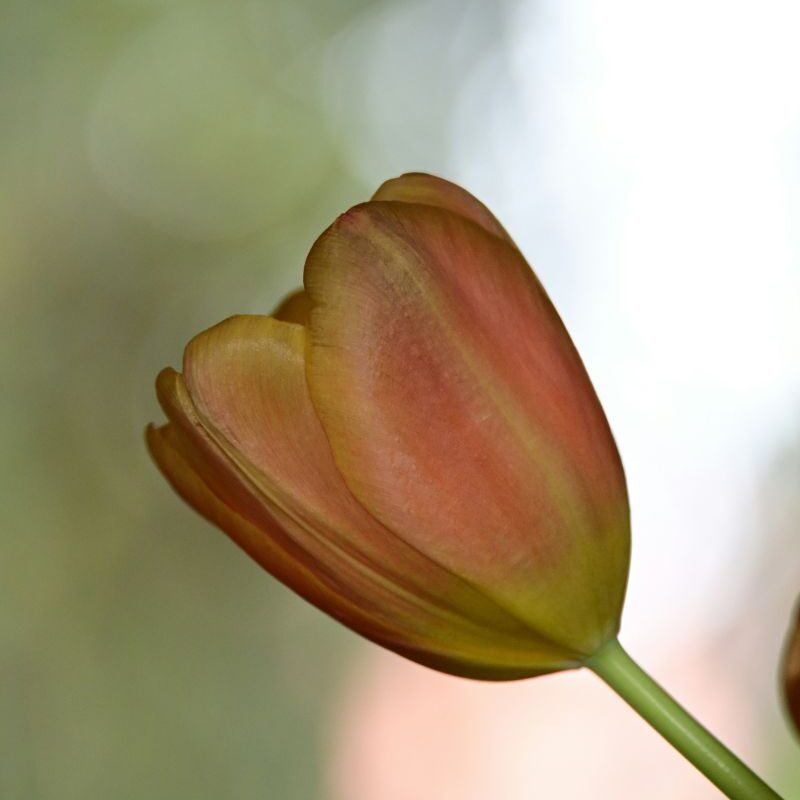
How do these tulips escape their natural calendar? It all lies in “Forcing”—an ancestral technique refined in France over decades, which tricks the bulb into believing winter has already passed.
The bulbs are harvested in summer and subjected to artificial cold: 12 to 16 weeks at 2-5°C (35-41°F) in the darkness of refrigerated rooms, simulating an accelerated winter dormancy. Then, in early October, they are planted in crates in heated greenhouses (17-20°C / 63-68°F) with supplemental lighting to compensate for the fading autumn sun. Twenty-one to twenty-eight days later, the first stems pierce the soil, and the flowers open by late November.
This technical ballet is not without risk: one degree too warm and the flower aborts; one week late and the quality drops. In France, the Var region—located along the Mediterranean coast of the French Riviera—excels in this art. In towns like Carqueiranne, greenhouses have been producing “giant” and early tulips since the 1970s, with harvests beginning in November for the earliest varieties. Other regions like Loire-Atlantique and Île-de-France (the Paris region) follow suit, prioritizing “short circuits” to limit the carbon footprint. The result: French tulips, picked 48 hours before sale, traveling barely 200 km from the field to your vase.

The Green Tulip: The Minimalist Star of Christmas
Among these early bloomers, one family stands out: the Viridiflora tulips, which remain deliberately green even when open. Spring Green, Greenland, Green Star, or Deirdre: their petals hold a wide flame of pale green or sea-foam that persists through blooming. Unlike simple pink or white tulips that lose their green tint in a few days, these remain resolutely “winter”: an icy green, sometimes almost lunar white, which works wonders in the dim light of December.
Dutch florists launched them a decade ago for “Scandinavian-style” Christmas decor; today, French producers also force them in small quantities to massive success. Sold under names like “Winter Green” or “Christmas Greenery,” they create the ultimate elegant holiday table when placed in a frosted glass vase with a few sprigs of Eucalyptus cinerea and white candles. No red, no gold—just a vegetable softness that lets the home breathe.
Artistic Contrast: The green of these tulips, linked to chlorophyll and life, contrasts sharply with the symbolism of the Golden Age classics used in Vanitas paintings to represent fleeting beauty. While these green flowers speak of rebirth, discover the tragic and magnificent role of their red and yellow cousins in [Dutch Floral Art].
The Rise of Winter Tulips: A Local and Sustainable Rebirth
These early tulips are not a passing fad; they meet a specific seasonal need. As days shorten, they offer a foretaste of spring. Their popularity in 2026 is driven by three trends: the quest for local flowers (with Dutch imports down as consumers favor the expertise of Var producers), a taste for modest hues, and a love for “limited editions”—stocks are often low at markets like Rungis, leading to quick sell-outs at local florists.
Sustainability and the “Slow Flower” Shift
The rise of winter tulips in 2026 is not just a passing trend; it answers a specific seasonal desire for local, mindful consumption. As daylight fades, these blooms offer an essential foretaste of spring.
Their massive popularity this year is driven by three major shifts: the intense quest for local flowers—as Dutch imports have dropped significantly since 2022 in favor of regional French production—a newfound love for modest, muted tones after seasons of saturated colors, and the allure of the “ephemeral.” These winter greens are produced in limited quantities, often leading to rapid sell-outs at flower markets and boutique florists.
While these specific blooms from the French Var—the sun-drenched heart of the French Riviera—are the premier stars of European winter markets, their influence has crossed the Atlantic. Today, American boutique growers and ‘Slow Flower’ enthusiasts are adopting these very same French forcing techniques. This shared expertise ensures that ‘Winter Greens’ can now bring their quiet, sophisticated magic to flower lovers from the workshops of Provence to the boutiques of New England.
Pro-Tips: Making the Miracle Last
To prolong this stolen bit of spring, start by recutting the stems by 2 cm (1 inch) at an angle under cold water to avoid air bubbles. Add floral preservative or a pinch of sugar, and change the water every two days. Place the vase far from ripening fruit (which emits ethylene gas) and heat sources, ideally keeping them at 15-18°C (59-64°F) at night.
With this care, the green petals will open in 3 to 5 days, and the bouquet will last 7 to 10 days. For a poetic touch, associate them with willow branches or simple white candles.
A Quiet Presence of Hope
Winter tulips don’t shout; they whisper. Fifteen stems in a fine glass vase are enough to transform a coffee table into a living masterpiece. Their slow opening is like a shared secret. They are not there to last; they are there to remind us that even in November, life knows how to force the door open. If you see these simple green bunches this week, stop. Watch them wake up. For a week or two, you will have a fragment of March in November—a proof that spring, sometimes, begins with a benevolent lie.
History does not end with this single petal…
Two paths now lie before you: one invites you to delve deeper into the soul of this bloom by exploring main arcticle, the other beckons you to broaden your horizon by discovering its kin among other floral wonders.
Explore our themes through the “Flower Collection” tab, or return to the heart of our world:
GatewayWinter Blooms: Your Questions About Seasonal Tulips
Is it “natural” to have tulips in November and December?
While tulips naturally bloom in spring, the art of forcing allows us to enjoy them early. By mimicking a natural winter cycle through controlled cooling and greenhouse warmth, growers can “awaken” the bulbs just in time for the holiday season. It is a traditional horticultural craft that brings a touch of life to the darkest months.
What exactly is a “Green” tulip (Viridiflora)?
Unlike most tulips that lose their green tint as they open, Viridiflora varieties like Spring Green possess a genetic trait where chlorophyll remains in the petals. This creates a stunning “flame” of green that lasts throughout the flower’s life, making them the perfect organic choice for minimalist winter decor.
: Do these early winter tulips last as long as spring tulips?
Yes, and often longer! Because indoor temperatures in winter are generally more stable than the erratic weather of early spring, and because these varieties are bred for sturdiness, a well-cared-for winter bouquet can easily grace your home for 7 to 10 days.
Can I replant the bulbs from my winter bouquet in my garden?
Unfortunately, “forced” bulbs expend all their energy to bloom early and rarely have the strength to flower again in the soil. It is best to treat them as a beautiful, ephemeral gift of the season, much like a fine bottle of wine or a holiday feast.