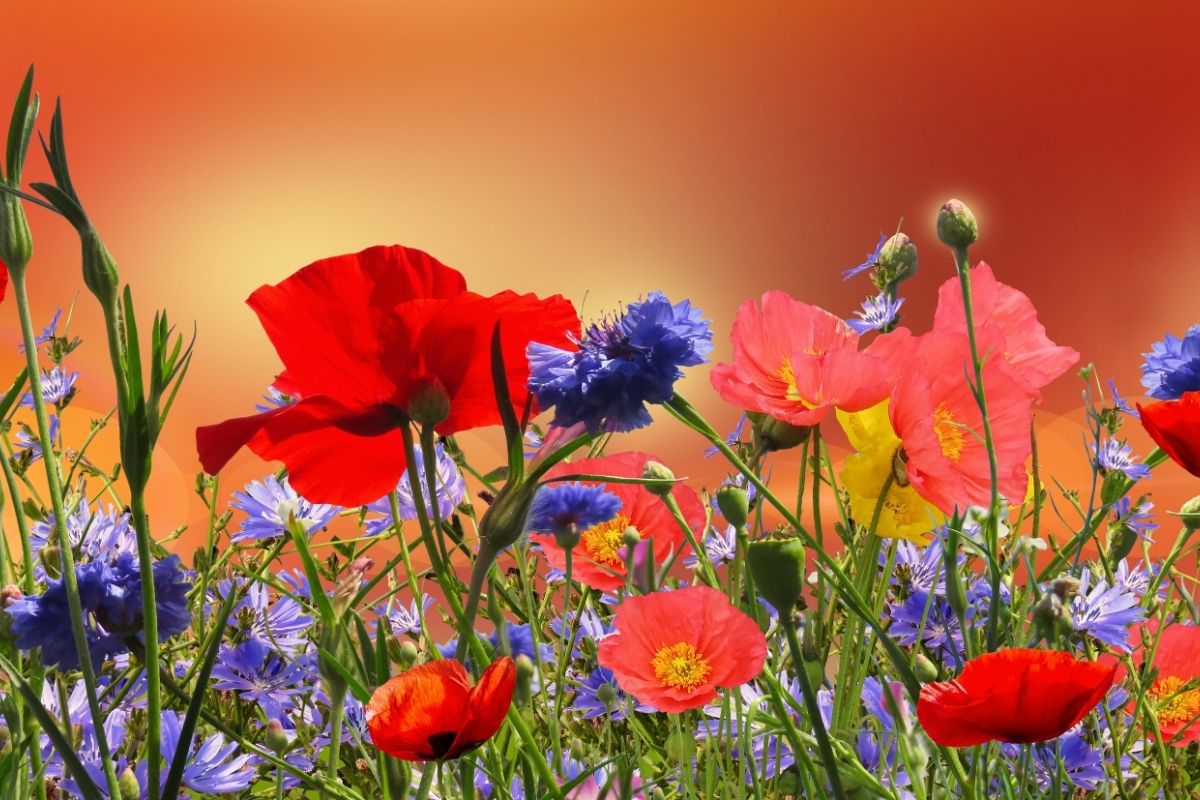
After World War I, two flowers became powerful symbols of remembrance: the poppy and the cornflower. This article clearly explains their origins on the battlefields, their meaning across different countries, and their role in commemorations. Blending history, botanical science, and memorial traditions, discover why these flowers still represent the memory of fallen soldiers and the ongoing duty to remember.
In the fields ravaged by the First World War, two fragile flowers rose as powerful symbols of memory and resilience: the cornflower and the poppy. Linked to the remembrance of soldiers fallen in battle, these blooms carry a moving history and continue to embody hope and reflection. In this article, we explore the history, symbolism, and cultural significance of cornflowers and poppies, while paying tribute to their role in commemorating the Great War. The choice of these flowers is not arbitrary; it relies on a symbolic and secret language of flowers.
In this Floral Chronicle:
- The Alchemy of the Trenches: How the churning of war-torn soil awakened dormant seeds, transforming devastated fields into a sea of scarlet poppies.
- The Blue Horizon of Resilience: The moving history of the Bleuet de France, from the “Horizon Blue” uniforms of the young recruits to the healing workshops of the Invalides.
- The Crown of a Queen: The secret legend of Queen Louise of Prussia and how a simple field flower became a symbol of national survival in the German heart.
- A Botanical Bridge of Peace: How these fragile corollas, once symbols of opposing nations, have evolved into a shared language of reconciliation and universal memory.
Origins of the Poppy and Cornflower: A Botanical Explanation
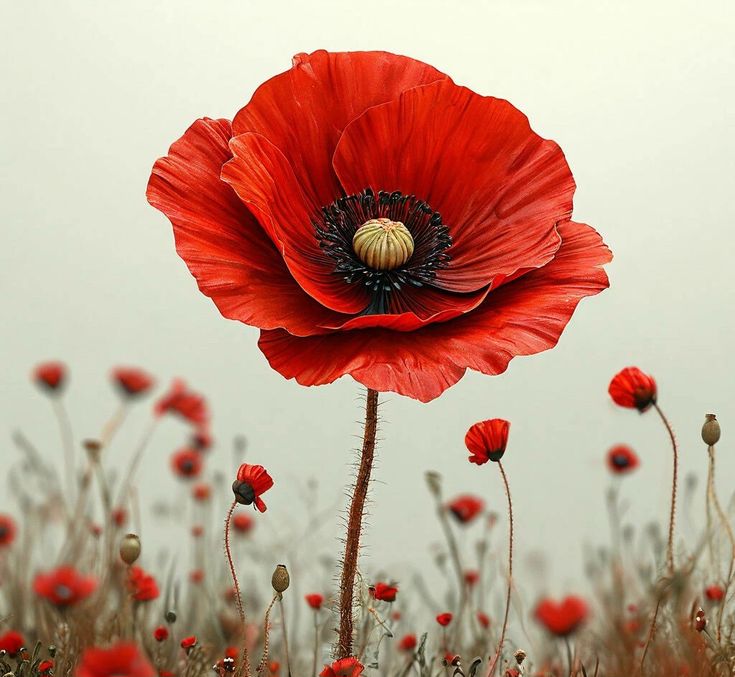
The appearance of these flowers on the battlefields is not only poetic; it is firmly rooted in science. The poppy (Papaver rhoeas) and the cornflower (Centaurea cyanus) are so-called arable weeds, or “messicoles.” Their seeds have an exceptional dormancy capacity, allowing them to remain buried in soil darkness for decades.
The catastrophic upheaval of the limestone soils in regions such as Picardy and Flanders, caused by millions of artillery shells, acted like a massive form of uncontrolled plowing. By bringing these seeds back to the surface and enriching the soil with lime (from destroyed villages and organic remains), the war paradoxically created the ideal conditions for an unprecedented bloom. In 1915, soldiers were stunned to see red and blue carpets covering the edges of the trenches, as if the land itself were trying to heal its wounds through color.
Poppy: A Symbol of World War I and Remembrance
The commemorative meaning of the poppy shifted one morning in May 1915, near Ypres. Lieutenant Colonel John McCrae, a Canadian military doctor, had just buried a young friend. Exhausted, he scribbled the verses of In Flanders Fields on a notebook page. In the poem, the dead call on the living to carry on the fight, warning they will not rest “as long as poppies grow.” It would go on to spread around the world.
However, the poppy would never have become a symbol of solidarity without the determination of two women. American Moina Michael, deeply moved by the poem, vowed to wear a silk poppy at all times. She persuaded veterans’ organizations that selling these flowers could help fund the rehabilitation of wounded soldiers. At the same time, Frenchwoman Anna Guérin organized the large-scale distribution of the “poppy” in the United Kingdom and Canada. In 1921, the Royal British Legion officially adopted the poppy, establishing a tradition that still sees millions of paper flowers worn on coats every November.
The Cornflower in Europe: German Legend and Symbolism
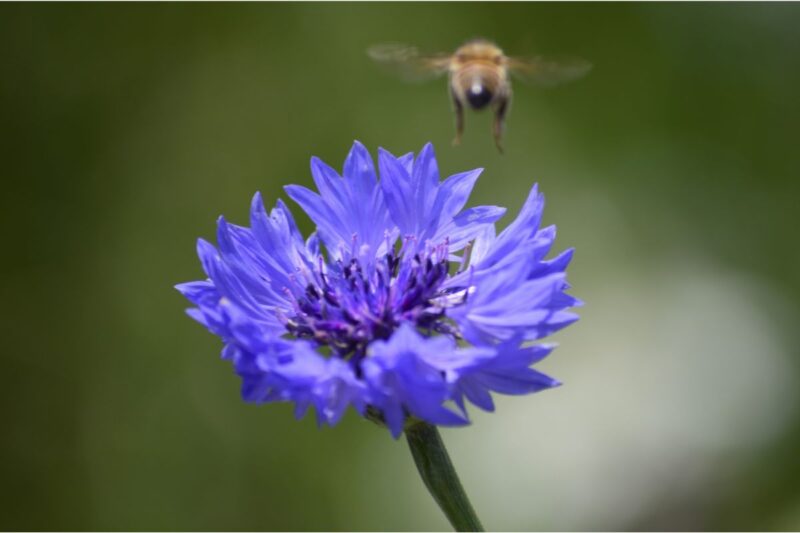
It is striking to note that across the Rhine, the cornflower carries a very different story—one marked by unexpected tenderness. Long before the world wars, the Kornblume (the German cornflower) was already a national symbol, rooted in an imperial legend. In 1806, as she fled Napoleon’s army, Queen Louise of Prussia is said to have taken refuge in a field with her children. To calm them and distract them from danger, she wove crowns for them using the wild cornflowers growing around her. Her son, the future Emperor Wilhelm I, later made it his favorite flower in memory of this maternal gesture. This shared destiny of a single flower—refuge of a queen in Germany, horizon of the soldier in France—reminds us that the poetry of plants knows no trenches.
Symbolism of the Poppy and Cornflower: Memory, Peace, and Sacrifice
The poppy and the cornflower share a symbolism that transcends borders.
Red: evokes the blood shed, passion, but also the intensity of battle.
Blue: represents the sky, a sense of regained calm, and historically, France.
In France, chrysanthemums are the traditional flowers used to honor the dead during All Saints’ Day, and they remain one of the strongest floral symbols of remembrance.
These flowers teach us resilience. They stand as proof that life returns, even on soil once poisoned by gas and heavy metals. In the language of flowers, their meanings speak of remembrance, healing, and the fragile hope of peace.
In other cultures, such as Mexico, the Marigold plays a central role during Día de los Muertos, where it is believed to guide and accompany the souls of the deceased.
The Mirror Across the Rhine: Germany’s Blue Jewel
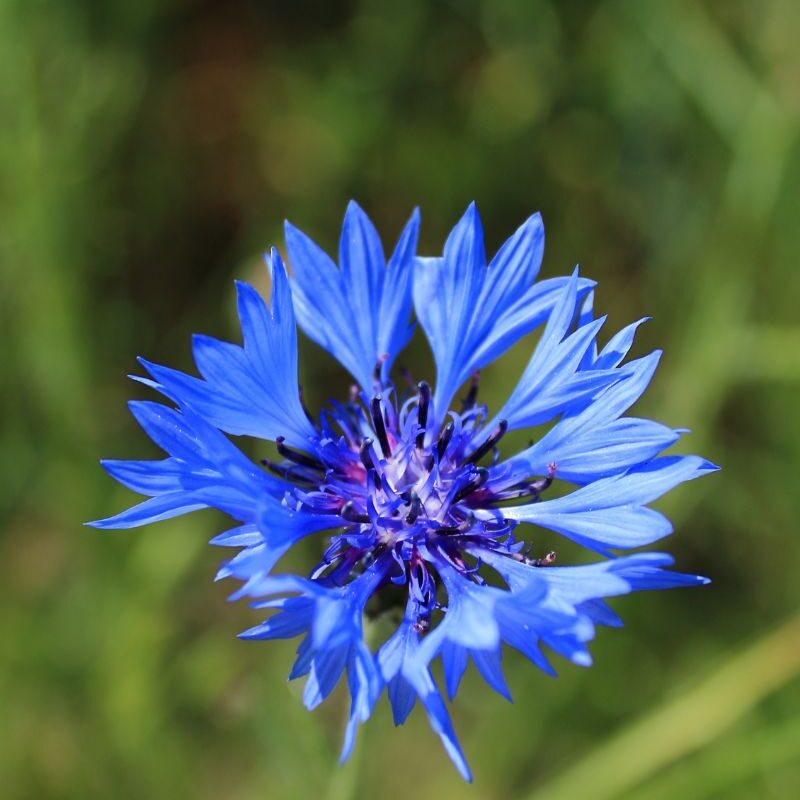
The National Flower of Prussia
While the cornflower is the herald of French memory, it also holds a sacred, ancestral place across the Rhine as the Kornblume. In the 19th century, it became the quintessential symbol of Prussia and, subsequently, of the German Empire. Its deep azure hue—recalling the famous ‘Prussian Blue’—was more than a mere aesthetic choice; it embodied the romantic ideals of fidelity, rural purity, and a profound connection to the soil. For Emperor William I, it was the ‘Kaiserblume’ (the Emperor’s flower), a personal favorite that he helped elevate to a national emblem, weaving it into the very fabric of German identity.
The Legend of Queen Louise’s Crown
The soul of this devotion lies in a poignant legend born during the Napoleonic Wars of 1806. It is told that Queen Louise of Prussia, fleeing Berlin to escape the advancing French troops, found refuge in a golden field of grain with her children. To soothe her young sons’ fears during their long hours of hiding, the Queen wove crowns from the brilliant blue cornflowers growing amongst the wheat. One of those children, the future Emperor William I, never forgot this gesture of maternal grace amidst the chaos of war. For him and for generations to come, the cornflower became a symbol of national survival and the resilience of the heart when faced with overwhelming odds.
A Shared Witness: From Conflict to Reconciliation
In our modern era, the presence of the cornflower in both French and German traditions has evolved from a mark of division into a powerful bridge of reconciliation. Today, these blue petals—whether called Bleuet or Kornblume—serve as a silent, shared witness to a common European sorrow. No longer just symbols of separate nations, they have become emblems of a ‘memory beyond borders.’ In recent years, they have been seen side by side at international commemorations, reminding us that nature does not recognize the trenches of men, and that beauty and grief are languages spoken by all humanity.
Shared Symbolism: Memory and Resilience
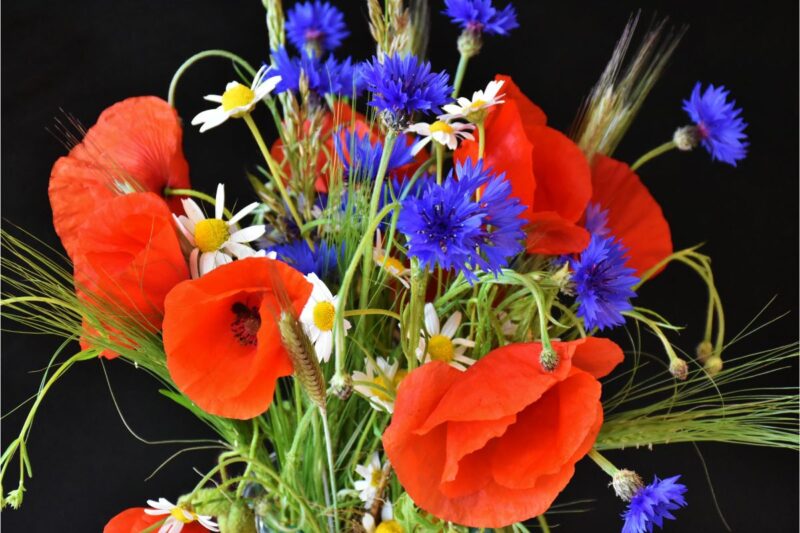
Although the poppy and the cornflower are linked to different nations, they share a common symbolism: that of memory, resilience, and hope. These seemingly fragile flowers managed to thrive in extreme conditions, just as the soldiers endured the hell of the trenches. Their presence in the devastated fields also symbolizes nature’s ability to regenerate—a powerful metaphor for societies scarred by war. Today, these flowers continue to remind us of the importance of never forgetting the sacrifices of the past while looking toward a future of peace.
Although the poppy and the cornflower originate from World War I, they are now used as broader symbols of remembrance, associated with all 20th-century conflicts, particularly World War II commemorations such as D-Day and Victory in Europe Day on May 8.
Petals to Remember
Cornflowers and poppies are far more than mere flowers. They are the guardians of collective memory, symbols of hope and resilience born in the devastated fields of the First World War. In France and abroad, they invite us to remember the soldiers’ sacrifices while celebrating life that endures despite everything. This tribute is part of a long-standing tradition of rites and the symbolism of offerings.
Frequently Asked Questions: A Deeper Look into Floral Heritage
Why is the poppy specifically linked to the soil of the Great War?
Beyond its poetic beauty, the poppy is a botanical opportunist. The heavy shelling of the First World War released high levels of nitrates into the earth, creating the perfect conditions for poppy seeds—which can lie dormant for eighty years—to bloom in a spectacular, almost miraculous, red tide.
Is the German “Kornblume” the same species as the French “Bleuet”?
Yes, both are the Centaurea cyanus. While their botanical identity is identical, their symbolic paths diverged: one mirroring the French soldier’s uniform and the other embodying Prussian romanticism and the legend of Queen Louise’s maternal courage.
How do these flowers contribute to modern reconciliation?
Today, the poppy and the cornflower are no longer markers of enmity. In international ceremonies, they are often worn together, symbolizing a “memory beyond borders.” They remind us that the earth knows no victory, only the cycle of life that persists despite the scars of history.
Continue Your Exploration
Immerse yourself in the world of flowers through our various themes and discoveries.
Start ExploringReceive Our Next Discoveries
Subscribe ✉️