This general interest article invites us to discover Garden Angelica, a plant that sits right at the crossroads of the Sacred and Botany. Through the lenses of Medieval History and the Art of Living, we explore how this “Herb of the Holy Ghost” traveled from monastery gardens to confectioners’ workshops. It’s a journey between medicinal traditions and culinary heritage, lifting the veil on a truly extraordinary botanical destiny.
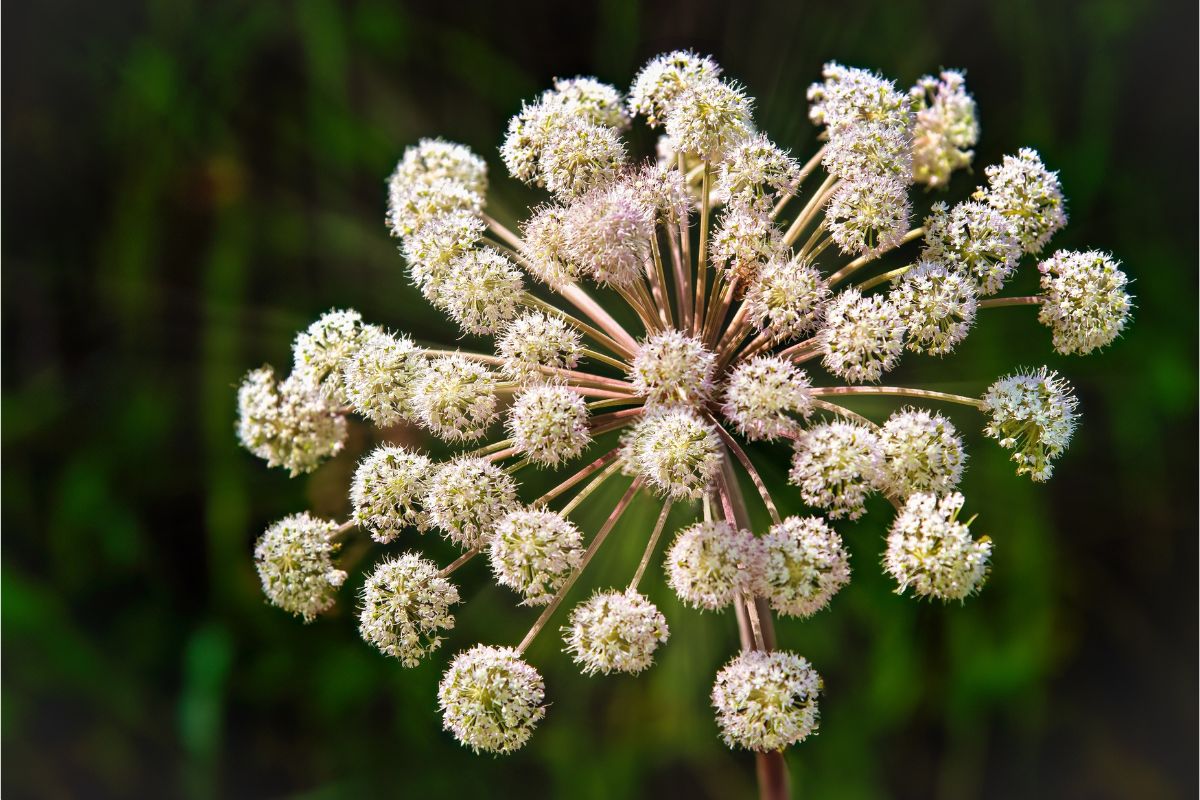
Within the European botanical landscape, few plants possess a presence as singular as garden angelica (Angelica archangelica). This grand umbellifer does not merely grow: it rises, straight and vigorous, with an almost architectural elegance. Its powerful, hollow, and fluted stalks can exceed two meters in height, bearing wide, greenish umbels that irresistibly draw the wanderer’s eye.
For centuries, this plant has intrigued and fascinated. It appears, by turns, in folk traditions, medicinal treatises, monastic gardens, and even the kitchens of confectioners. Known as the “root of the Holy Ghost” in certain regions of Europe, angelica has long held a unique place in the human imagination. Its history weaves together beliefs, practical uses, and scientific discoveries.
Why Garden Angelica Deserves Your Undivided Attention
- A Heritage from the Far North: Discover how this robust plant braved harsh winters to become a vital resource for northern societies.
- A Garden Architect: Learn to recognize this two-meter giant whose structured elegance captivates both botanists and gardeners alike.
- The Art of Transformation: Delve into the workshops of Niort’s confectioners and master distillers who have refined its unique aromas for centuries.
- A Sensory Treasure: Explore the subtleties of its fragrance—a dance of musky and herbaceous notes—that makes it an essential ally for spirits and patisseries.
- Safety First: Master the essential identification criteria to distinguish this generous plant from its toxic cousins.
- The Weight of History and Mystery: Immerse yourself in medieval lore, where angelica was revered as a divine protector, weaving the legend of its name and reputation through the ages.
I. A Plant from the Frozen North
Unlike many medicinal plants that trace their origins to the Mediterranean basin, garden angelica is a child of the northern lands. It grows naturally in the cool, damp regions of Northern Europe: Scandinavia, Iceland, Greenland, and even select mountainous zones.
In these territories of short summers and harsh winters, plants capable of rapidly producing fleshy, edible stalks were held in high regard. Angelica stood among these invaluable botanical resources, prized for its tender stalks, aromatic leaves, and fragrant root.
Medieval Icelandic sources already record the cultivation of angelica within protected gardens. The Grágás, an ancient collection of Icelandic laws, even details sanctions for anyone intruding upon a neighbor’s garden to harvest angelica roots. This legal protection bears witness to the profound value placed upon the plant within these rural societies.
Northern populations consumed its stalks fresh—sometimes simply peeled—or dried them for later use. Rich in both aroma and nutrients, they served as a vital dietary supplement in regions where fresh vegetables were scarce.
This northern origin undoubtedly explains the plant’s inherent robustness. Angelica thrives in cold climates and damp soils. Its rapid growth allows it to fully seize the fleeting summers of the North.
II. A Remarkable Botanical Architecture
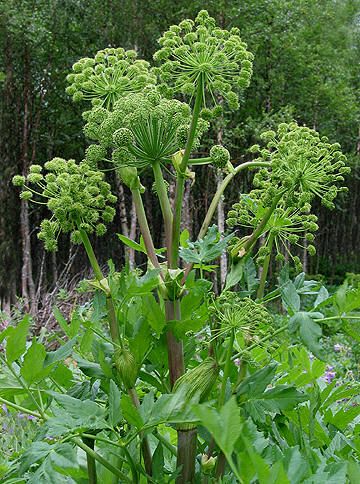
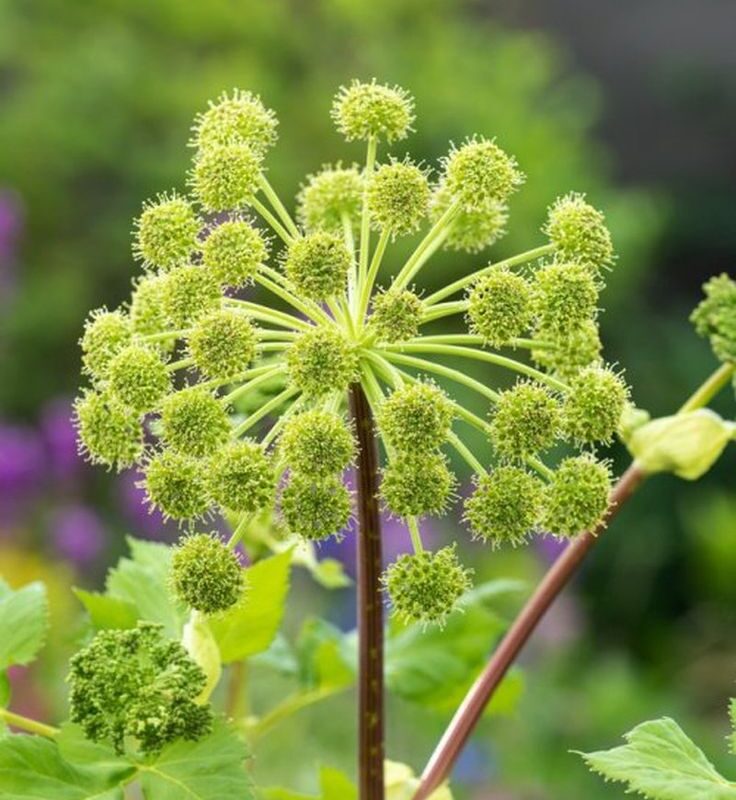
In a garden, angelica immediately commands attention. Following an initial year dedicated to forming a rosette of broad, incised leaves, the plant enters its spectacular phase: it develops a towering floral stalk that can reach two meters, or even more under optimal conditions.
This hollow, slightly fluted stalk branches toward the summit, bearing vast spherical umbels composed of hundreds of tiny, pale green or cream-colored florets. The ensemble forms a remarkably regular, almost geometric structure.
Botanists classify angelica within the Apiaceae family—formerly known as Umbelliferae—which also includes parsley, carrot, fennel, and dill. Like its cousins, it possesses characteristic umbel-shaped inflorescences and releases an aromatic fragrance when its leaves are crushed.
This fragrance—at once sweet, slightly musky, and faintly spicy—stems from the presence of essential oils and complex aromatic compounds. For centuries, these very substances have bolstered the plant’s medicinal renown.
In European gardens, angelica is often cultivated as an ornamental plant as much as for its culinary virtues. Its slender silhouette lends a compelling verticality to garden beds while drawing in a multitude of pollinating insects.
III. A Protective Herb of Medieval Europe
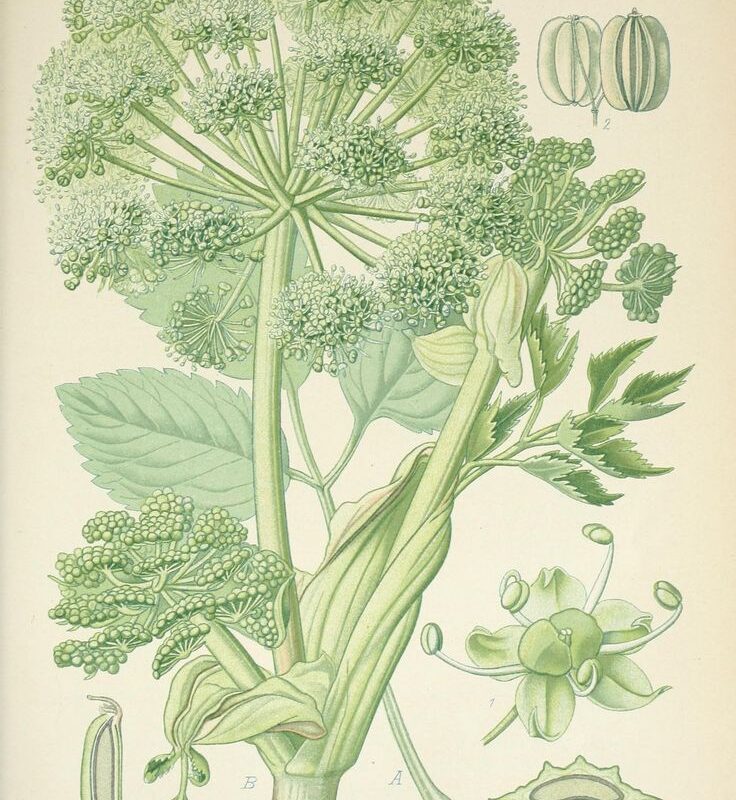
Throughout the Middle Ages and the Renaissance, angelica enjoyed an exceptional reputation. In an era when diseases were poorly understood and medicine relied heavily upon plants, any species possessing a potent fragrance or stimulating properties could swiftly acquire a nearly miraculous aura.
According to certain traditions, an angel appeared to a monk, revealing the plant’s protective virtues. This legend likely explains the origin of the Latin name “archangelica,” as well as the frequent association of angelica with divine protection.
During the great epidemics that struck Europe, particularly the waves of plague that recurred from the 14th century onwards, numerous aromatic plants were utilized in the hope of purifying the air. The prevailing theory of the era was that of miasmas: it was believed that diseases were transmitted through corrupted and foul-smelling air.
Within this context, angelica roots and seeds were incorporated into various medicinal or aromatic blends. They were sometimes used in the composition of medicinal vinegars or fragrant preparations intended to ward off malevolent influences.
While these practices obviously could not halt the great epidemics, certain digestive and stimulating properties of the plant may have contributed to strengthening the body or alleviating the discomfort of the afflicted.
IV. From the Apothecary to the Confectionery
While angelica long belonged to the realm of traditional medicine, it has also enjoyed a remarkable career in the world of gastronomy.
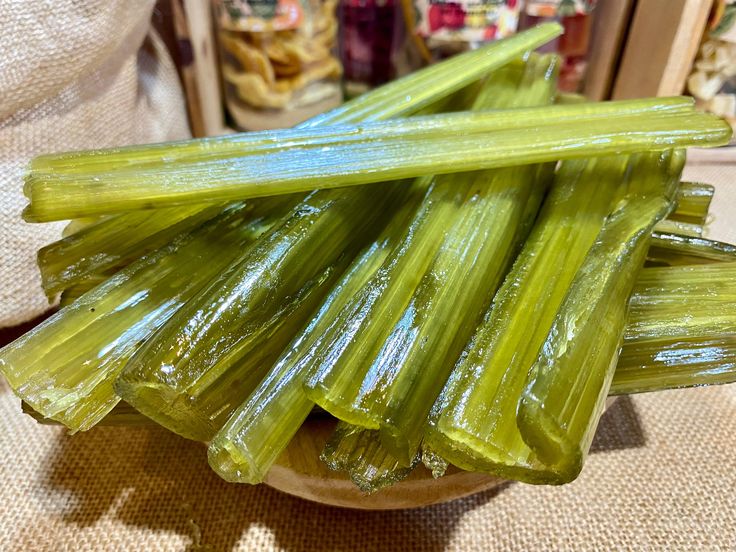
Beginning in the 18th century, several French regions developed the art of candying angelica stalks in sugar. The principle involves the gradual replacement of the water within the plant’s fibers with a syrup of increasing sugar concentration.
This process requires both patience and precision. The stalks are first blanched, then successively immersed in sugar baths of gradually increasing concentration. Throughout the process, they become translucent while retaining their texture.
The city of Niort, in the Poitou region, became particularly famous for this specialty. To this day, the craftsmanship of Niort’s confectioners keeps this emerald tradition alive, cementing the city’s status as the undisputed capital of this extraordinary plant.
Confectioners used these emerald-green stalks to decorate cakes, brioches, and refined desserts. Their flavor, both sweet and subtly herbaceous, lent an original note to pastries.
Even today, candied angelica remains a cherished regional specialty, although its production has become more niche.
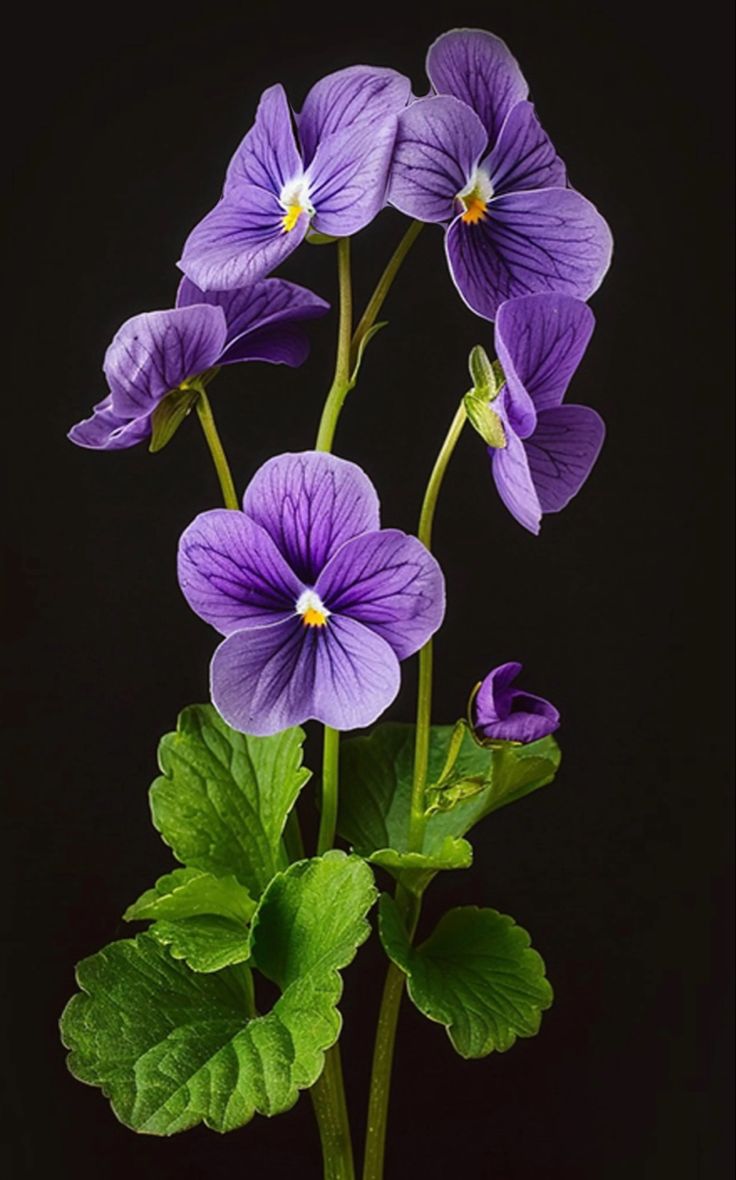
This heritage of confectionery art also extends to other delicate blossoms, such as the violet, which shares a similar history of culinary transformation.
V. Angelica and Spirits
Confectioners are not the only ones to appreciate angelica. Distillers have long been drawn to its roots and seeds, which possess a powerful and complex aroma. In the crafting of certain spirits, angelica plays a significant role by imparting earthy, slightly musky notes that contribute to the aromatic depth of the drink. It is thus a key ingredient in several historical liqueurs, particularly those derived from monastic recipes.
In the crafting of certain spirits, angelica plays a significant role by imparting earthy, slightly musky notes that contribute to the aromatic depth of the drink. It is thus a key ingredient in several historical liqueurs, particularly those derived from monastic recipes.
It is also utilized in the production of many gins. In these botanical blends, angelica root acts as a base note that binds more volatile aromas, such as those of citrus or flowers.
This aromatic balancing function explains why many master distillers continue to feature it in their recipes.
VI. The Herb of Angels: Reflections on a Legend
Beyond its botanical and culinary uses, angelica has traversed the centuries carried by narratives that have shaped the collective imagination. In an era when remedies were scarce, its potent fragrance and stimulating properties earned it the name “herb of the Holy Spirit.” Legend has it that an angel revealed the plant’s virtues to a monk to protect the people from epidemics. This celestial connection isn’t unique in the botanical world; it’s mirrored in other cultures where flowers serve as bridges to the unseen, much like the divine lotus and its spiritual symbolism. While this mystical dimension explains its scientific name, Angelica archangelica, today, it speaks above all to the special place the ancients reserved for plants seen as protectors against the unknown.
VII. Caution and Identification
Despite its many virtues, angelica requires caution when encountered in the wild. Like many Apiaceae, it can be mistaken for other species within the same family, some of which are toxic. The most well-known confusion is with poison hemlock (Conium maculatum), famously used as the poison for the execution of Socrates in Ancient Greece.
However, several key features make it possible to distinguish between the two plants.
The angelica stalk is generally green, somet
imes slightly purplish at the base, but it remains uniform. The hemlock stalk often features characteristic reddish-purple spots.
The scent provides another clue. Angelica leaves emit a pleasant, aromatic fragrance, while those of the hemlock produce a disagreeable odor, often compared to that of mouse urine.
Finally, stature can also be helpful: garden angelica often reaches two meters or more, with a robust and uniform appearance.
These simple criteria make it possible to avoid the most dangerous cases of mistaken identity.
VII. A Rediscovered Plant
In recent years, angelica has experienced a resurgence of interest. Enthusiasts of traditional herbalism, curious chefs, and passionate mixologists are rediscovering the possibilities offered by this ancient plant.
Its leaves can infuse broths or accompany certain fish dishes. The young stalks, when still tender, can be used in cooking after proper preparation.
In the world of cocktails, angelica root is also prized for crafting artisanal bitters. Its subtle bitterness and complex fragrance help balance sweet or spirit-forward mixtures.
Thus, this great plant from the North continues to find its place in contemporary practices, bridging the gap between tradition and creativity.
Conclusion : The Longevity of a Singular Plant
The history of angelica shows how a simple plant can span the centuries, shifting its role without ever losing its allure. By turns a remedy, a talisman, an occasional vegetable, a confection, and a distillation ingredient, it has accompanied many of the evolutions of European culture.
Its slender silhouette continues to grace gardens today, while its aromas persist in certain culinary and spirit specialties.
Beneath its broad, greenish umbels lies a plant quietly steeped in history. It serves as a reminder that the plant kingdom is not limited to pure botany: it is also woven from traditions, human experiences, and a curiosity for the resources that nature places at our disposal.
FAQ : The Curious Lore of Angelica
Is it safe to forage for Angelica in the wild?
While foraging is a rewarding experience, nature demands respect. Angelica has a dangerous ‘look-alike’—poison hemlock—which can be fatal. Our guide helps you master the three key visual and sensory identifiers to forage with total confidence.
Why is Angelica called the “Herb of Angels”?
Long before it became a staple in modern mixology, Angelica was whispered to have mystical properties. Discover the medieval legend of the monk who revealed its ‘divine’ power during an epidemic, and how it shaped European folklore for centuries.
Can I use Angelica in my home kitchen?
Absolutely. Beyond its historical uses, Angelica is a secret weapon for modern chefs and cocktail enthusiasts. From infusing delicate broths to crafting artisanal bitters, learn how to elevate your dishes and drinks with its unique, earthy, and aromatic profile.
How does Angelica compare to other edible flowers like the violet?
If you’ve enjoyed the delicate sweetness of candied violets, you’ll love the robust versatility of Angelica. Both represent a storied tradition of floral confectionery. Click here Art of Living to explore how these two iconic plants have influenced the art of the French confiseur.
I’m a bartender/mixologist: what does Angelica add to a cocktail?
It’s the secret ingredient you’ve been looking for. Angelica root provides a complex, structural bitterness that perfectly balances ‘spirit-forward’ drinks. Discover why it has become a go-to for professional mixologists looking to add depth and sophistication to their bitters.
Continue Your Exploration
Immerse yourself in the world of flowers through our various themes and discoveries.
Start ExploringReceive Our Next Discoveries
Subscribe ✉️Crédits photos :
- Couverture : Christian Fischer / CC BY-SA 3.0