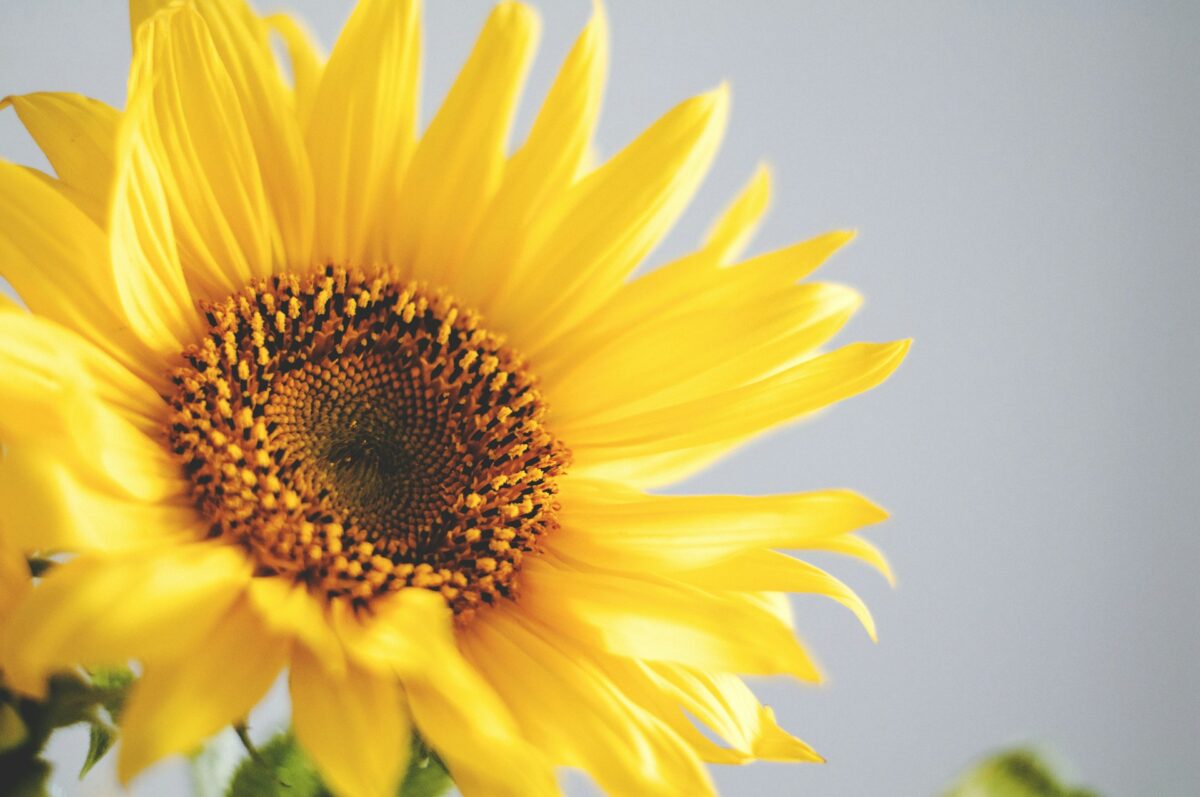
Under a radiant sky, sunflowers lift their gilded faces like living brushes capturing the very essence of light. Helianthus annuus, born in the sweeping plains of the Americas, is far more than a mere botanical specimen; it is an artistic icon, a vibrant symbol of hope and vitality. From ancient Inca altars to the feverish canvases of Vincent van Gogh, the sunflower illuminates the history of art, weaving a golden thread across centuries and civilizations. In our series Flowers in Art, Pétales d’histoire explores the profound significance of this floral muse that has enchanted painters and poets throughout the ages.
The Helianthus Through the Centuries: What the Flower Whispers to Art
- The Solar Idol: Its central role in the ritual iconography of Pre-Columbian civilizations.
- The Baroque Mirror: How 17th-century masters transformed it into a symbol of fidelity and nobility.
- Van Gogh’s Priesthood: An analysis of the biological mutations that inspired his most legendary masterpieces.
- The Icon of Resilience: Its modern reinterpretation in contemporary art and environmental installations.
A Muse from the Americas to European Ateliers
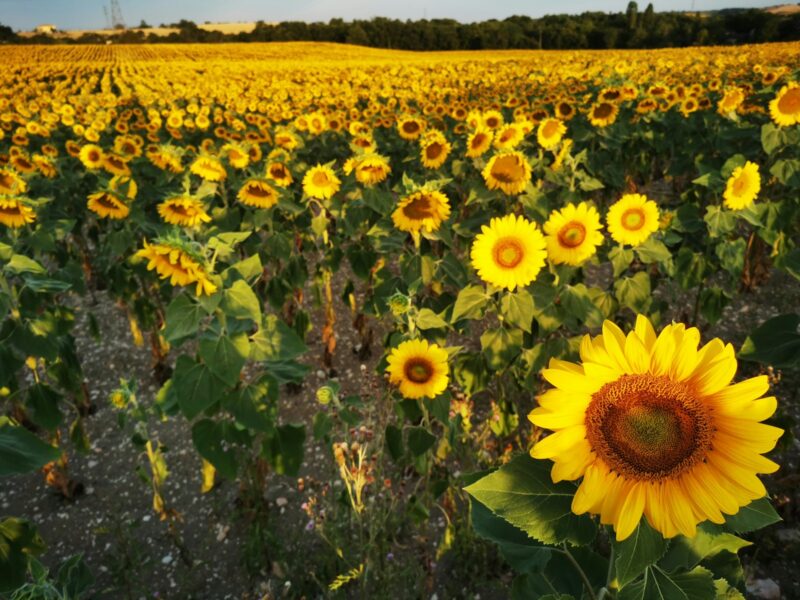
As early as 3000 BCE, Native American peoples venerated the sunflower as a sacred symbol of the solar deity, Inti. Its radiant petals adorned altars, inspiring ritual motifs carved into stone or woven into ceremonial fabrics. These primary artistic expressions imbued the sunflower with a spiritual weight, linking the earth to the heavens.
In the 16th century, Spanish conquistadors brought this marvel back to Europe, where it transitioned from a botanical curiosity to a centerpiece of artistic iconography. In the royal gardens of Madrid and the sprawling estates of Versailles, Baroque painters such as Jan Brueghel the Elder captured its splendor in opulent still lifes. In these works, every golden petal evokes a sense of wealth and vitality, marking the flower’s grand entrance into the European consciousness.
Far beyond mere botanical opulence, the sunflower became, under the brushes of the 17th century, a true metaphysical compass. In emblem books and court portraits—such as the famous self-portrait by Sir Anthony van Dyck, where he depicts himself alongside a giant corolla—the flower embodies fides, the absolute fidelity that orients the soul toward the light. This movement of the blossom following the sun—heliotropism—ceased to be a mere biological phenomenon and became a powerful metaphor for devotion: the courtier toward his king, or the believer toward the divine. Thus, “the flower of the sun” established itself as a cultural bridge, a floral muse celebrated throughout European high art.
Van Gogh and the Soul of the Sunflowers
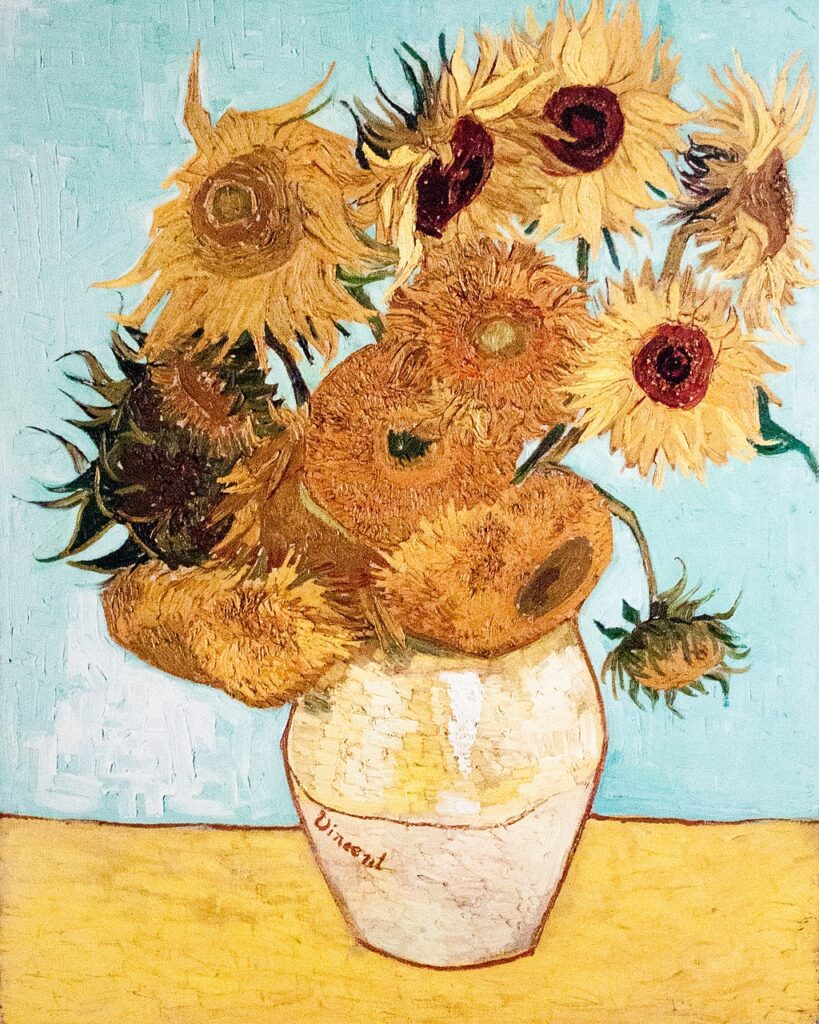
In 1888, in the sun-drenched town of Arles, Vincent van Gogh transformed the sunflower into a timeless icon of light and hope. Within the walls of his modest Yellow House, he created his world-renowned Sunflowers series—bouquets of vibrant yellows that seem to imprison the brilliance of the day. “The sunflower is mine, in a way, like the sun,” he passionately confessed to his brother Theo. Intended to impress Paul Gauguin, these canvases translate the deepest meaning of the sunflower in art: a raw, emotional cry blending joy with an underlying melancholy.
Beyond the striking colors, Van Gogh immortalized a biological curiosity: his models were often specimens suffering from a mutation known as “double flowering.” By painting these blossoms with centers densely packed with petals, he captured a rare, tormented, and uniquely beautiful form of nature.
To capture this pure radiance, Vincent turned to the scientific innovations of his time, employing Chrome Yellow pigments that were revolutionary at the moment. Yet, this quest for absolute intensity carried a tragic fragility. Under the relentless effect of light, these pigments oxidize and darken over the decades. Thus, Van Gogh’s work suffers the same fate as its botanical model: it slowly withers, transforming the brilliant gold of the early days into a bronze patina aged by time, rendering these painted bouquets as mortal as the living flowers from which they were born.
The vibrant yellows, applied with feverish brushstrokes, contrast with backgrounds of turquoise or ochre, capturing an inspiration drawn directly from the raw intensity of nature. Each petal reflects Van Gogh’s internal turmoil and his desperate love for the light. The 1888 version, with its rustic vase and fading blooms, contrasts with the more luminous 1889 version displayed at the Sompo Museum in Tokyo. Today, these masterpieces, held in institutions like the Van Gogh Museum in Amsterdam or the National Gallery in London, consecrate the sunflower as an eternal symbol of floral iconography. Influenced by Japanese woodblock prints, Van Gogh saw in them a metaphor for his inner quest—a bridge between the human soul and the natural world.
The Sunflower in Global Iconography
Beyond the genius of Van Gogh, the sunflower continues to inspire art across the globe. This fascination is rooted in heliotropism: the flower’s movement following the sun serves as a metaphor for “perpetual devotion,” representing the soul of the faithful turning tirelessly toward divine light.
In Russia, starting in the 18th century under the influence of Peter the Great, it became a recurring motif in folk art. Orthodox embroideries and icons adopted its golden petals as symbols of divine light. A popular folksong even compares the flower to a young girl watching the horizon, a theme later revisited in 19th-century Romantic watercolors.
In the contemporary art world, particularly in Ukraine, the sunflower embodies resilience. Following the Chernobyl disaster, artistic installations drew inspiration from the plant’s ability to purify the soil, turning the flower into a symbol of hope in the face of catastrophe. These modern works, exhibited in galleries such as the PinchukArtCentre, extend the significance of the sunflower in art, weaving together beauty, science, and renewal.
A Virtual Flower Route: In the Footsteps of Van Gogh
In Arles, the fields of sunflowers still dance in the wind, a living echo of Van Gogh’s canvases. The Yellow House, marked today by a simple plaque, remains a place of pilgrimage for lovers of floral art. The Van Gogh Route, accessible via the Van Gogh Museum or Google Arts & Culture, offers a virtual immersion into this golden universe. Each sunflower whispers a story, revealing the flower’s enduring significance in the artistic inspiration of the master.
A Timeless Muse
From Inca altars to Van Gogh’s canvases, from Russian icons to modern environmental installations, the sunflower shines as an eternal symbol in art. In the Flowers in Art series, it embodies the light that unites eras and cultures—a golden muse inviting us to paint our own hopes, one petal at a time.
History does not end with this single petal…
Two paths now lie before you: one invites you to delve deeper into the soul of this bloom by exploring main arcticle, the other beckons you to broaden your horizon by discovering its kin among other floral wonders.
Explore our themes through the “Flower Collection” tab, or return to the heart of our world:
GatewayDeepening the Gaze: Frequently Asked Questions about Sunflowers in Art
Why were sunflowers so important in Van Gogh’s paintings?
For Van Gogh, sunflowers were more than flowers; they were a symbol of gratitude, light, and the cycles of life. He saw in their vibrant yellow a representation of the sun’s divine energy. Interestingly, his Choice of “double-flowered” mutant varieties allowed him to experiment with thick, expressive textures (impasto), making his bouquets feel alive and almost architectural.
What is the hidden meaning of the sunflower in Baroque art?
In 17th-century Baroque paintings, the sunflower primarily symbolized fidelity and devotion. Because of its heliotropism (turning toward the sun), it became a metaphor for the soul’s orientation toward the divine or a subject’s loyalty to a monarch. It was the ultimate “metaphysical compass” of the era.
How did the sunflower travel from the Americas to European canvases?
Native to North America and cultivated by the Incas and Aztecs, the sunflower was considered a sacred solar icon. It was brought to Europe by Spanish explorers in the 16th century. Originally grown as a botanical curiosity in royal gardens, it quickly caught the eye of artists like Jan Brueghel, who integrated its exotic scale into opulent still-life compositions.
Is it true that the yellow in Van Gogh’s sunflowers is changing over time?
Yes, and it is a fascinating paradox of art history. Van Gogh used Chrome Yellow pigments, a cutting-edge chemical innovation of the 19th century. Unfortunately, these pigments are sensitive to light and oxidation. Over time, the brilliant golds are slowly turning into a brownish-bronze, making the paintings as “mortal” as the flowers they depict.