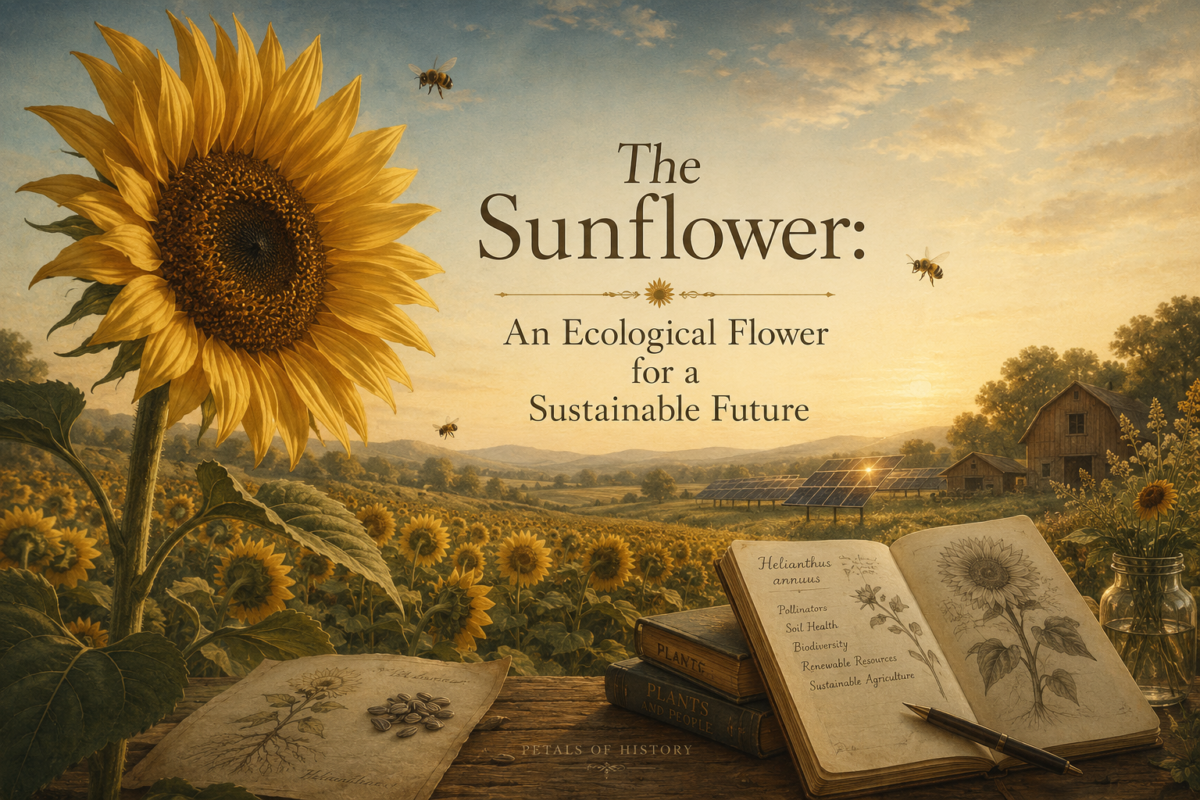
WITH ITS FASCINATING HELIOTROPISM — THAT DAILY, MILLIMETER-PRECISE TILT TOWARD THE SUN’S LIGHT — HELIANTHUS ANNUUS IS FAR MORE THAN A FAMILIAR SILHOUETTE OF OUR SUMMER LANDSCAPES OR A PAINTERLY MUSE FOR THE MASTERS OF MODERN ART. BEHIND THE BRILLIANCE OF ITS GIANT BLOOMS AND THE POETRY OF ITS GOLDEN FIELDS LIES A TRUE TECHNOLOGICAL AND ENVIRONMENTAL POWERHOUSE.
From managing major nuclear disasters to reinventing our packaging, from drought resistance to the creation of clean fuels, this common plant now stands as one of nature’s most sophisticated laboratories.
Crossing through history, science, and industry, the sunflower no longer simply lights up our landscapes: it is charting a path toward a tangible ecological transition, one rooted in a circular economy deeply connected to the living world.
At a Glance: The Incredible Promises of the Sun Flower
- The healer of sacrificed lands: Discover how this plant giant is healing the wounds of modern history by drawing radioactivity and heavy metals out of the soils of Chernobyl, Fukushima, and our industrial wastelands, thanks to an unexpectedly powerful root system.
- A fuel forged by light: Dive into the heart of the energy transition with a plant oil capable of cutting CO2 emissions by more than 50%, establishing itself as a locally produced alternative to fossil fuels.
- The sentinel of scorching summers: Faced with the challenge of global warming, explore the remarkable resilience of this Native American plant, which protects biodiversity, feeds pollinators, and maintains field yields even under severe water stress.
- The fiber’s transformation: From fully compostable food packaging developed in laboratories to new eco-friendly textiles from Germany, discover how the sunflower stalk is reinventing design, insulation, and sustainable fashion.
The pioneer of poison-free chemistry: From bio-based glues to non-toxic adhesives for furniture and automotive use, see how proteins from its seeds are pushing petrochemical compounds and formaldehyde out of our daily lives.
Healing Wounded Lands: The Secrets of Phytoremediation
The sunflower’s ability to purify degraded environments is no mere laboratory curiosity; it is a major force for ecological intervention that has proven itself on some of the planet’s most hostile sites. The term “phytoremediation” refers to the ability of plants to decontaminate an environment. The sunflower is its undisputed king, and its effectiveness rests on a biological mechanism of surgical precision.
It all begins underground. The sunflower develops an exceptionally vigorous deep root system, capable of boring two to three meters into the soil in search of water and nutrients. As the roots draw up groundwater, they don’t discriminate: they also absorb the toxic molecules present in the environment. This is the phenomenon known as phytoextraction.
From the Rubble of Chernobyl to the Hills of Fukushima
After the Chernobyl nuclear disaster of 1986, scientists searched for an economical, non-destructive way to treat millions of hectares of contaminated farmland.
Removing the topsoil to a depth of several tens of centimeters would have permanently destroyed the ecosystem. That’s where the sunflower stepped in. Planted en masse on floating rafts set directly on the cooling ponds and on the surrounding soils, it acted as a biological pump.
The plant has a surprising chemical affinity for certain radioisotopes. Its roots mistake cesium-137 for potassium (an essential nutrient it needs to grow) and strontium-90 for calcium. The sunflower absorbs these deadly elements, transports them through its sap, and stores them safely in its stems and leaves. Once the plant is saturated with radioactivity, it simply needs to be harvested. The volume of highly toxic waste is thereby reduced to plant biomass alone, which is then incinerated under strict safety conditions, with the ashes entrusted to specialized storage facilities.
Twenty-five years later, in 2011, this same strategy was deployed in Japan following the accident at the Fukushima power plant. Millions of sunflowers were sown by Buddhist monks and volunteer residents to purify the soil in the evacuation zones. Beyond their purely scientific role, these fields of brilliant gold amid devastated landscapes became a universal symbol of resilience and renewal in the face of technological disaster.
Application to European Industrial Wastelands
This healing power is not limited to nuclear crises. In Europe, and particularly in France’s Hauts-de-France region, the sunflower is being deployed by research bodies such as INRAE to address a quieter but equally destructive problem: soil pollution from heavy metals.
On former industrial wastelands, where old chemical or metallurgical plants once stood, soils are often saturated with lead, arsenic, cadmium, or zinc. Traditional decontamination methods involve excavating tons of soil with heavy machinery, trucking it away, and treating it chemically — a process with a disastrous carbon footprint that permanently kills off soil life. The sunflower offers a “gentle” alternative: over a few growing seasons, it gradually extracts these heavy metals, allowing the land to regain its natural fertility without ever being turned over or disturbed.
Sunflowers are not the only species used to restore degraded environments; other plants also play a major role in phytoremediation and plant-based decontamination, particularly in wetlands.
Tomorrow’s research: Laboratories are now turning their attention to a new frontier in decontamination: microplastics and persistent organic pollutants. Preliminary studies show that enzymes secreted by sunflower roots stimulate beneficial soil bacteria — microscopic allies capable of breaking down the molecular chains of certain polymers and pesticide residues.
Energy Drawn from Light: The Biodiesel Revolution
If the sunflower can heal the land, it can also power our machines without depleting the planet’s fossil resources. Its use as an energy source is part of the urgent search for alternatives to petroleum fuels, a major driver of climate disruption.
At the heart of the sunflower seed lies a kernel of exceptional richness, containing up to 45 to 50% oil. Once extracted through simple mechanical pressing, this oil undergoes a transesterification process to become “biodiesel,” also known as Fatty Acid Methyl Ester (FAME) or Vegetable Oil Methyl Ester. This green fuel can be blended directly with conventional diesel or used pure in adapted engines.
A Wonderfully Green Carbon Footprint
The numbers speak for themselves. According to life-cycle analyses validated by ADEME (France’s environment and energy management agency), sunflower biodiesel cuts greenhouse gas emissions by 50 to 60% compared to its fossil equivalent. Why such a gap? Because the carbon released from the exhaust pipe when biodiesel burns corresponds exactly to the carbon the plant captured from the atmosphere through photosynthesis as it grew. The balance is therefore virtually neutral, unlike petroleum, which releases carbon that has been stored underground for millions of years.
What’s more, compared to other energy crops such as rapeseed or oil palm, the sunflower has a remarkably light environmental footprint. It is a hardy plant that needs very few pesticides or chemical treatments. Its cultivation is clean, local, and doesn’t require deforestation in distant tropical regions.
The Virtuous Model of the Circular Agricultural Economy
One of the strongest arguments in favor of the energy sunflower is its ability to generate a zero-waste ecosystem. In France’s Nouvelle-Aquitaine region, as well as across the great agricultural plains of Germany and Spain, biofuel production is organized through short supply chains, directly on the farm or at the level of regional cooperatives.
When a farmer presses sunflower seeds, the oil is only part of the harvest. The solid residue left after the oil is extracted is called the meal. Far from being waste, this sunflower meal is an extremely valuable agricultural raw material: it is particularly rich in plant protein and fiber. It is used immediately to feed local livestock (dairy cows, sheep), avoiding the massive import of genetically modified soy from South America.
At the same time, once dried, the plant’s stalks have a high calorific value. In Germany, they feed biogas plants that produce energy used to heat buildings or generate green electricity. Nothing is wasted, everything is transformed: the sunflower becomes the engine of rural energy self-sufficiency.
Facing the Great Heat: The Sentinel of Tomorrow’s Agriculture
Climate change is no longer a distant threat; it is a daily reality for the farming world. European summers, marked by repeated heat waves and prolonged droughts, are taking a toll on traditional crops like corn, which require enormous amounts of water during the hottest time of year. In this context of water crisis, the sunflower stands out as a true sentinel of agroecological resilience.
The Art of Water Frugality
Native to the semi-arid regions of North America, Helianthus annuus has developed physiological adaptations to drought over millennia. Its deep root system allows it to draw moisture from places where other plants give up — in the lower layers of the soil.
In addition, its leaves have a unique cuticle structure and fine hairs that limit evapotranspiration during periods of intense heat. Agronomic studies conducted in the Mediterranean basin show that the sunflower is able to maintain stable yields and quality oil production even under severe water stress. Where an unirrigated cornfield is doomed to wither on the stalk, the sunflower keeps tracking the sun.
A Pillar of Companion Planting and Biodiversity
As part of a sustainable agriculture movement seeking to reduce dependence on chemical inputs, the sunflower plays a pivotal role. In France and Italy, the principles of permaculture and agroecology are now being applied on a large scale through crop associations.
The sunflower pairs wonderfully with climbing or trailing legumes such as peas or vetch. In this arrangement, the sunflower’s sturdy, upright stalk serves as a natural trellis for the legume. In return, the legume — thanks to symbiotic bacteria housed in its roots — captures nitrogen from the air and returns it to the soil, directly nourishing the sunflower. This natural partnership almost completely eliminates the need for synthetic nitrogen fertilizers, whose production is extremely energy-intensive and whose excess runoff pollutes groundwater.
Finally, no discussion of the sunflower would be complete without mentioning its role as a refuge for beneficial wildlife. Its huge flower heads, made up of thousands of small individual flowers that bloom gradually from the outside in, offer an inexhaustible source of nectar and pollen for bees, bumblebees, and butterflies at the end of summer — a critical period when other wildflowers become scarce.
In the field, it is also used as a “trap crop”: its hardiness allows it to tolerate certain aphids or insects without suffering harm, drawing pests away from neighboring vegetable or grain crops without the need for insecticide spraying.
From Stalk to Fiber: The Pioneer of Green Chemistry and Biomaterials
While the sunflower’s oil and seeds have captured attention for centuries, modern industry is now turning its focus to the forgotten part of the plant: its stalk. Long regarded as a simple harvest residue, ground up and left on the ground, sunflower straw is becoming the raw material of a clean industrial revolution, driven by green chemistry and materials science.
Compostable Bioplastics: An Alternative to Petroleum
The search for alternatives to petroleum-based plastics is one of the greatest environmental challenges of our time. It was in France, at INRAE’s laboratories, that a major breakthrough was achieved. Researchers discovered that the pith found inside the sunflower stalk has exceptional binding and insulating properties.
By grinding these stalks and combining their fibers with natural starch-based resins, scientists succeeded in creating a 100% bio-based, fully biodegradable plastic.
In the Auvergne-Rhône-Alpes region, pilot projects have tested these materials in the form of food trays in organic supermarkets. Unlike traditional plastics, which take centuries to break down into toxic microparticles, these sunflower-based packages compost completely within a few weeks in a home composter, returning to the earth as nutrients for future crops.
Eco-Friendly Housing and the Textiles of the Future
The industrial use of sunflower fibers also extends to the construction and sustainable fashion sectors — two of the most polluting industries in the world.
- In construction: In the Netherlands, the innovative company Sunstrand uses the stalk’s rigid outer bark to manufacture thermal and acoustic insulation panels. These bio-based panels offer technical performance equivalent to fiberglass or polystyrene, but with a negative carbon footprint, since they durably store the CO2 captured by the plant as it grew. They are also completely safe for indoor air quality, releasing no volatile organic compounds (VOCs).
- In textiles: In Germany, green fashion start-ups are exploring non-chemical mechanical processes to extract cellulose from the long fibers of the sunflower stalk. The resulting yarn can be woven into fabrics that are soft, lightweight, and naturally breathable.This next-generation plant-based fabric offers a real alternative to synthetic polyester (derived from petroleum) and to conventional cotton, whose intensive cultivation consumes vast amounts of water and pesticides worldwide.
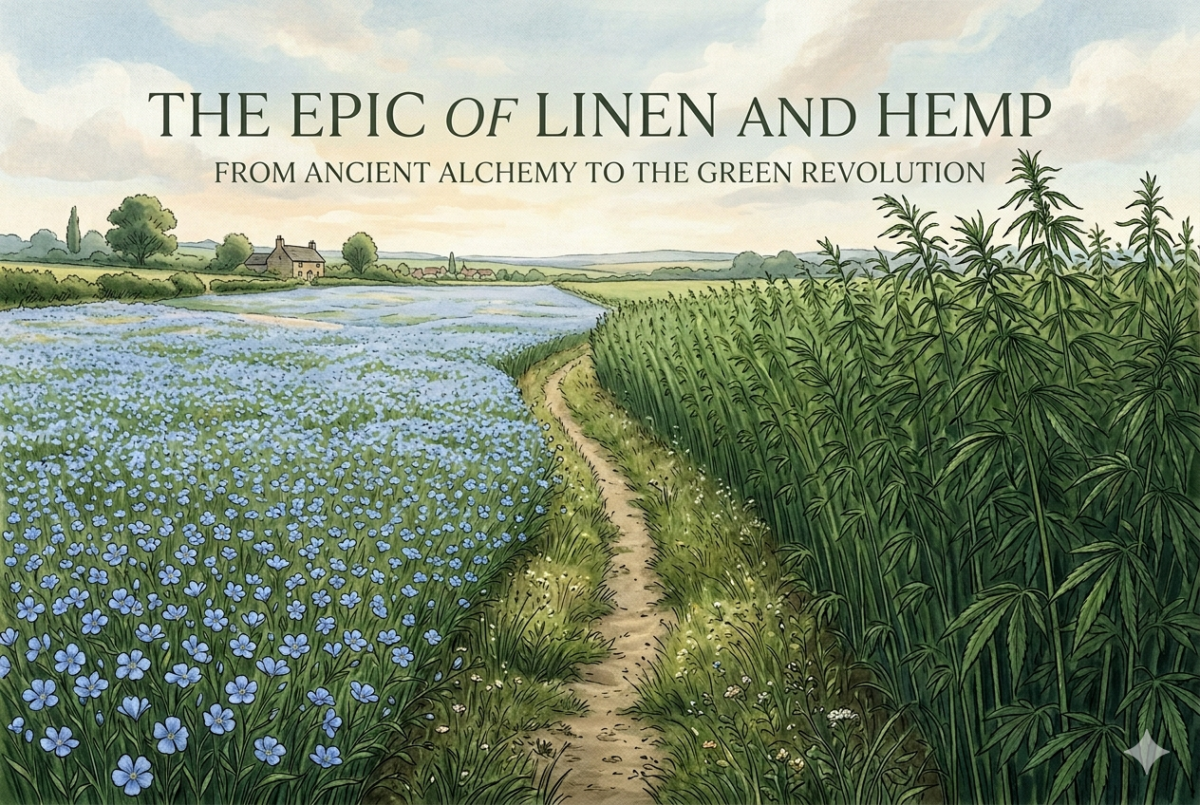
Innovations in natural glues, plant fibers, and sunflower-based biomaterials are part of the same movement as the development of green chemistry and bio-based materials made from flax and hemp.
The Green Glue Revolution
One of the plant’s most surprising impacts lies in the field of adhesives. In Italy, chemists have harnessed the protein structure found in sunflower seed residues to formulate fully natural industrial glues.
Until now, the furniture industry (for particleboard panels) and the automotive industry relied heavily on formaldehyde-based glues — a highly carcinogenic chemical compound that slowly evaporates into the air of our homes.
Sunflower-based glue offers the same level of adhesion while being completely non-toxic. Similarly, the phenolic compounds extracted from the plant’s yellow petals are the subject of advanced research aimed at replacing synthetic preservatives in the cosmetics and food industries, paving the way for healthier beauty products and food.
A Promise of Action and the Future
From the biological healing of landscapes scarred by nuclear disaster to the creation of a circular, waste-free industrial economy, the sunflower transcends its simple status as a countryside flower. It reminds us forcefully that the answers to today’s environmental crises don’t always require complex, costly human technologies.
Sometimes, the solutions lie quietly in the hardiness and intelligence of a plant from our countryside. By learning to look at Helianthus annuus with fresh eyes, we come to understand that nature is always one step ahead: it is up to us to cultivate its promises.
Keep Reading
This captivating story is part of our complete anthology on the civilizations and symbolism of the sunflower. Explore our collection of articles to deepen your discovery of its impact on human history and cultures around the world:
From Sacred Flower to Giant of the Plains: The History of the Sunflower — to follow the great historical and sociological story of this plant compass, from its Native American origins to the far reaches of Tsarist Russia.
The Sunflower in Art — to explore the sun flower’s unique imprint on the history of painting, from the Renaissance to modern masterpieces.
Continue Your Exploration
Immerse yourself in the world of flowers through our various themes and discoveries.
Start ExploringReceive Our Next Discoveries
Subscribe ✉️