
A Golden Star for a Greener World
With its heliotropism—that fascinating and natural attraction toward the light—Helianthus annuus is far more than a simple flower or a mere artistic muse, as we have profoundly explored in our dedicated article regarding sunflowers within the world of art.
This radiant, sun-like flower embodies a true ecological hope for our time, contributing actively to the phytoremediation of soils in Chernobyl, to the production of high-performance and sustainable sunflower-based biodiesel, and to visionary innovations such as bioplastics crafted from its very own fibers.
It shines brightly within the landscape of sustainable agriculture, demonstrating a remarkable ability to resist drought, and serves as an inspiration for the creation of ecological textiles and the advancements of green chemistry. Throughout this comprehensive article, we invite you to discover how this extraordinary plant is effectively lighting the way toward a truly sustainable future.
In Brief: The Key Ecological Contributions of the Sunflower
- Decontamination: It acts through the process of phytoremediation to absorb radioactive isotopes (such as Cesium-137 at Chernobyl) as well as various heavy metals (including Lead and Arsenic).
- Clean Energy: Its natural oil is meticulously processed and transformed into a sustainable biodiesel, which reduces CO2 emissions by an impressive 50% to 60% when compared directly to traditional fossil diesel.
- Climate Resilience: Its innate capacity to withstand periods of severe drought makes it an essential and strategic ally for sustainable agriculture in the face of ongoing global warming.
- Biodiversity Protection: It significantly improves soil fertility through the practice of companion planting and acts as a powerful, irresistible attractor for essential pollinators.
- Innovative Materials: Its natural fibers are utilized to create fully compostable bioplastics, ecological textiles, and bio-sourced adhesives, pushing the boundaries of Green Chemistry.
Soil Phytoremediation in Chernobyl: A Flower to the Rescue of the Earth
In the devastating aftermath of the Chernobyl nuclear catastrophe in 1986, this iconic plant with its golden petals played a monumental role in the phytoremediation of the local soils. Its powerful root system, plunging deep into the earth to a depth of up to three meters (nearly 10 feet), successfully absorbed radioactive isotopes such as cesium-137, thereby participating directly in the decontamination of the surrounding land. Once these plants were harvested, they were disposed of under strictly secure conditions, which effectively reduced the overall level of environmental contamination.
This pioneering project served as a profound inspiration for similar environmental initiatives elsewhere, most notably in Fukushima in 2011, where this same solar flower helped to restore lands that had been irradiated.
In France as well, the practice of soil decontamination using the sunflower is being actively applied to various industrial sites. Within the Hauts-de-France region, the national research institute INRAE (the National Research Institute for Agriculture, Food and the Environment) utilizes this natural method to treat brownfields and abandoned industrial lands polluted by heavy metals like lead or arsenic.
For example, the soils of former chemical factories, once considered lost, have found a new lease on life thanks to this “gentle” and non-invasive approach. Unlike more aggressive and destructive techniques such as mass excavation, the phytoremediation of soils is both economically viable and deeply respectful of the natural environment. It is also worth noting that other flowers exist with similar decontamination powers, such as the Iris.
Recent scientific research continues to explore the sunflower’s potential to capture modern pollutants, such as microplastics, cementing this plant’s status as a beacon of hope for the world’s damaged and exhausted lands.
Sustainable Biodiesel: Energy Drawn Directly from the Light
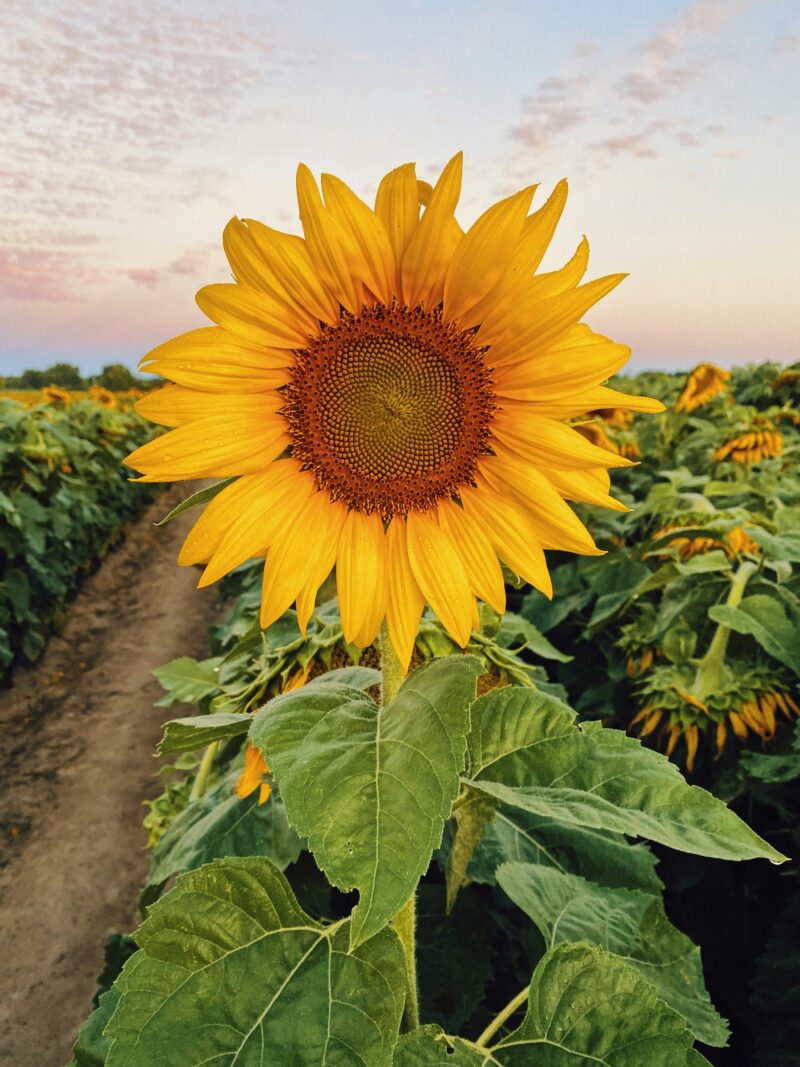
The seeds produced by this solar flower contain a genuine treasure for the realm of renewable energy. Their oil, carefully extracted through mechanical pressure, is transformed into a sustainable biodiesel—a clean and viable alternative to traditional fossil fuels. At the heart of European innovation, in countries such as France, Germany, and Spain, various pilot projects are currently using this biodiesel to power agricultural tractors, commercial vehicles, and even domestic heating systems. According to data from ADEME (the French Agency for Ecological Transition), this biofuel reduces CO2 emissions by 50% to 60% compared to conventional diesel, representing a major step toward a less polluted and more breathable future.
This plant distinguishes itself primarily by its exceptionally low environmental impact. Being much less demanding in terms of water consumption and pesticide use than rapeseed (canola), it integrates perfectly into the global strategy for energy transition. In the Nouvelle-Aquitaine region of France, local farmers utilize the sunflower within sophisticated crop rotation systems to naturally enrich the soil while simultaneously producing high-quality oil.
The “oil cakes”—the solid residues remaining after the extraction process—serve as a rich source of feed for livestock or as a natural fertilizer, thereby creating a virtuous and sustainable circular cycle. In Germany, the stalks of the plant are even transformed into biogas through the process of methanization, further reinforcing the vital role of sustainable sunflower-based biodiesel within a modern green economy. Every single seed is, in itself, a promise of clean and renewable energy.
Sustainable Agriculture: A Resilience in the Face of Drought
In a world increasingly confronted by the harsh realities of global warming, this flower has become a pillar of support for sustainable agriculture. Originally native to the Americas, the sunflower is capable of prospering in a wide variety of soils, from arid, sun-baked plains to heavy, clay-rich earth. Its natural capacity to resist drought, made possible by its incredibly deep root system, makes it a critical ally for agricultural regions affected by increasingly scorching summers, such as the South of France or Spain.
Scientific studies consistently show that the sunflower is able to maintain stable yields even when subjected to intense water stress, which is a major strategic asset for farmers today. Within the framework of sustainable agriculture, the sunflower is often associated with beneficial practices like companion planting.
By cultivating it in close proximity to certain legumes, such as peas, the sunflower helps to enrich the soil with nitrogen, which significantly reduces the reliance on chemical fertilizers. In the agricultural regions of France and Italy, this traditional yet innovative method improves soil fertility while simultaneously limiting the effects of erosion. Furthermore, the sunflower acts as a “trap crop,” naturally attracting harmful insect pests to itself in order to protect other nearby plantations, which in turn decreases the necessity for chemical pesticides. Thanks to this inherent resilience in the face of drought, the sunflower is effectively tracing a new path toward an agriculture that is truly respectful of our environment.
Sustainable Materials: Bioplastics, Textiles, and Green Chemistry
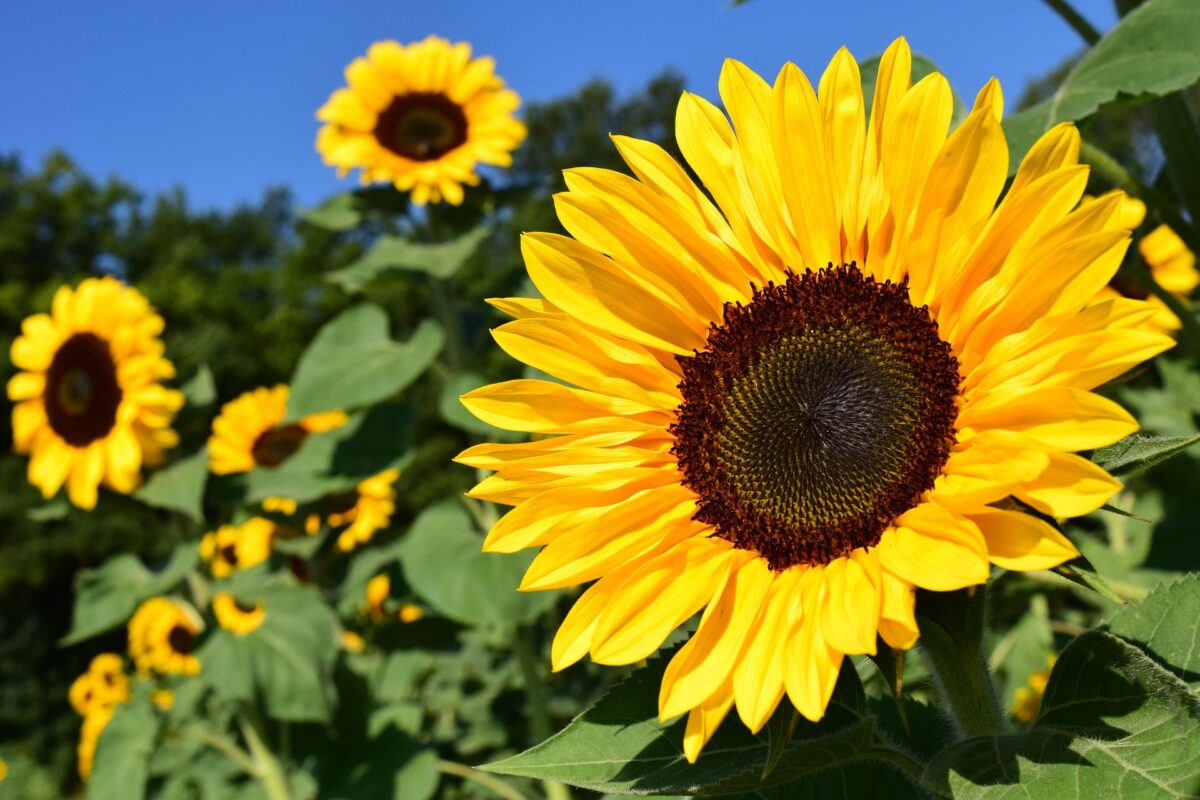
The sunflower continues to inspire the development of sustainable materials, transforming its humble stalks into sophisticated ecological solutions. The bioplastics derived from sunflower fibers are opening up entirely new perspectives for the future. In France, specifically through the work of INRAE, researchers are developing fully compostable packaging, such as food trays currently being tested in organic supermarkets throughout the Auvergne-Rhône-Alpes region. These bioplastics, when combined with natural plant-based resins, are designed to replace petrochemical plastics, thereby reducing global pollution while adding value to agricultural residues.
Ecological textiles made from sunflower fibers represent another major innovation in the field. In Germany, several visionary startups are currently transforming these plant fibers into durable and high-quality fabrics intended for clothing or interior upholstery—providing a beautiful and sustainable alternative to synthetic polyester. Additionally, sustainable materials based on the sunflower now include high-performance insulation panels for the construction industry.
In the Netherlands, the company Sunstrand produces thermal and acoustic insulators that are far more ecological than traditional glass wool. In the specialized field of Green Chemistry, sunflower seeds, which are naturally rich in proteins, are being used to create bio-sourced adhesives for the furniture and automotive industries.
In Italy, ongoing research is developing non-toxic adhesives that can replace standard petrochemical glues. Furthermore, the phenolic compounds found within the flowers could soon be used to produce natural antioxidants for the cosmetics industry or the food sector. These sunflower-based materials perfectly embody the concept of a circular economy, where every single part of the plant has a specific utility and a second life.
A Promise of Hope and Action
This solar flower is much more than a plant; it is a true emblem of a sustainable future for our planet. From the phytoremediation of soils in Chernobyl to the production of sustainable biodiesel, and from the creation of eco-friendly textiles to the advancements of green chemistry, it demonstrates that nature itself can provide the answers to the most complex challenges of our time. By choosing to support these initiatives, you are actively participating in the creation of a greener, cleaner, and more sustainable world for everyone.
History does not end with this single petal…
Two paths now lie before you: one invites you to delve deeper into the soul of this bloom by exploring main arcticle, the other beckons you to broaden your horizon by discovering its kin among other floral wonders.
Explore our themes through the “Flower Collection” tab, or return to the heart of our world:
GatewayQuestions Fréquentes sur l’Écologie
Is the sunflower really effective against nuclear radiation?
Absolutely. The sunflower isn’t just a pretty face; it’s a biological powerhouse. Through a process called phytoremediation, its roots act like a natural vacuum, pulling radioactive isotopes like Cesium-137 out of the soil. This “French-tested” botanical approach was a game-changer at both Chernobyl and Fukushima, proving that nature can heal even our most severe industrial scars.
How can a flower compete with traditional fuels?
It’s all about efficiency and carbon footprint. Sunflower-based biodiesel can reduce CO2 emissions by up to 60% compared to standard diesel. In Europe, especially in France and Germany, it’s already powering farm equipment and heating systems. It’s a “drop-in” solution that requires less water and fewer chemicals than other bio-crops like canola.
I live in a drought-prone area. Is sunflower farming viable?
Yes—and that is one of its greatest strengths. Native to the Americas and refined through European sustainable practices, the sunflower is a climate-resilient warrior. Its deep root system (reaching up to 10 feet!) allows it to find water where other crops wither. It’s the perfect candidate for the future of farming in states facing increasing heat stress.
Can sunflowers really replace plastic and polyester?
We are already there. Innovations in Green Chemistry—many coming out of French research hubs like INRAE—are turning sunflower stalks and fibers into compostable packaging and eco-fabrics. Imagine a world where your car dashboard or your clothing starts in a field of flowers rather than a petroleum refinery.
Does growing sunflowers help the local ecosystem?
More than you might think. Beyond its industrial uses, the sunflower is a biodiversity magnet. It acts as a “trap crop” to protect other vegetables from pests and provides a massive pollen feast for bees. By integrating sunflowers into crop rotations, farmers can naturally enrich their soil with nitrogen, cutting down the need for synthetic fertilizers.
How can I support this “Green Star” movement?
The revolution starts with awareness and consumer choice. By choosing bio-based products, supporting sustainable agriculture, and advocating for nature-based solutions in green tech, you are helping scale these French and international innovations. Every sunflower seed is a tiny investment in a cleaner, more resilient planet.